Which OpenAI Book Should You Read First?
-
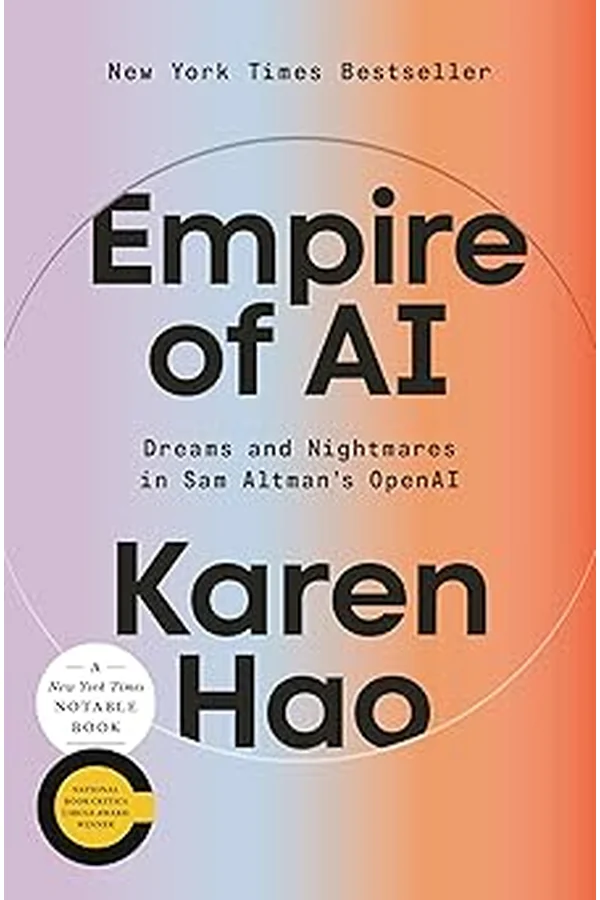 Most-decorated investigation Empire of AI Hao's 2025 NBCC Award and LA Times Book Prize winner reframes OpenAI as a colonial empire that extracts data, compute, and labour, anchored by her 2020 MIT Technology Review profile.
 -
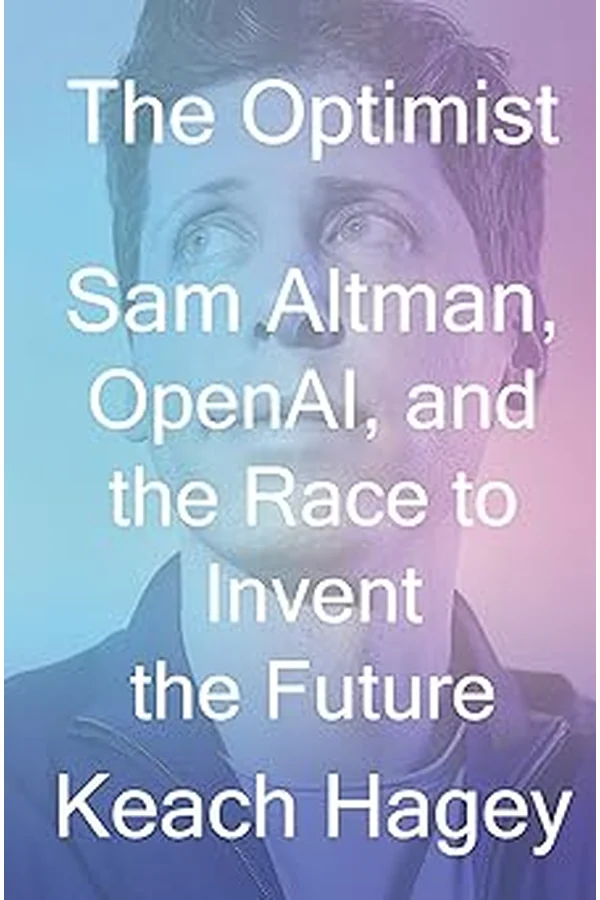
First Altman biography The Optimist The first major Sam Altman biography in print per Publishers Weekly: WSJ reporter Keach Hagey drew on 250+ interviews including with Altman himself, covering Y Combinator through the November 2023 board firing.
-
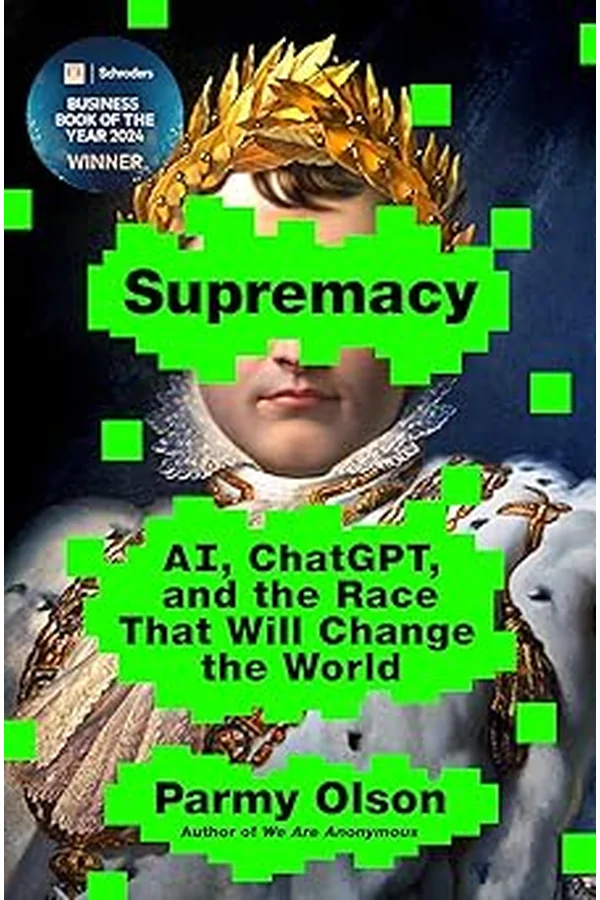
FT 2024 Business Book Supremacy Bloomberg columnist Parmy Olson's 2024 Financial Times and Schroders Business Book of the Year winner pits Sam Altman against Demis Hassabis in a board-level OpenAI versus DeepMind race.
All 5 OpenAI Books Compared
| Title | Goodreads | Best For | Pages |
|---|---|---|---|
| 01Empire of AI (2025) | 4.01 | Most-decorated investigation | 496 |
| 02Supremacy (2024) | 4.05 | FT 2024 Business Book | 336 |
| 03The Optimist (2025) | 3.81 | First Altman biography | 384 |
| 04Genius Makers (2021) | 4.26 | Pre-ChatGPT AI history | 384 |
| 05AI Valley (2025) | 3.96 | Trillion-dollar AI race | 320 |
Goodreads 3.81-4.26 across 320-496 pages and 2021-2025 dates. Picks 1-3 are OpenAI-primary investigations; picks 4-5 cover OpenAI within the broader AI race.
How I Chose These 5 OpenAI Books
I screened 11 English-language trade books naming OpenAI as a primary or substantial subject, ranking them by external editorial validation rather than crowd score.
- Tier-1 trade-imprint publisher (Penguin Press, Norton, St. Martin's, Dutton, or Harper Business); self-published Kindle excluded.
- T2-or-better editorial review trail (New York Times, MIT Technology Review, Financial Times, Publishers Weekly, Kirkus, or equivalent).
- Publication date from 2021 onward to span the GPT-3 through post-ChatGPT era.
- OpenAI is the central subject or a substantial named protagonist alongside one or two other companies.
- Goodreads aggregate 3.75 or above with at least 400 ratings.
- Ranking weighted toward editorial validation first (major awards, T1 review coverage, primary-source access); Goodreads as tie-breaker.
Award validation can override the Goodreads floor: Empire of AI's 2025 National Book Critics Circle Award, LA Times Book Prize, and NYT bestseller status outweigh Supremacy's 2024 Financial Times and Schroders Business Book of the Year by a 0.04 Goodreads-score gap. Per-pick citations below link the award records at each book's card.
The 6 books excluded for topic-centrality, audience-fit, academic framing, or thin editorial authority are listed in Also Considered below.
1. Empire of AI: Dreams and Nightmares in Sam Altman's OpenAI (2025)
What it's about
Empire of AI is Karen Hao's investigation of how Sam Altman, CEO of OpenAI, scaled a research nonprofit into global compute infrastructure. The former senior AI editor at MIT Technology Review draws on 260+ interviews and field reporting from Kenya, Chile, and Uruguay across 496 pages, mapping the data-extraction, content-moderation labour, and energy footprint sitting beneath the API layer.
"Empire of AI is a powerful work, bristling not only with great reporting but also with big ideas."
Pros
- Won the 2025 National Book Critics Circle Award for Nonfiction and the LA Times Book Prize per Penguin Random House.
- Karen Hao first profiled OpenAI in 2020 for MIT Technology Review; her 260+ interviews and reporting from Kenya, Chile, and Uruguay anchor the book.
Cons
- At 496 pages with broad colonial-empire framing, longer and more polemical than business-book readers may want.
- Karen Hao writes from outside OpenAI access; no on-record Sam Altman interviews ground the central narrative.
Aiifi's Take
Empire of AI outranks Supremacy because Hao's empire frame lands as a structural critique of one company rather than a two-protagonist race story, validated by the NBCC Award listing on Penguin Random House. Pick Empire of AI over Supremacy when you want a single-company OpenAI investigation with critical depth, not a two-company DeepMind-versus-OpenAI race narrative. For the wider ethics canon, see our best AI ethics books.
Bottom Line: Read Empire of AI if you want the single most decorated critical history of the company in print.
2. Supremacy: AI, ChatGPT, and the Race That Will Change the World (2024)
What it's about
Published September 2024 as the GBP 30,000 FT and Schroders Business Book of the Year, Supremacy pits Sam Altman against Demis Hassabis (CEO of Google DeepMind) in OpenAI and Google DeepMind's race to ship the first conversational AI at scale. Parmy Olson, a Bloomberg Opinion technology columnist, draws on board-meeting reconstructions and lab-level reporting across 336 pages, published by St. Martin's Press, with Microsoft as the funding superpower. For Hassabis in his own words, see Demis Hassabis's most-quoted lines.
"In her deeply reported account, Parmy Olson brilliantly frames the development of artificial intelligence as a thrilling race to master the technology, build a business, and dominate the technological future."
Pros
- Won the 2024 Financial Times and Schroders Business Book of the Year Award (30,000 GBP prize) per Publishing Perspectives.
- Parmy Olson is a Bloomberg Opinion technology columnist and former Wall Street Journal tech reporter, per Wikipedia.
- FT editor Roula Khalaf called Supremacy a 'deeply reported account' of the AI race per Publishing Perspectives.
Cons
- The two-protagonist Altman-versus-Hassabis frame skips Anthropic and Meta entirely, treating the AI race as a head-to-head between OpenAI and DeepMind.
- Published September 2024, Supremacy predates OpenAI's late-2024 and 2025 board reset, the Microsoft AI CEO appointment, and Anthropic's emergence as a third pole.
Aiifi's Take
When you want both protagonists, Supremacy outranks Empire of AI by framing the AI industry's biggest commercial race as the spine. Pick Supremacy over Empire of AI when the head-to-head DeepMind versus OpenAI race frame matters more than Karen Hao's data-and-labour extraction critique of the same company. Roula Khalaf, Financial Times editor and 2024 FT Schroders jury chair, said Olson 'brilliantly frames the development of artificial intelligence as a thrilling race' per Publishing Perspectives.
Bottom Line: Read Supremacy if you want the OpenAI versus DeepMind race in one volume, with Hassabis as Altman's narrative equal.
3. The Optimist: Sam Altman, OpenAI, and the Race to Invent the Future (2025)
What it's about
Wall Street Journal reporter Keach Hagey delivers the first major biography of Sam Altman per Publishers Weekly, drawn from 250+ interviews including Altman, his family, and OpenAI colleagues. Across 384 pages, Hagey traces the Y Combinator years, the November 2023 board firing, and the five-day reinstatement that followed, framed by MIT Technology Review as a personal-life biography from childhood to present. For the wider tech-executive canon, see our best AI books written by tech executives.
Pros
- Publishers Weekly starred review called it "the first major biography of tech's newest titan" with a high bar.
- Keach Hagey, a Wall Street Journal reporter, drew on 250+ interviews including Sam Altman himself, per the W. W. Norton listing.
Cons
- At 384 pages the biography concentrates on Altman's personal life through the November 2023 firing, light on structural critique.
- Cooperative access trades critical distance: Altman participated in the 250+ interview pool, biasing toward subject participation over adversarial reporting.
Aiifi's Take
Hagey's 250+ interviews including Altman make The Optimist the inside-the-tent counterpart to Hao's outside investigation, per W. W. Norton. Pick The Optimist over Empire of AI when a first-major Sam Altman biography from a Wall Street Journal reporter matters more than a critical investigation of the company's culture. The cooperative-access frame is the trade-off readers should weigh against Hao's institutional distance.
Bottom Line: Read The Optimist if Altman the founder anchors your interest more than the company's structural critique does.
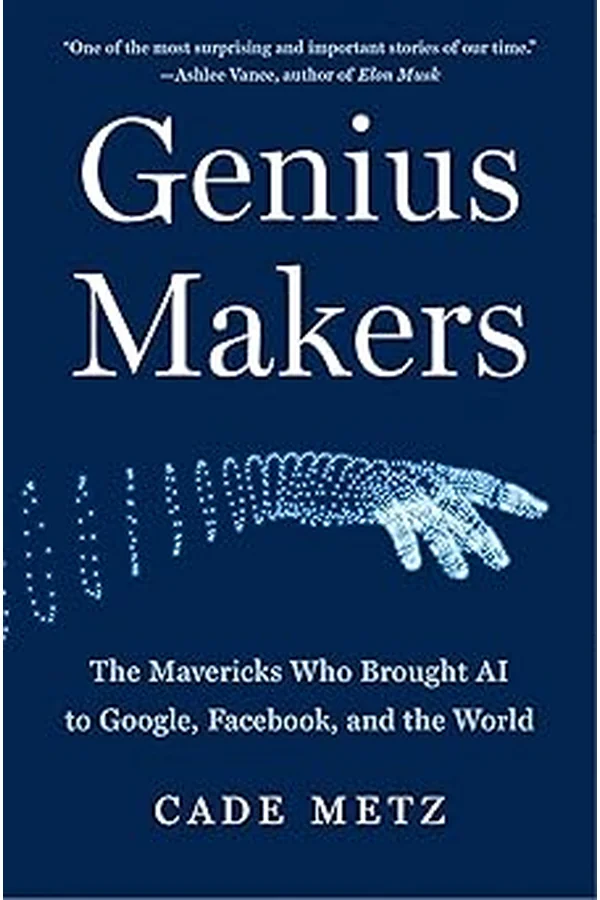
4. Genius Makers: The Mavericks Who Brought AI to Google, Facebook, and the World (2021)
What it's about
Across 384 pages and hundreds of interviews, Cade Metz traces how a small group of deep-learning researchers, anchored by Geoff Hinton (British-Canadian computer scientist and 2024 Nobel Laureate), moved from academic obscurity to staffing the AI labs at Google, Facebook, and OpenAI. The New York Times reporter covers AI and Silicon Valley, with OpenAI as one of several subjects rather than the central focus.
Pros
- Cade Metz is the New York Times Silicon Valley and AI reporter, per his NYT author page.
- Walter Isaacson calls it a "colorful page-turner" that explains AI through Geoff Hinton's life, per Penguin Random House.
- Los Angeles Times rated it "entertaining and valuable, essential" in a 2021 review, per Penguin Random House, and Kirkus Reviews covered the book on release.
Cons
- Published March 2021, predating ChatGPT; OpenAI coverage stops before the 2022 to 2025 era the other four picks document.
- OpenAI is one of several subjects alongside Google, Facebook, and Microsoft, not the exclusive narrative focus.
Aiifi's Take
Genius Makers outranks The Optimist when you want the pre-2023 AI-race history that explains how OpenAI got founded, accepting it sits alongside Google, Facebook, and DeepMind rather than centring on Sam Altman. Walter Isaacson calls Genius Makers a "colorful page-turner" that puts AI "into a human perspective" through Geoff Hinton's life, per Penguin Random House. See our best AI books for leaders next.
Bottom Line: Read Genius Makers if you need the pre-ChatGPT origin story behind every name in the current race.
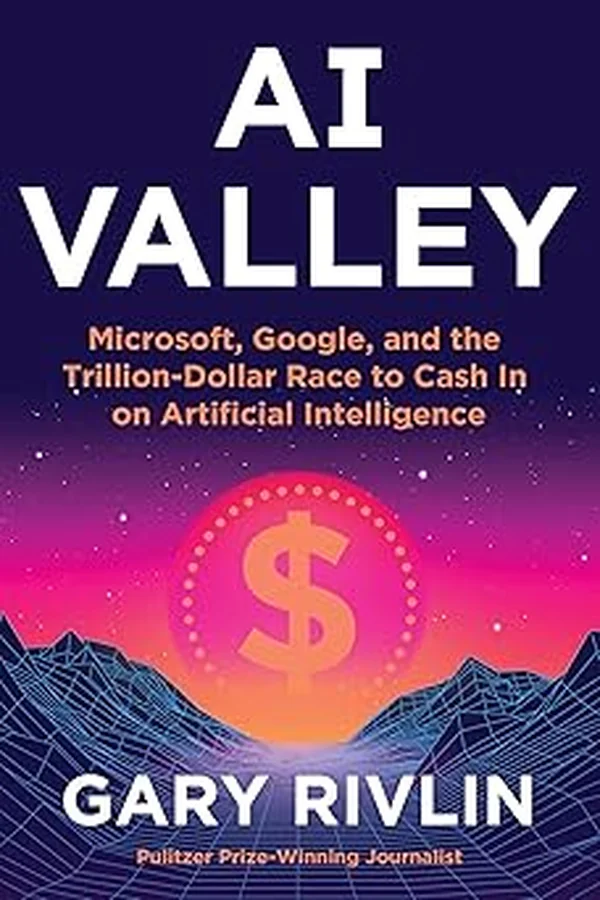
5. AI Valley: Microsoft, Google, and the Trillion-Dollar Race to Cash In on Artificial Intelligence (2025)
What it's about
Former New York Times reporter and shared-2017-Pulitzer winner Gary Rivlin chronicles the trillion-dollar AI race through the lens of Reid Hoffman (LinkedIn co-founder, Greylock partner, and former OpenAI board member), positioning him as the connective tissue between Microsoft, Google, OpenAI, and Inflection AI. Across 320 pages, Rivlin follows the platform-power and venture-capital flows behind the post-ChatGPT race.
Pros
- Gary Rivlin is a former New York Times reporter and two-time Gerald Loeb Award winner per Wikipedia.
- Rivlin gains direct access to Inflection AI and OpenAI through Reid Hoffman, per HarperCollins publisher description.
- NPR interviewed Rivlin in March 2025 on AI deregulation, positioning him as an authoritative AI-industry chronicler.
Cons
- OpenAI shares the narrative with Microsoft, Google, and Inflection AI, so Sam Altman is not the exclusive subject.
- Published March 2025 at 320 pages, AI Valley pre-dates late-2025 OpenAI governance and corporate-structure developments.
Aiifi's Take
AI Valley outranks Supremacy when the Hoffman venture-capital throughline matters more than Altman-versus-Hassabis: Reid Hoffman, Inflection AI, and the Microsoft-Google rivalry share the stage with OpenAI rather than ceding it. Naveen Chandra in The Hindu BusinessLine describes AI Valley as chronicling "the remarkable race being played out right now to win the artificial intelligence battle with trillions of dollars at stake." See our AI books for business next.
Bottom Line: Read AI Valley for the Hoffman VC throughline if the platform-power story matters more than a single-company portrait.
Which OpenAI Books Did We Consider but Not Pick?
These 6 books appear regularly on reading lists about OpenAI, AI strategy, and the post-ChatGPT era. Each was reviewed against the criteria above and excluded for a specific reason, listed here so readers can decide for themselves whether the exclusion fits their needs.
- The Coming Wave by Mustafa Suleyman (2023): The Coming Wave is a containment-thesis book about frontier AI broadly; OpenAI appears in supporting passages but is not the central narrative subject, which fails the OpenAI-as-subject topic-centrality knockout.
- Genesis: Artificial Intelligence, Hope, and the Human Spirit by Henry Kissinger, Eric Schmidt, Craig Mundie (2024): Genesis is a philosophy-of-AI book examining humanity's relationship with intelligent machines and fails the OpenAI-as-subject topic-centrality knockout; the company is referenced but never the focus.
- Co-Intelligence: Living and Working with AI by Ethan Mollick (2024): Co-Intelligence is a practical guide to using AI tools at work and fails the audience-fit gate. Readers wanting that applied frame should see our ChatGPT reading list or applied-AI business shortlist.
- The Worlds I See by Fei-Fei Li (2023): Memoir of Fei-Fei Li centred on ImageNet and Stanford HAI; OpenAI is peripheral and fails the topic-centrality knockout for an OpenAI-specific reading list. For pre-OpenAI AI history readers may prefer our foundational AI quotes page.
- ChatGPT and the Future of AI: The Deep Language Revolution by Terrence Sejnowski (2024): Academic-technical knockout: a graduate-level transformer textbook, off-spec for the non-technical reader. OpenAI is mentioned but not the central narrative subject. Try our AI agents list, marketing-AI picks, or prompt-engineering picks instead.
- Sam Altman Biography: His Journey from Y Combinator by Theron Isaacson (2024): Thin authority knockout: a self-published Kindle biography with an unknown imprint and no editorial review trail, below the T2-or-better editorial-authority floor used to gate every pick.
OpenAI Books: Frequently Asked Questions
What is the best book about OpenAI to read first?
Empire of AI by Karen Hao is the best first read for most readers. Published in May 2025, the book won the 2025 NBCC Award for Nonfiction and the Los Angeles Times Book Prize for Science and Technology, and it reframes OpenAI as a colonial-scale extractor of data, compute, and labour.
Empire of AI versus The Optimist: which OpenAI book should I read?
For most readers, start with Empire of AI for the critical investigation of OpenAI as a company and Karen Hao's empire thesis, then move to Keach Hagey's first major biography of Sam Altman drawn from 250+ interviews.
Is there a book that covers the November 2023 Sam Altman firing?
Yes. Empire of AI by Karen Hao (May 2025) and Keach Hagey's biography of Sam Altman (May 2025) both cover the November 2023 OpenAI board firing in detail, including the staff revolt, the escalation with Microsoft, and the five-day reinstatement. Supremacy by Parmy Olson (September 2024) covers the buildup but published before the later legal fallout.
What is the best book about Sam Altman?
Keach Hagey's biography of Sam Altman is the first major biography in print per Publishers Weekly. The Wall Street Journal reporter drew on 250+ interviews including with Sam Altman himself, tracing his Y Combinator years through OpenAI's founding to the November 2023 board ousting and reinstatement. The trade press at Kirkus and at Publishers Weekly each gave the book a starred review. For more leader-focused reading, see our best AI books for leaders.
Which book covers the OpenAI versus DeepMind race?
Supremacy by Parmy Olson is the definitive book on the OpenAI versus DeepMind race. Olson is a Bloomberg opinion columnist on AI, and she won the 2024 Financial Times and Schroders Business Book of the Year prize for Supremacy, valued at 30,000 GBP. The book pairs Sam Altman and Demis Hassabis as the two protagonists driving the post-ChatGPT race.
Are these OpenAI books suitable for non-technical readers?
Yes. All 5 picks are narrative nonfiction written for general business and policy readers, not technical manuals. Karen Hao (formerly MIT Technology Review), Keach Hagey (Wall Street Journal), Parmy Olson (Bloomberg Opinion), Cade Metz (The New York Times), and Gary Rivlin (former New York Times, shared 2017 Pulitzer for Panama Papers) are all working journalists. No prior AI background is assumed. Beginners may want our primer for AI newcomers, and product leaders may prefer our reading list for product managers.