Quick Picks
-
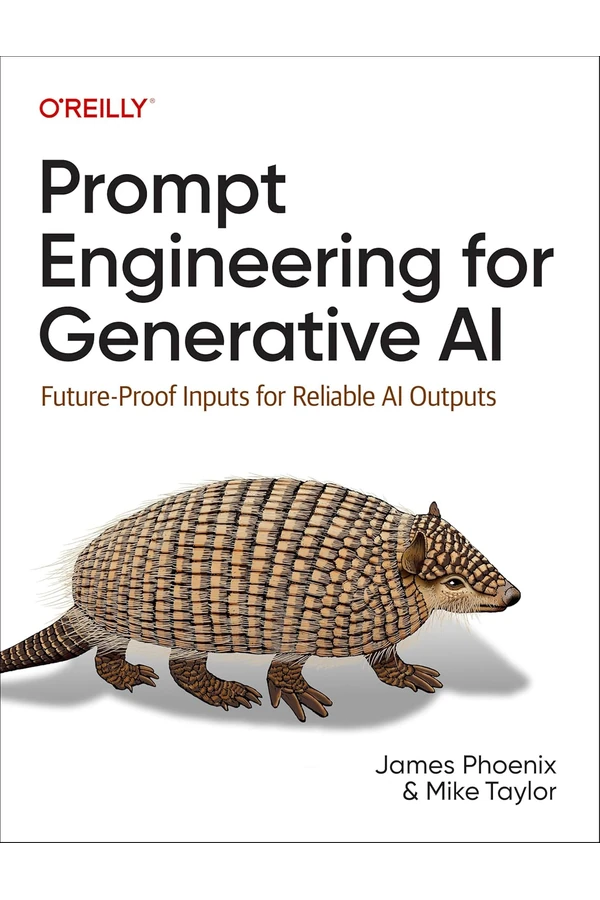 Best overall reference Prompt Engineering for Generative AI Broadest serious reference here, covering text and image work, evaluation, plus code-related tasks in a way that still holds up as tools change.
 -
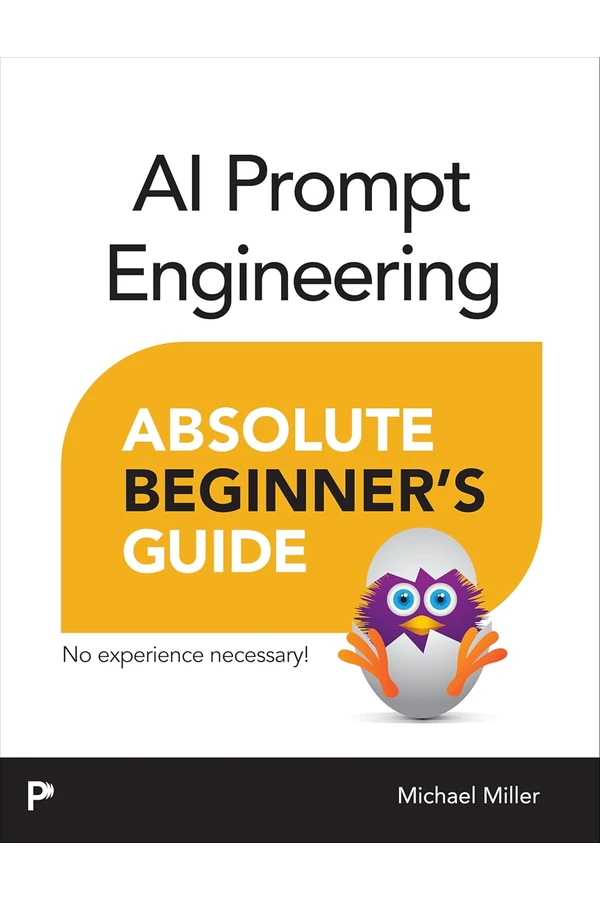
Best first read AI Prompt Engineering Absolute Beginner's Guide Clearest ramp for office users who want prompt anatomy, worked examples, and reusable habits before they touch heavier books.
-
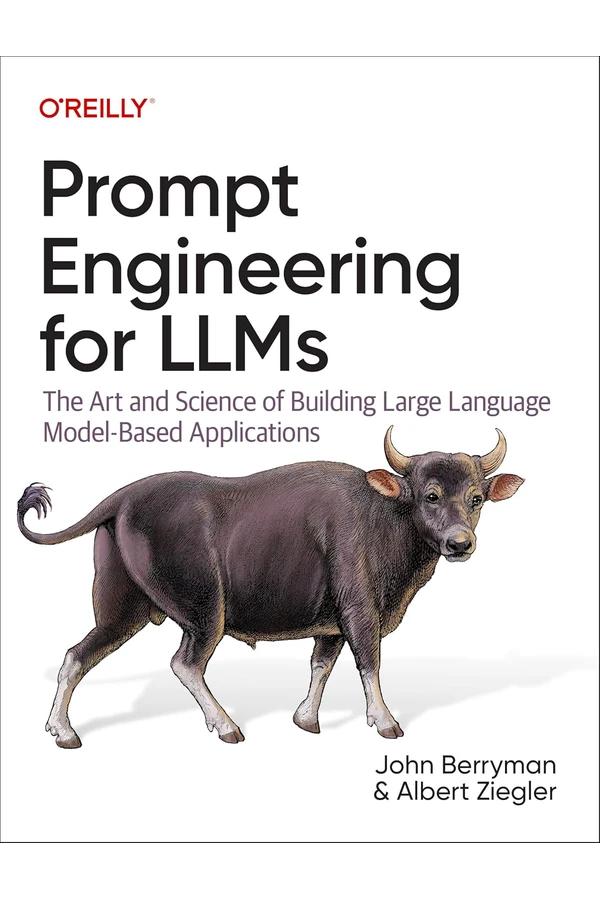
Best for LLM app builders Prompt Engineering for LLMs Best when prompting has to survive inside a copilot, internal tool, or product system instead of a one-off chat.
Which Prompt Engineering Book Should You Read First?
For a single first read, start with Prompt Engineering for Generative AI by James Phoenix and Mike Taylor because its method fits more tools and tasks than the narrower books below it. Three of the five picks were published in 2024 or later, and page counts range from 190 to 467. The table uses Level labels because one recent pick has too few public ratings to be useful.
| Title | Level | Best For | Length (pages) |
|---|---|---|---|
| 01Prompt Engineering for Generative AI (2024) | Intermediate | Prompt systems | 422 |
| 02AI Prompt Engineering Absolute Beginner's Guide (2025) | Beginner | First prompts | 272 |
| 03The Art of Prompt Engineering with ChatGPT (2023) | Beginner | ChatGPT practice | 223 |
| 04Prompt Engineering for LLMs (2024) | Specialist | LLM apps | 467 |
| 05Prompt Engineering and ChatGPT (2023) | Beginner | Business starter | 190 |
1. Prompt Engineering for Generative AI: Future-Proof Inputs for Reliable AI Outputs (2024)
James Phoenix and Mike Taylor make a simple argument: prompt engineering works better as a repeatable operating system than as a stash of clever one-liners. Their 422-page O'Reilly guide opens with five principles, explains why models behave differently under small prompt changes, and then carries that logic into text and image work plus code-adjacent tasks. That breadth is the reason it sits at #1. Most office readers need an approach that still works after tools and interfaces shift, not more copy-paste prompts.
The strongest part of the book is how concrete that approach becomes once the setup is done. The five principles are Give Direction, Specify Format, Provide Examples, Evaluate Quality, and Divide Labor. Phoenix and Taylor keep returning to them as they move from document-completion framing into model evaluation and process design. One sequence moves from AI blog topic research and expert interview generation into outline creation, style control, and title testing. The image chapters also go further than most workplace AI books, covering inpainting and outpainting, consistent character work, plus prompt rewriting and analysis instead of stopping at generic visual-prompt tips.
Compared with AI Prompt Engineering Absolute Beginner's Guide at #2, this book asks for more patience but gives you a sturdier mental model. Michael Miller is better when the immediate need is plain-language instruction and a first clear map of prompt anatomy. Phoenix and Taylor are better when the real problem is inconsistency between tools, tasks, and outputs. Compared with The Art of Prompt Engineering with ChatGPT at #3, this book is less tied to one chat interface and more interested in principles that hold up beyond one model. That wider scope is why it wins, even if parts of it lean more builder-adjacent than a strict office-use manual.
Read this first if you work in marketing, consulting, product, analysis, or operations and expect AI to show up in several parts of the job, not just drafting. Best for readers who want one reliable method for writing, research, image work, and output review. Start with #2 instead if you are still learning basic prompt structure and want the easiest entry point. Move to #3 if most of your work happens inside ChatGPT and guided exercises matter more than scope.
2. AI Prompt Engineering Absolute Beginner's Guide (2025)
What it's about: Michael Miller writes a Pearson end-user handbook built around worked prompts, task-by-task chapters, and a prompt-template appendix. The book breaks prompts into task and format, then layers in topic, tone, context, and constraints. It gives early chapters to zero-shot through few-shot prompting before moving into role-based prompts, chain-of-thought, self-consistency, and prompt chaining. Later chapters shift into writing, productivity, media generation, evaluation, and responsible use.
Aiifi's Take: This is the cleanest first read for a business user who wants clear language and a usable structure on day one. Miller does not assume code, and the way the chapters are built makes it easy to lift a method and reuse it at work after a quick test. The weakness is the reader signal: the book is new and only has a thin public rating base. Start here if ChatGPT still feels fuzzy and you want a calm, current ramp.
3. The Art of Prompt Engineering with ChatGPT: 2026 Update (2023)
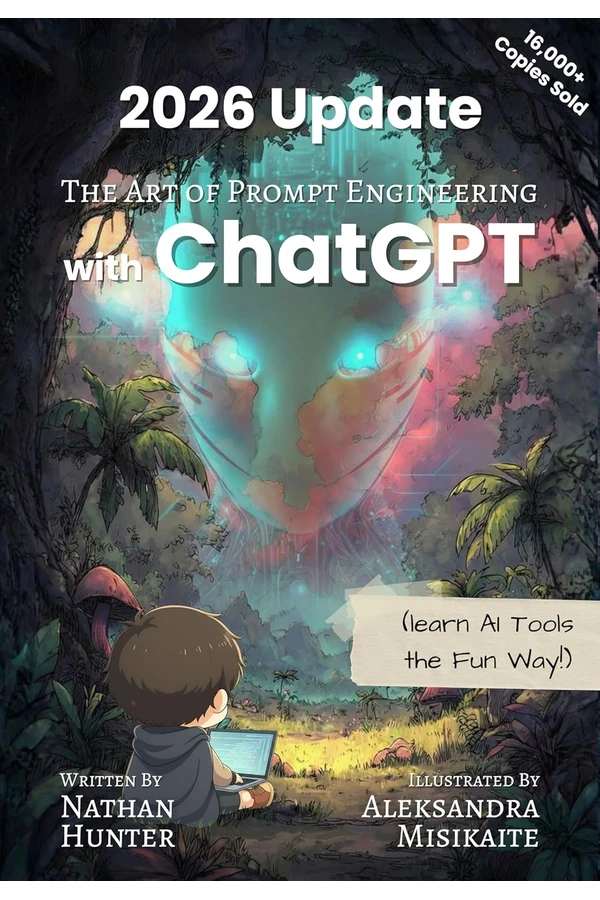
What it's about: Updated in January 2024, Nathan Hunter's book is a training-led handbook for everyday ChatGPT users. It teaches five core techniques first, adds four more advanced tools next, and then uses nine workplace use cases plus exercises to turn the methods into habit. GPTs and image generation sit alongside role-based prompt practice inside a ChatGPT-first frame throughout.
Aiifi's Take: Hunter is strongest when a reader wants guided practice, not abstract theory. The exercises make this easier to use than many self-published prompt books, and the 2024 GPTs update keeps it current. It is still narrower than the top two because almost everything runs through ChatGPT. Choose it if you mainly work in chat interfaces and want repetition, examples, and a shorter read.
4. Prompt Engineering for LLMs: The Art and Science of Building Large Language Model-Based Applications (2024)
What it's about: A practical O'Reilly guide for people designing prompts inside applications, John Berryman and Albert Ziegler treat prompt engineering as the job of deciding what supporting material a language model should see before it answers. The book moves from model foundations into prompt strategy, how to pull in and sort source material, and three named techniques: few-shot prompting (showing examples), chain-of-thought prompting (asking for the steps), and retrieval-augmented generation, or RAG (bringing documents into the answer process). Its center of gravity is LLM-powered products, not casual chat use.
Aiifi's Take: This is the right book when prompting becomes a system-design problem, not a personal productivity trick. The best detail in it is not a catchy prompt formula; it is the repeated advice to choose and organize the right material before asking for output. That insight is not just the authors' own framing. Scaling Tech Podcast put it similarly in April 2024: prompt engineering is "less about asking the right questions and more about providing the right context to guide the model's responses." That makes the book smarter than most prompt-hacks titles, but it is also the least beginner-friendly pick here. Buy it when work is drifting toward product or system design.
5. Prompt Engineering and ChatGPT: How to Easily 10X Your Productivity, Creativity, and Make More Money Without Working Harder (2023)
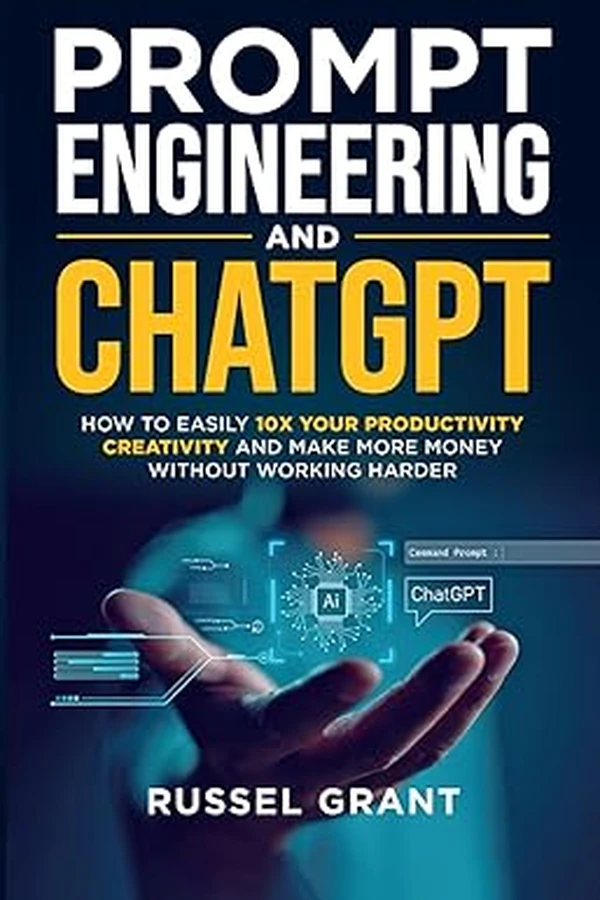
What it's about: Three named devices give Russel Grant's business-use starter its coaching tone: the U.S.E. Method, a Contextualization Equation, and a Precision Formula. The book mixes AI basics with prompt-building advice, workplace examples, and some paid-versus-free tool discussion. It also folds in career framing, so it is built more as a practical bridge for business readers than as a technical manual.
Aiifi's Take: This earns the last slot for the non-technical reader who wants to put ChatGPT to work fast. Freelancers and small-business operators will like the business-first voice. Still, it spends more time on AI background and motivational framing than the tighter books above it, so the prompting lessons are looser and less repeatable. Pick it if you want a short, straightforward bridge into workplace use.
How We Chose These Prompt Engineering Books
I evaluated 10 prompt engineering books published between 2023 and 2026, drawing from the World Economic Forum's Future of Jobs Report 2025, LinkedIn's Work Change Report: AI Is Coming to Work, and Microsoft's 2025 Work Trend Index. Every candidate was checked against the criteria below before the final ranking was set. This is an editorial ranking, not a formula or a score-sorted list.
Market context in 2026
- 39% of workers' key skills are expected to change by 2030, which supports books that teach lasting AI communication skills instead of vendor-specific tricks (World Economic Forum, Future of Jobs Report 2025).
- LinkedIn expects 70% of the skills used in most jobs to change by 2030, with AI as a major catalyst, which makes prompt literacy a workplace skill, not a niche one (LinkedIn, Work Change Report: AI Is Coming to Work).
- 82% of leaders say 2025 is a key year to rethink strategy and operations, which raises the value of books that teach repeatable AI work habits (Microsoft, 2025 Work Trend Index).
The 5 picks were ranked against four criteria, in order:
- Topic centrality (knockout): at least half of the sampled contents, table of contents, or description had to cover prompt design, prompting techniques, or prompt-led workflows.
- Audience fit (knockout): the book had to be useful without coding skills, even if some later sections moved into technical detail.
- Quality signals (ranking): reader signal, publisher credibility, sample depth, and evidence of practical workplace use shaped the rank order. Books below 3.00 on Goodreads were not promoted.
- Freshness (tie-break): 2024 or later broke the tie unless a 2023 book still filled a clear beginner or workplace gap.
One recent book here is too new to carry a meaningful public rating, so the comparison table uses Level labels instead of Goodreads scores. Workplace prompt engineering books rarely receive trade-press review coverage from Publishers Weekly, Kirkus, or Library Journal, so trust signals come from publisher reputation (O'Reilly, Pearson), reader signal where it exists, sample-content depth, and instructor track record rather than critic citations.
I excluded three categories: low-signal fast-follow primers such as The Quick Guide to Prompt Engineering, Prompt Engineering (CRC Focus), and Prompt Engineering for Beginners; app-builder or technical titles such as Prompt Engineering Using ChatGPT, The Essential Guide to Prompt Engineering, and AI Engineering in Practice; and adjacent AI-adoption books such as How to Talk to AI (and How Not To), Easy AI for your life and work, and AI for Business: The Beginner's Fast Track to ChatGPT for Productivity, Profit, and Growth. Books below 3.00 on Goodreads were not promoted. The full list of five well-known books I considered but did not include sits in the next section.
This page is editorially independent. No book is paid or sponsored, and affiliate relationships do not influence which books are selected.
Who should skip this book list
Software engineers and technical product teams building production LLM features should skip this book list and start with our best AI agents books or the AI course guides instead. These five picks are built for non-technical professionals improving prompts at work, not for readers who need API patterns, evaluation pipelines, or RAG architecture.
Prompt Engineering Books I Considered but Did Not Include
These five books appear regularly on reading lists, recommendation threads, and prompt engineering roundups. Each was reviewed against the four criteria above and excluded for a specific reason, listed here so readers can decide for themselves whether the exclusion fits their needs.
- The Quick Guide to Prompt Engineering: Generative AI Tips and Tricks for ChatGPT, Bard, Dall-E, and Midjourney by Ian Khan (2024): Topic centrality is fine, but the current Goodreads signal is too weak and too negative for a best books list.
- Prompt Engineering Using ChatGPT: Crafting Effective Interactions and Building GPT Apps by Mehrzad Tabatabaian (2024): It is a plausible inclusion, but its app-building slant and one-rating reader signal pushed it below more audience-friendly picks.
- Prompt Engineering (CRC Focus) by Ajantha Devi Vairamani and Anand Nayyar (2024): It treats prompting as a broad cross-domain concept rather than as a tight workplace prompting manual, and current reader signal is too weak to trust it as a top pick.
- The Essential Guide to Prompt Engineering: Key Principles, Techniques, Challenges, and Security Risks by Vladimir Geroimenko (2025): Credible and current, but it leans technical and security-oriented for this site's non-technical white-collar audience.
- AI Engineering in Practice by Richard Davies and Rafael Fischer (2026): It is still in Manning Early Access with publication estimated for Fall 2026, and prompt engineering is only one part of a broader AI engineering book.
Frequently Asked Questions
What is the best prompt engineering book overall?
The best prompt engineering book overall is Prompt Engineering for Generative AI (2024, 422 pages) by James Phoenix and Mike Taylor because it treats prompting as process design, not prompt collecting. It is the best choice for workplace readers who move between tools and need one method that carries from drafting and research into evaluation and output review.
What is the best prompt engineering book for beginners?
The best prompt engineering book for beginners is AI Prompt Engineering Absolute Beginner's Guide (2025, 272 pages) by Michael Miller. It explains prompt anatomy and core methods through clear workplace examples. Read Phoenix and Taylor next if you want a broader approach after the basics.
What is the best prompt engineering book for ChatGPT users?
The best prompt engineering book for ChatGPT users is The Art of Prompt Engineering with ChatGPT (2023, 223 pages) by Nathan Hunter. It is built around guided practice, exercises, GPTs, and chat-first use cases, which makes it a better fit than heavier app-design books when you mostly work inside chat windows.
What is the best prompt engineering book for building LLM apps?
The best prompt engineering book for building LLM apps is Prompt Engineering for LLMs (2024, 467 pages) by John Berryman and Albert Ziegler. It explains how an app pulls in source material, shapes the prompt, and checks the output instead of treating prompting as a bag of isolated tricks. Read it when you need to turn prompting into a repeatable system that can be tested and improved over time.
Are prompt engineering books still worth reading in 2026?
Yes, prompt engineering books are still worth reading in 2026 when they teach lasting habits instead of model-specific tricks. Prompt Engineering for Generative AI and Prompt Engineering for LLMs both age better than thin prompt collections because they focus on structure, context, evaluation, and repeatable methods.
Which prompt engineering book is the shortest?
The shortest prompt engineering book here is Prompt Engineering and ChatGPT (2023, 190 pages) by Russel Grant. It is the quickest business-first on-ramp here. If you want a short book with more guided exercises, Nathan Hunter's book is the better next step.
Do non-technical professionals need a technical prompt engineering book?
Most non-technical professionals do not need a technical prompt engineering book at the start. Begin with Michael Miller or Nathan Hunter, then move to Berryman and Ziegler only when your prompt work starts touching copilots or internal tools.
What to Read Next
For broader workplace AI reading, see our best ChatGPT books, best AI books for beginners, and best AI books for leaders. If you want hands-on practice after the books, see our AI course guides.
This list was last reviewed in May 2026 and is updated when significant new prompt engineering books are released. Think we missed one? Let us know.