Quick Picks
-
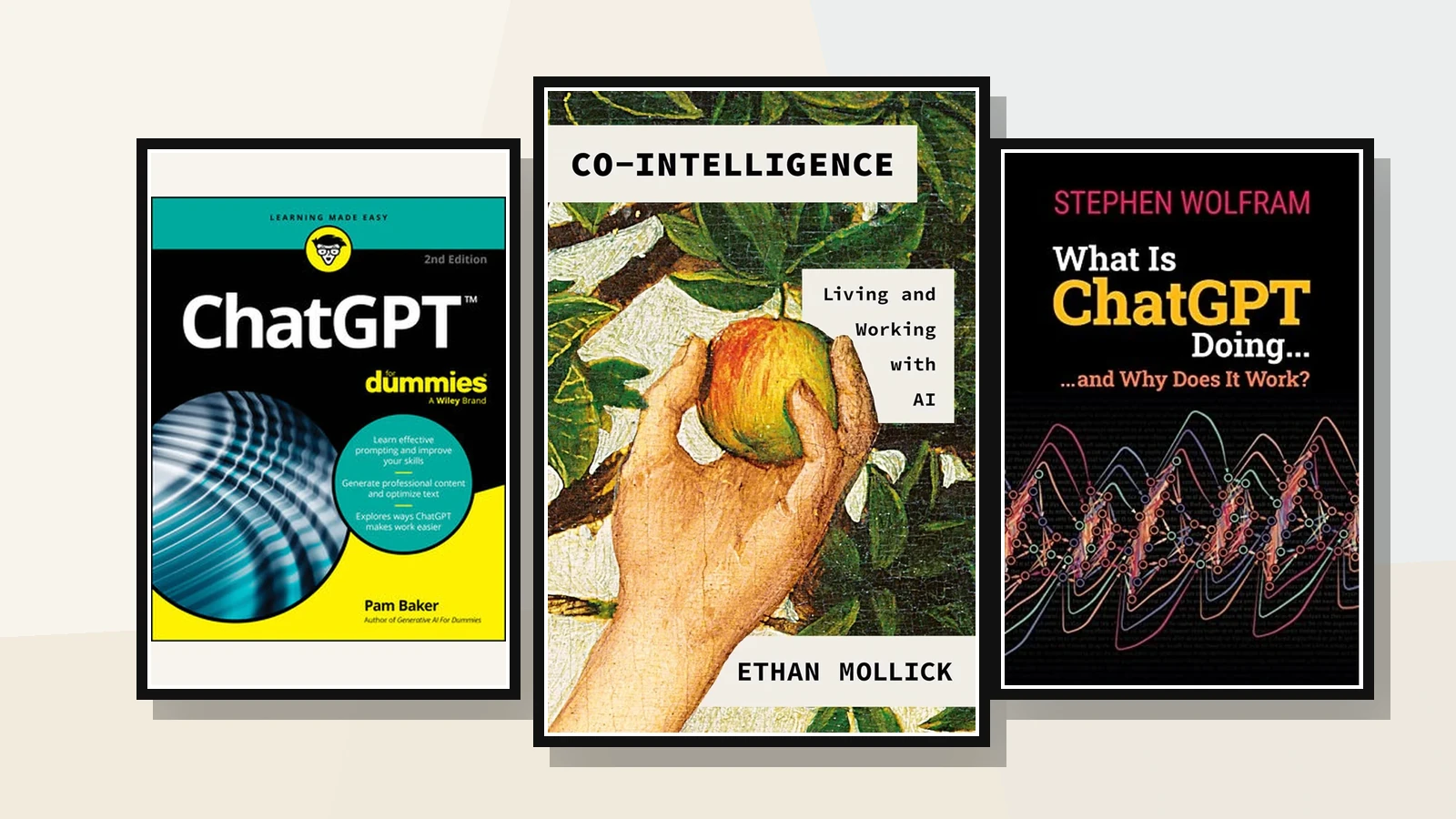
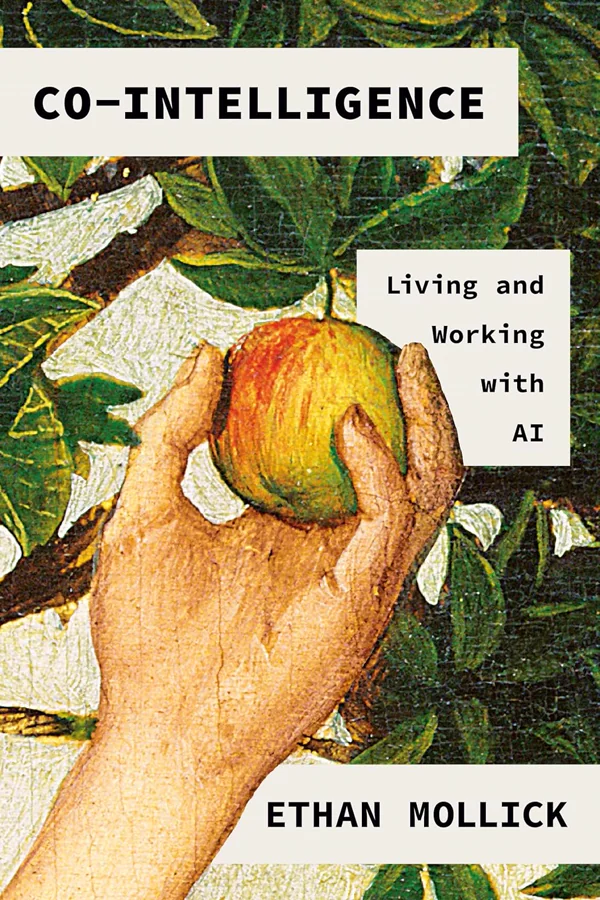 Best first read Co-Intelligence The only book on this list written for the ChatGPT era by someone using AI tools daily: a Wharton professor's practical guide to working alongside AI.
 -
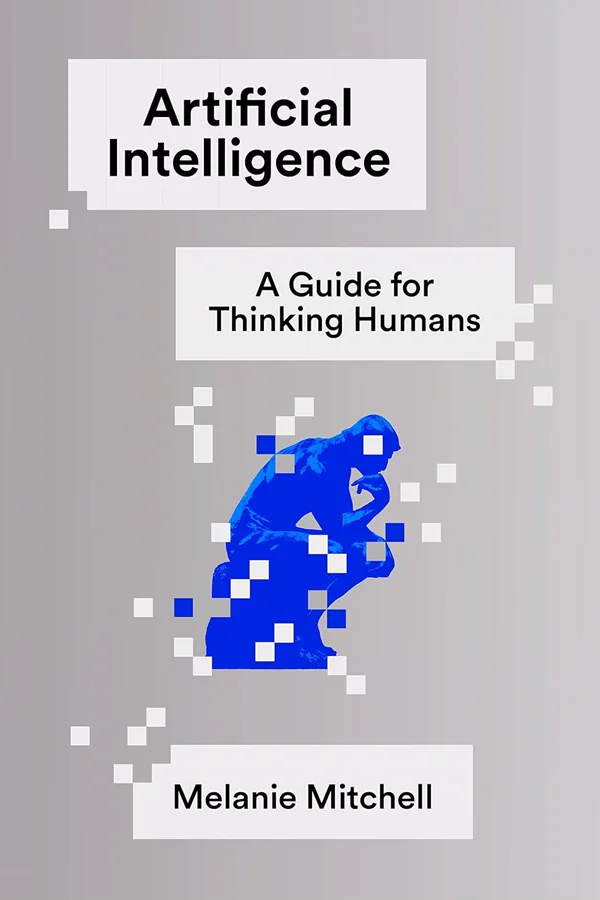
Highest rated AI: A Guide for Thinking Humans Separates what AI can do from what it cannot: the most recommended beginner AI book across expert lists.
-
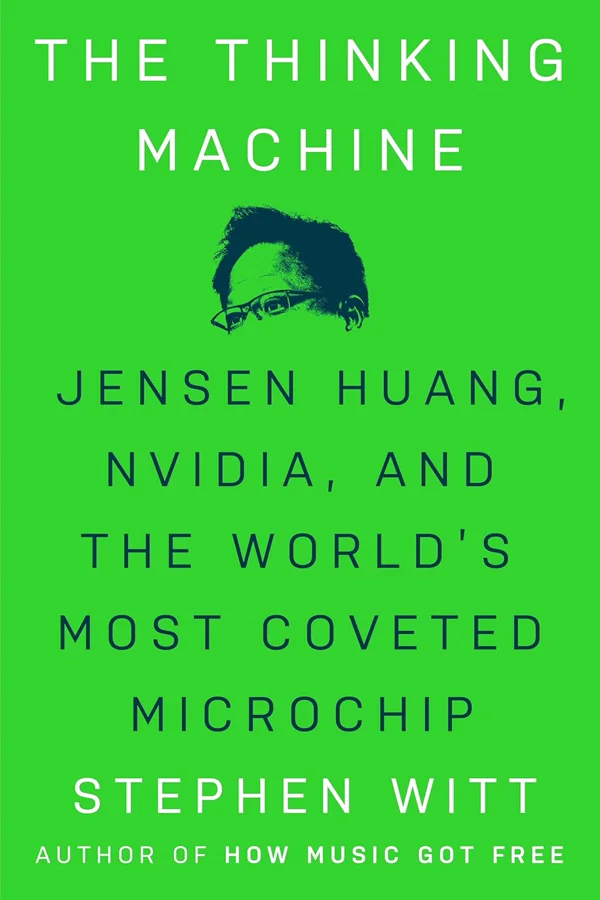
Newest release The Thinking Machine FT Business Book of the Year 2025: how Jensen Huang built Nvidia into AI's most important company.
Which AI Book Should You Read First?
| Title | Goodreads | Best For | Pages |
|---|---|---|---|
| 01Co-Intelligence (2024) | 3.94 | Working with AI | 243 |
| 02Life 3.0 (2017) | 3.99 | Big picture | 384 |
| 03AI: A Guide for Thinking Humans (2019) | 4.33 | AI literacy | 336 |
| 04You Look Like a Thing and I Love You (2019) | 4.11 | AI humor | 272 |
| 05The Thinking Machine (2025) | 4.31 | AI hardware | 272 |
| 06The Worlds I See (2023) | 4.31 | AI science | 336 |
| 07The Alignment Problem (2020) | 4.33 | AI safety | 496 |
| 08The Coming Wave (2023) | 3.80 | AI & biotech | 332 |
| 09AI Snake Oil (2024) | 3.91 | AI skepticism | 360 |
| 10Nexus (2024) | 4.16 | AI & history | 492 |
| 11Empire of AI (2025) | 4.04 | Inside OpenAI | 496 |
| 12Supremacy (2024) | 4.06 | AI race | 336 |
What Are the Best AI Books for Beginners?
The best AI books for beginners are Co-Intelligence by Ethan Mollick (2024, Goodreads 3.94), Life 3.0 by Max Tegmark (2017, Goodreads 3.99), and A Guide for Thinking Humans by Melanie Mitchell (2019, Goodreads 4.33). Mollick writes from Wharton, Tegmark from MIT, Mitchell from the Santa Fe Institute. Together they cover using AI, its future, and its limits.
1. Co-Intelligence: Living and Working with AI (2024)
What it's about: Wharton professor Ethan Mollick draws on two years of hands-on research with GPT-4 and other large language models to show how professionals, educators, and creative workers can treat AI as a co-worker rather than a threat. Organized around four principles for human-AI interaction, the book covers teaching, writing, strategy, and idea generation, with practical exercises throughout its 243 pages.
Andrew Hill, Financial Times, 2024"A sharp and good-humoured guide to how to make the most of generative AI."
Aiifi's Take: The most useful AI book published since ChatGPT launched. Mollick writes from daily classroom experience, not theory, and his framework for thinking about AI as a co-intelligence gives readers something to act on immediately. The idea generation chapter is the strongest practical section on this list. Risks get limited space, which some readers will notice. Best for professionals who want to start using AI at work this week. A New York Times bestseller.
2. Life 3.0: Being Human in the Age of Artificial Intelligence (2017)
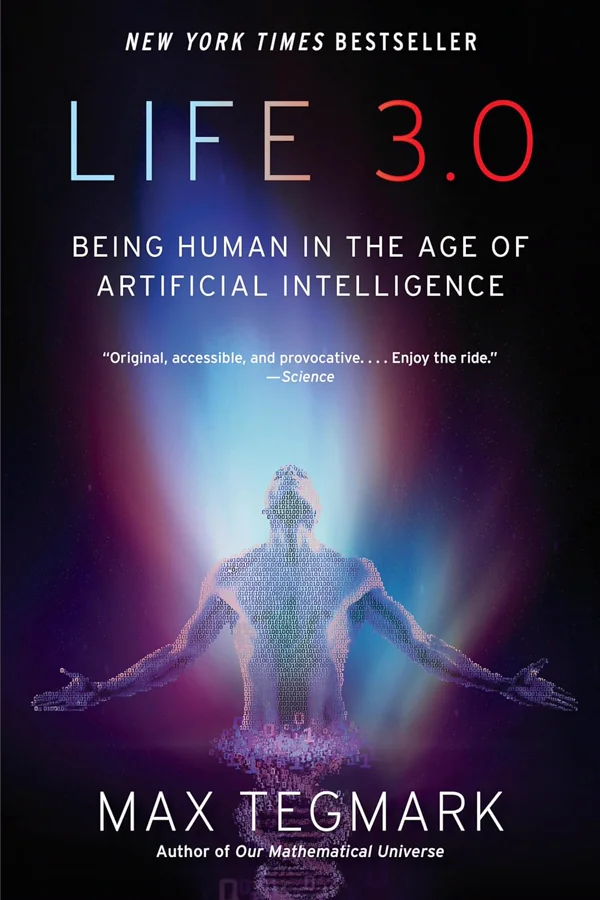
What it's about: MIT physicist Max Tegmark maps what happens when artificial intelligence surpasses human capabilities across work, war, law, and consciousness. The book opens with a fictional scenario of an AI secretly seizing the global economy, then moves through three tiers of existence: biological (Life 1.0), cultural (Life 2.0), and technological (Life 3.0). Tegmark co-founded the Future of Life Institute.
Yuval Noah Harari, The Guardian, September 2017"The book offers a political and philosophical map of the promises and perils of the AI revolution."
Aiifi's Take: Still the best single gateway book for someone who has never read anything about AI. Tegmark covers economics, consciousness, governance, and existential risk in 384 pages, more ground than most AI authors manage in a trilogy. His taxonomy of twelve named aftermath scenarios for post-AGI civilization, from Benevolent Dictator to Zookeeper to Enslaved God, is the most useful framework on this list for understanding why even optimists disagree about what a good AI future looks like. Published in 2017, so it predates ChatGPT and large language models entirely; pair it with Co-Intelligence for the current picture. The most-rated AI book on Goodreads with over 27,000 ratings.
3. Artificial Intelligence: A Guide for Thinking Humans (2019)
What it's about: Computer scientist Melanie Mitchell, a professor at the Santa Fe Institute and former student of Douglas Hofstadter, examines what artificial intelligence can and cannot actually do. The book covers neural networks, natural language processing, computer vision, and common-sense reasoning, testing each against its hype. Mitchell draws on her own research in analogy-making and complexity science to anchor the assessment.
Aiifi's Take: The best book on this list for building genuine understanding. Mitchell writes with a scientist's precision and a teacher's clarity, and her chapter on the gap between AI benchmarks and real intelligence is the sharpest section in any beginner AI book. Drier than Life 3.0 and less practical than Co-Intelligence: readers wanting action steps may stall. Best for anyone who wants to think about AI clearly, not just react to headlines. Goodreads 4.33, the highest rating of any beginner AI book.
Which AI Books Best Explain How Artificial Intelligence Works?
The best AI books on how artificial intelligence works are You Look Like a Thing and I Love You by Janelle Shane (2019, Goodreads 4.11), The Thinking Machine by Stephen Witt (2025, Goodreads 4.31), and The Worlds I See by Fei-Fei Li (2023, Goodreads 4.31). Shane uses humor, Witt covers Nvidia, Li writes memoir. None requires a technical background.
4. You Look Like a Thing and I Love You (2019)
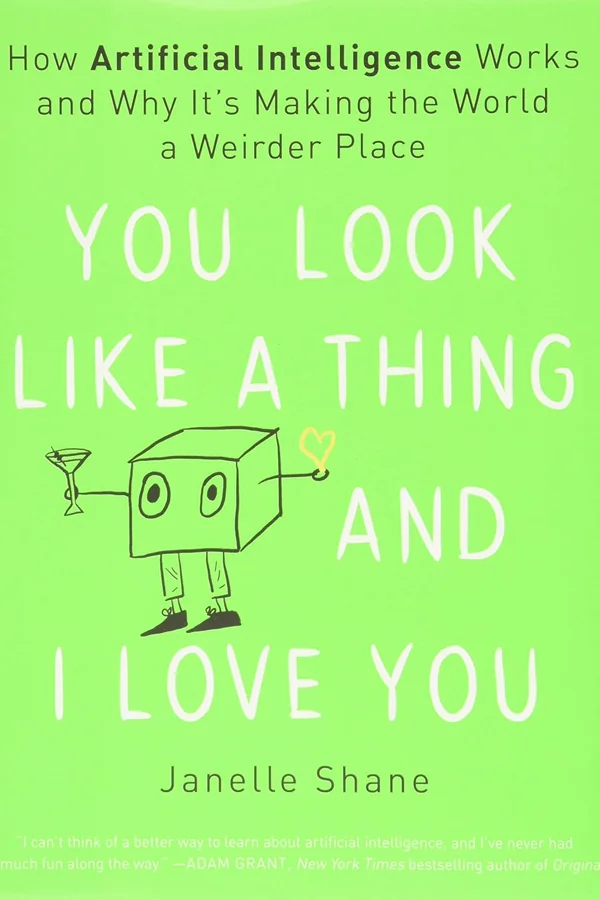
What it's about: AI researcher Janelle Shane uses real experiments with neural networks to show how machine learning works and, more often, how it fails. Drawing from her popular AI Weirdness blog, she trained algorithms to generate pickup lines, paint colors, recipes, and guinea pig names. The results reveal the distance between what AI promises and what it actually delivers. The title itself is an AI-generated pickup line.
Aiifi's Take: The funniest AI book on this list, and possibly the most effective teacher because of it. Shane makes gradient descent and overfitting legible by showing what happens when they go wrong: a neural network naming paint colors "Stargoon" and "Turdly" teaches more about training data than most textbooks. The humor does most of the heavy lifting, so readers wanting depth on any single topic will need a second book. Best entry point if technical language has kept you away from AI until now.
5. The Thinking Machine: Jensen Huang, Nvidia, and the World's Most Coveted Microchip (2025)
What it's about: Journalist Stephen Witt traces Jensen Huang's path from a dishwashing job at Denny's to building Nvidia into the most valuable company in the world and the dominant supplier of AI chips. Based on unprecedented access to Huang, the book covers Nvidia's pivot from gaming graphics to parallel computing, the bet on CUDA that most analysts dismissed, and the GPU shortage that defined the AI boom.
Aiifi's Take: No AI book on this list explains the hardware side better. Witt makes chip architecture and supply chains readable, which is harder than it sounds, and Huang's operating philosophy of investing in "zero billion dollar markets", markets that do not yet exist, explains the CUDA bet that most analysts dismissed for a decade, and Witt makes that logic legible without requiring a finance background. Published in April 2025, it is the newest book on this list. The Nvidia focus means you learn little about the software or ethics side; pair it with Mitchell or The Alignment Problem for that. Winner of the 2025 FT Business Book of the Year.
6. The Worlds I See: Curiosity, Exploration, and Discovery at the Dawn of AI (2023)
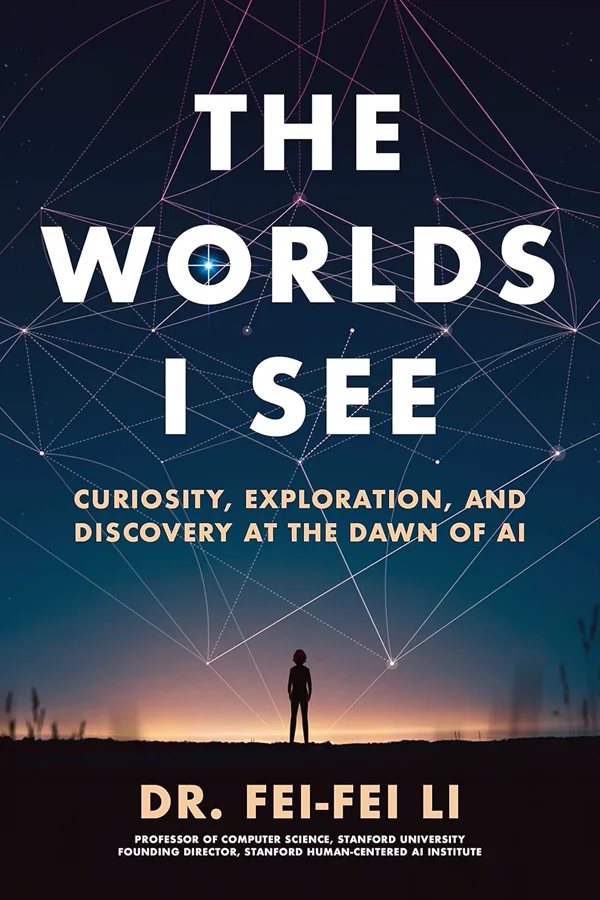
What it's about: Stanford professor Fei-Fei Li's memoir traces her journey from arriving in the United States as a teenage immigrant from China to becoming one of AI's most influential scientists. The central thread is the creation of ImageNet, the database of over 14 million labeled images that triggered the deep learning revolution in 2012 when a neural network trained on it shattered every benchmark in computer vision.
Aiifi's Take: The most personal book on this list. Li earns the memoir format because her story and AI's story are genuinely inseparable: ImageNet did not just advance her career, it changed the field. The sections on her mother's illness and her family's financial struggles give the science a weight that pure explainers lack. Occasionally slows when institutional politics take over. Best for readers who learn through people rather than abstractions. Named one of the New York Times' 100 Notable Books of 2023.
Which Books Cover the Risks and Ethics of Artificial Intelligence?
The best books on AI risks and ethics are The Alignment Problem by Brian Christian (2020, Goodreads 4.33), The Coming Wave by Mustafa Suleyman (2023, Goodreads 3.80), and AI Snake Oil by Arvind Narayanan and Sayash Kapoor (2024, Goodreads 3.91). Suleyman co-founded DeepMind; Narayanan and Kapoor are Princeton professors. Each covers a different failure mode: misaligned values, uncontained technology, and overhyped claims.
7. The Alignment Problem: Machine Learning and Human Values (2020)
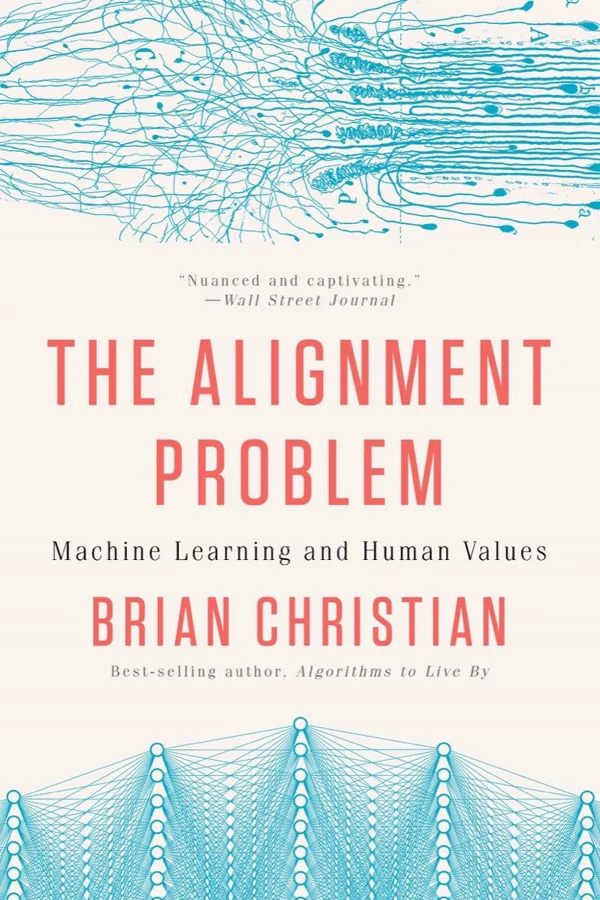
What it's about: Brian Christian surveys the growing field of AI alignment: the effort to ensure that machine learning systems do what their designers actually intend. The book moves from reinforcement learning gone wrong in video games to facial recognition failures in policing, interviewing researchers at DeepMind, OpenAI, and UC Berkeley's Center for Human-Compatible AI. Christian previously wrote The Most Human Human, about competing in a Turing test.
Aiifi's Take: The definitive AI safety book for a general audience. Christian makes reward hacking, specification gaming, and value alignment legible without dumbing them down. The chapter on algorithmic fairness in criminal sentencing is the most concrete ethics writing on this list. At 496 pages it is the longest book here, and some readers will find the middle third dense. Best for anyone who hears "AI alignment" and wants to understand what the debate is actually about. Goodreads 4.33, tied for the highest rating on this list.
8. The Coming Wave: Technology, Power, and the Twenty-First Century's Greatest Dilemma (2023)
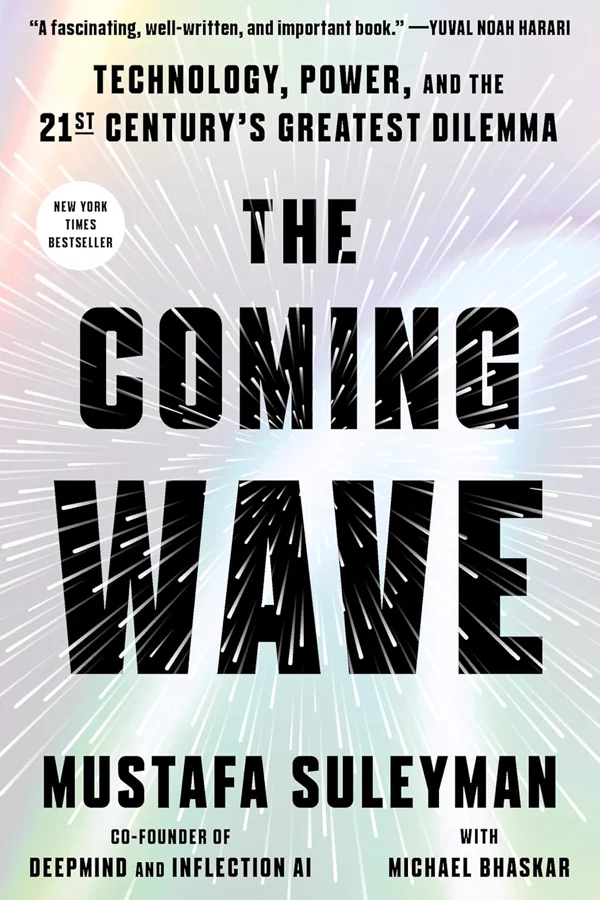
What it's about: DeepMind co-founder and Microsoft AI CEO Mustafa Suleyman argues that AI and synthetic biology are converging into a single technological wave that governments and institutions are not prepared to contain. The book introduces what Suleyman calls the "containment problem": why previous technologies like nuclear weapons and the internet were never fully controlled, and why AI and biotech together will be harder to manage than either alone.
Aiifi's Take: The strongest "what could go wrong" book written by someone who actually built the technology. Suleyman's insider perspective gives his warnings a credibility that outside critics cannot match, and the containment framework is the most useful mental model in any AI risk book on this list. The solutions in the final chapters are weaker than the diagnosis: Suleyman is better at naming the problem than solving it. Best for readers who want AI safety from a builder's perspective. Over 15,000 Goodreads ratings.
9. AI Snake Oil: What Artificial Intelligence Can Do, What It Can't, and How to Tell the Difference (2024)
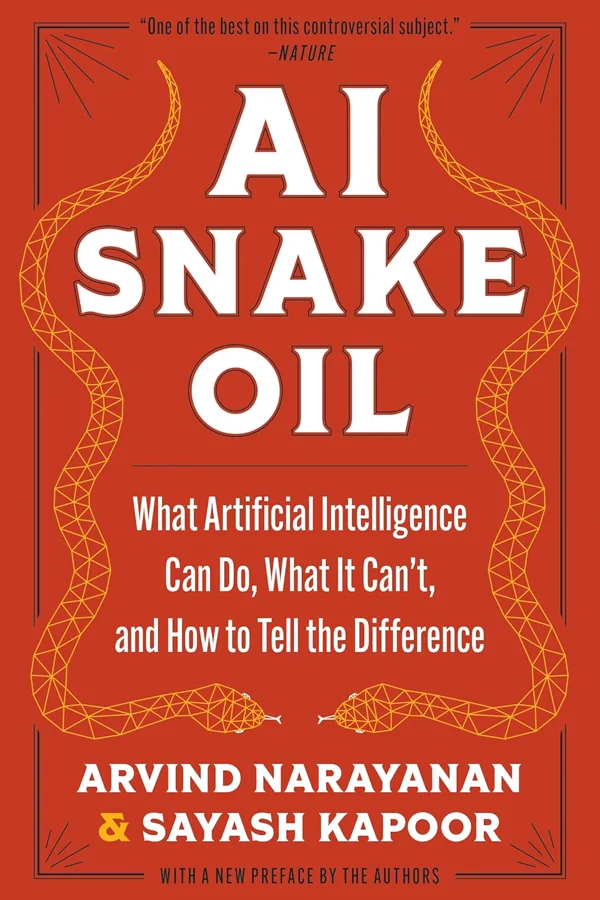
What it's about: Princeton computer scientists Arvind Narayanan and Sayash Kapoor separate genuine AI capabilities from misleading claims. The book categorizes AI into systems that work (content generation, game playing), systems that are unreliable (predictive policing, hiring algorithms), and systems that are fundamentally flawed (predicting recidivism, student success). Based on Narayanan's popular Princeton course and the authors' widely cited Substack newsletter.
Aiifi's Take: The most useful skeptic's guide on this list. Narayanan and Kapoor do not argue that AI is worthless; they argue specific applications are oversold, and they name names. The chapter on predictive AI in criminal justice is the clearest demolition of a bad AI product in any beginner book. The academic tone can feel clinical compared to the narratives in Section 4. Best for readers who want to evaluate AI claims critically, not just understand them. Updated edition released in 2025.
Which AI Books Explore the Future of Artificial Intelligence?
The best books on the future of artificial intelligence are Nexus by Yuval Noah Harari (2024, Goodreads 4.16), Empire of AI by Karen Hao (2025, Goodreads 4.04), and Supremacy by Parmy Olson (2024, Goodreads 4.06). Hao won the National Book Critics Circle Award; Olson won the FT Business Book of the Year. Each asks where AI is heading by following who builds it.
10. Nexus: A Brief History of Information Networks from the Stone Age to AI (2024)
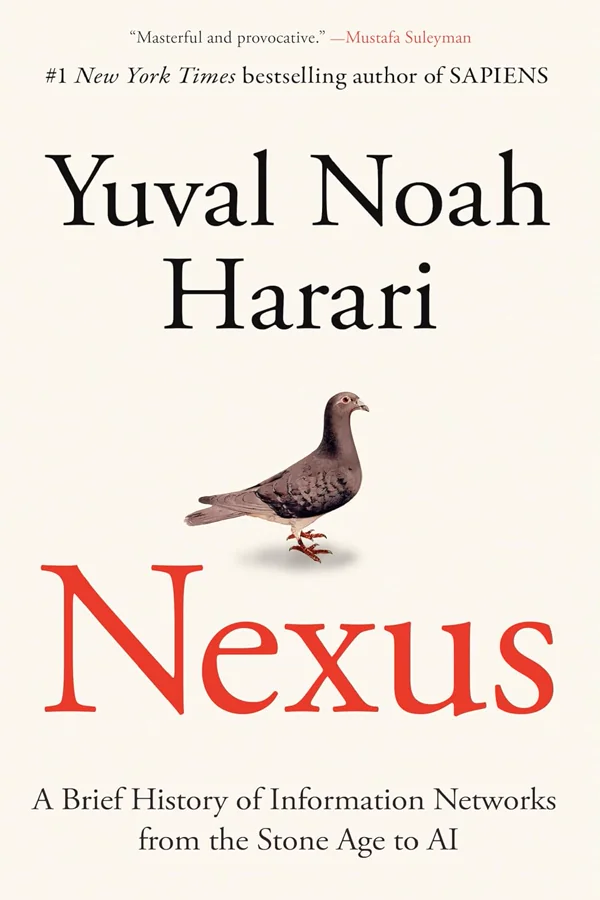
What it's about: The author of Sapiens and Homo Deus traces how information networks have shaped civilizations from the Stone Age to the AI era. Harari examines how mythologies, scriptures, print media, and algorithms each restructured human societies, arguing that AI represents a fundamentally new type of information agent: one that can make decisions and generate ideas without human oversight.
Aiifi's Take: The broadest book on this list. Harari does what he does best: zoom out until the pattern becomes visible. His comparison between AI algorithms and medieval Catholic bureaucracy is the kind of connection no other book here attempts. At 492 pages it demands commitment, and some critics argue Harari prioritizes narrative sweep over technical precision. Best for readers who think in systems and want AI placed in a 100,000-year context. Over 49,000 Goodreads ratings, the most of any book on this list.
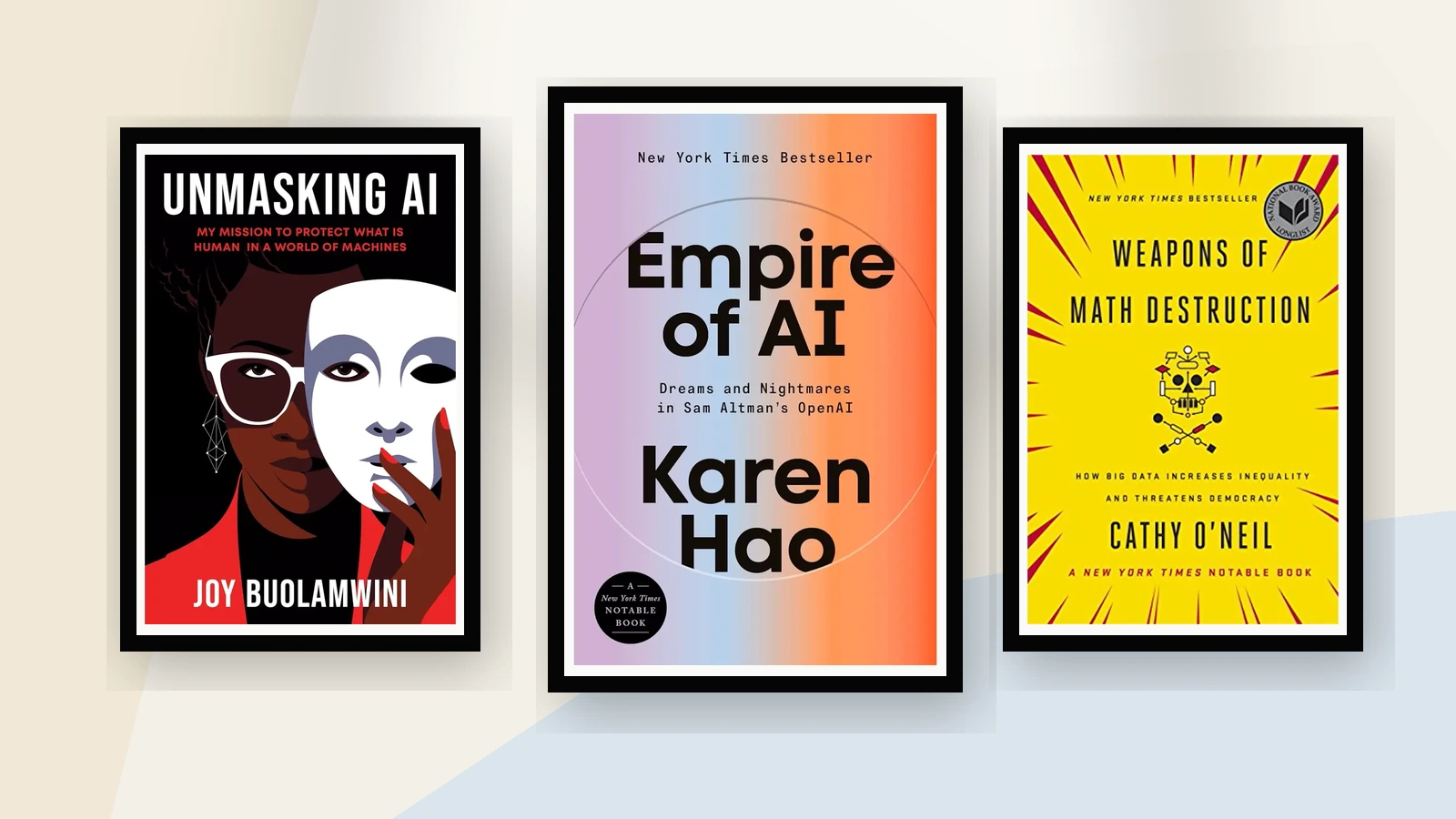
11. Empire of AI: Dreams and Nightmares in Sam Altman's OpenAI (2025)
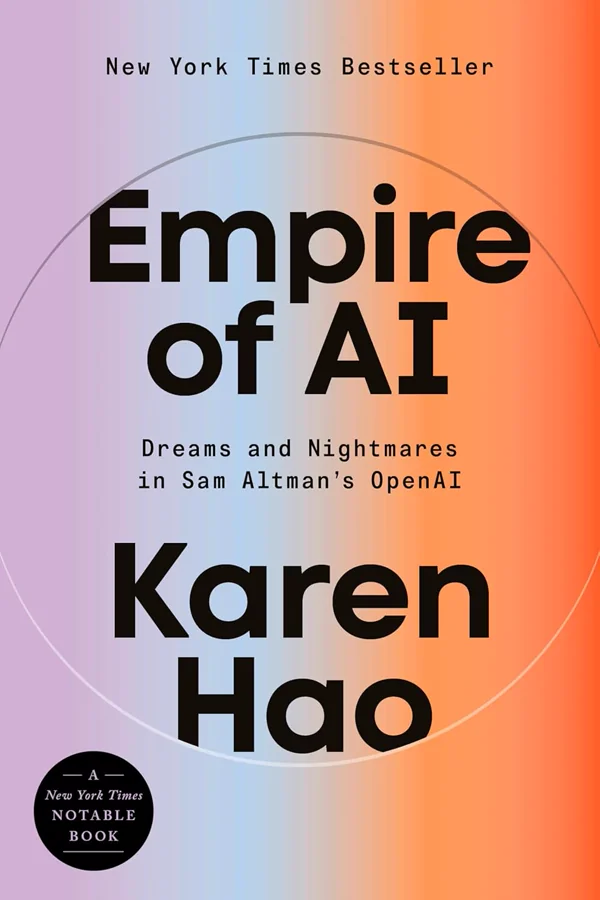
What it's about: Investigative journalist Karen Hao, formerly of MIT Technology Review, spent years reporting inside OpenAI to produce the most detailed account of the company's culture and pursuit of artificial general intelligence. Based on over 260 interviews, the book covers the founding tensions between safety and speed, the board's attempted firing of Sam Altman in November 2023, and the internal debates that shaped ChatGPT's release.
Aiifi's Take: The most important AI book of 2025. Hao's reporting is rigorous: OpenAI's response to the book became its own news story, which tells you she got close to something real. Hao's colonial-empire framework, mapping OpenAI's practices to resource extraction, labor exploitation of Kenyan annotation workers, environmental strain, and ideological control, is the book's original analytical contribution. Narrower than Supremacy since it focuses on one company rather than two; together they give you the full industry picture. Winner of the National Book Critics Circle Award for Nonfiction. Over 8,900 Goodreads ratings.
12. Supremacy: AI, ChatGPT, and the Race That Will Change the World (2024)
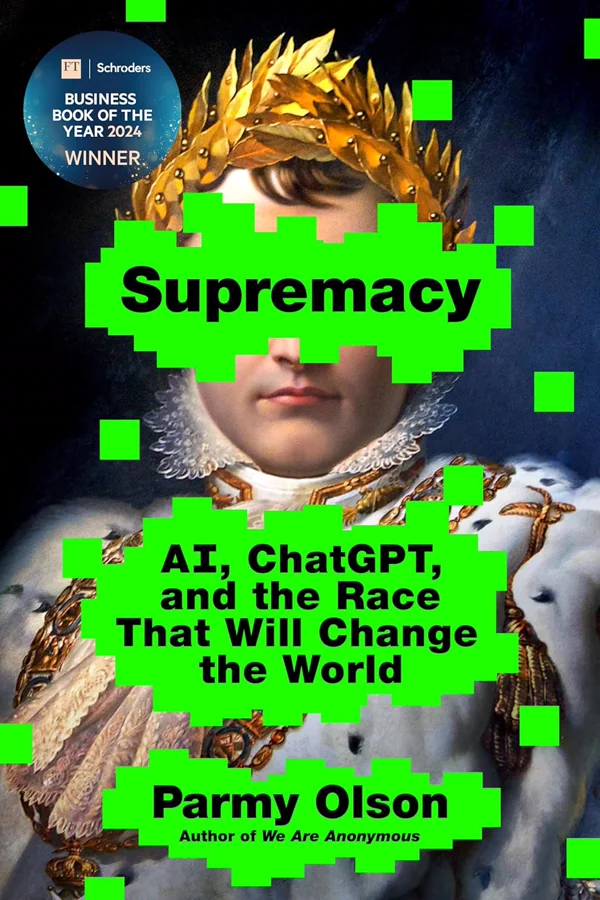
What it's about: Financial Times journalist Parmy Olson traces the rivalry between OpenAI and DeepMind from their founding ideals of building AI safely to the corporate pressures that complicated those goals. The book follows Sam Altman and Demis Hassabis through funding rounds, talent wars, and strategic pivots, examining how competition between two labs reshaped the technology industry and the AI safety conversation.
Aiifi's Take: The best book on this list for understanding why AI development looks the way it does right now. Olson's access to both camps gives the narrative a balance that single-company accounts lack, and her reporting on DeepMind's contractual ethics board, agreed by Google at acquisition and dissolved before it held a second meeting, is the most concrete evidence in any AI book that safety commitments did not erode gradually but were specifically abandoned. The pacing occasionally slows in technical sections. Best for readers who want to understand the industry dynamics shaping AI's direction. Winner of the 2024 FT Business Book of the Year.
How We Chose These AI Books
I evaluated 27 AI books published between 2014 and 2025, drawing from publisher/category listings, Goodreads ratings, expert recommendation lists, and major book award shortlists including the FT Business Book of the Year and the NBCC Award for Nonfiction. Every candidate was checked against the criteria below before the final ranking was set. This is an editorial ranking, not a formula or a score-sorted list.
The final 12 were chosen against four criteria, applied in this order:
- AI centrality (knockout): artificial intelligence had to be the primary subject, not a secondary topic within a broader technology or business book.
- Accessibility (knockout): every book is written for readers without a programming, mathematics, or machine learning background. Technical textbooks were excluded.
- Quality signals (ranking): Goodreads ratings, critical reception, retailer availability, and major book awards.
- Freshness (tie-break): post-ChatGPT books were prioritised. Older titles stayed only when no newer book had replaced them.
The 12 picks are organised into four sections (best overall, how AI works, risks and ethics, and the future of AI) so you can go straight to the category that matches your interest.
The numbers behind the list: lowest Goodreads rating 3.80, highest 4.33, 3 of 12 are FT Business Book or NBCC Award winners, 8 of 12 published in 2023 or later.
We excluded three categories: AI programming textbooks (Russell and Norvig, Goodfellow et al., Geron), books where AI is secondary to a broader argument (Hello World, A Thousand Brains, Weapons of Math Destruction), and titles with fewer than 1,000 Goodreads ratings unless supported by major awards. Books with Goodreads ratings below 3.70 were excluded regardless of commercial success. The full list of 15 well-known AI titles we considered but did not include sits in the next section.
This page is editorially independent. No item is paid or sponsored, and affiliate relationships do not influence which books are selected.
Books We Considered but Did Not Include
These 15 AI books appear regularly on reading lists, recommendation threads, and bestseller charts. Each was reviewed against the four criteria above and excluded for a specific reason, listed here so readers can decide for themselves whether the exclusion fits their needs.
- Superintelligence by Nick Bostrom (2014): long-term existential-risk philosophy that predates ChatGPT and large language models. Demanding for a first read.
- Human Compatible by Stuart Russell (2019): strong on the alignment problem, but covers similar ground to The Alignment Problem with a more academic frame.
- The Singularity Is Nearer by Ray Kurzweil (2024): locks into a specific 2045 timeline; the speculative methodology has not aged well across two earlier Singularity books.
- The Master Algorithm by Pedro Domingos (2015): pre-ChatGPT framing of five "tribes" of machine learning. Useful as history, dated as a current introduction.
- The Second Machine Age by Brynjolfsson and McAfee (2014): predates the deep-learning wave entirely; the economic framing still holds but the AI examples are obsolete.
- AI Superpowers by Kai-Fu Lee (2018): a US-China geopolitics lens on AI. Interesting but narrow, and the policy picture has shifted significantly since publication.
- Atlas of AI by Kate Crawford (2021): a political-economy critique of AI infrastructure, labor, and data. More cultural studies than primer.
- Weapons of Math Destruction by Cathy O'Neil (2016): excellent on algorithmic harm but covers algorithms broadly, with AI as one strand among many.
- Power and Prediction by Agrawal, Gans, and Goldfarb (2022): economics of AI for managers. Strong for an MBA reader, less so as a general primer.
- A Thousand Brains by Jeff Hawkins (2021): neuroscience theory of intelligence with AI as a secondary thread.
- Gödel, Escher, Bach by Douglas Hofstadter (1979): philosophy of mind predating modern machine learning by decades. Influential, but not a current AI book.
- Genius Makers by Cade Metz (2021): biographical history of deep-learning pioneers. Closely overlaps with Empire of AI and Supremacy on this list.
- Hello World by Hannah Fry (2018): strong on algorithmic decision-making but treats AI as one application among several rather than as the central subject.
- The Age of AI by Kissinger, Schmidt, and Huttenlocher (2021): high-altitude geopolitics from former officials. The framing is impressionistic rather than grounded in technical detail.
- Rebooting AI by Marcus and Davis (2019): skeptic's case against deep-learning hype. AI Snake Oil covers similar ground with newer evidence.
Frequently Asked Questions
What is the best AI book for complete beginners?
The best AI book for complete beginners is Co-Intelligence by Ethan Mollick (2024, Goodreads 3.94). It requires no technical background, covers AI as it exists right now, and is the shortest book on this list at 243 pages. For a deeper foundation after that, read Artificial Intelligence: A Guide for Thinking Humans by Melanie Mitchell (2019, Goodreads 4.33).
What is the best AI book on Amazon?
The best AI book for beginners on Amazon is Co-Intelligence by Ethan Mollick (2024, Goodreads 3.94). All 12 books on this list are available on Amazon. The highest-rated is The Alignment Problem by Brian Christian (2020, Goodreads 4.33, 496 pages). The most popular by reader count is Nexus by Yuval Noah Harari (2024, over 49,000 Goodreads ratings).
Can you learn about artificial intelligence just from books?
Yes. These 12 books cover how AI works, its risks, and where it is heading without requiring any programming or math. For practical understanding, start with Co-Intelligence by Ethan Mollick, which includes exercises. For deeper technical context explained accessibly, add Melanie Mitchell's guide. Books and online courses work well together: see our AI course guides for the next step.
What is the best AI book published in 2025?
The best AI book published in 2025 on this list is The Thinking Machine by Stephen Witt (Goodreads 4.31, 272 pages), the FT Business Book of the Year about Jensen Huang and Nvidia. Empire of AI by Karen Hao (Goodreads 4.04, 496 pages) is the other 2025 pick, covering OpenAI's internal culture and AGI pursuit. Both are available on Amazon.
What is the best book about AI ethics for beginners?
The best book about AI ethics for beginners is The Alignment Problem by Brian Christian (2020, Goodreads 4.33, 496 pages). It covers alignment, fairness, and value problems in machine learning without requiring a technical background. For a shorter, more skeptical take, AI Snake Oil by Narayanan and Kapoor (2024, 360 pages) focuses on where AI claims are overstated.
Which AI book is most relevant after ChatGPT?
The most relevant AI book after ChatGPT is Co-Intelligence by Ethan Mollick (2024), the only book on this list written entirely in the ChatGPT era by someone using the tools daily. For the investigative story behind ChatGPT's creation, read Empire of AI by Karen Hao (2025), which covers OpenAI from inside based on over 260 interviews.
Are older AI books still worth reading in 2026?
Yes. Life 3.0 by Max Tegmark (2017) remains the most widely read AI book on Goodreads with over 27,000 ratings, and its core questions about superintelligence have not been answered. The Alignment Problem (2020) and Melanie Mitchell's guide (2019) cover fundamentals that ChatGPT made more urgent, not less. Pair them with Co-Intelligence for the current picture.
What to Read Next
For the real-world arguments behind these books, see our collections of Geoffrey Hinton's warnings about AI, Demis Hassabis on AGI, and expert quotes on AI's future. For film instead of print, try the best AI movies and best AI documentaries. If these books inspire you to learn AI, see our AI course guides.
This list was last reviewed in May 2026 and is updated when important new AI books are released. Think we missed one? Let us know.