Quick Picks
-
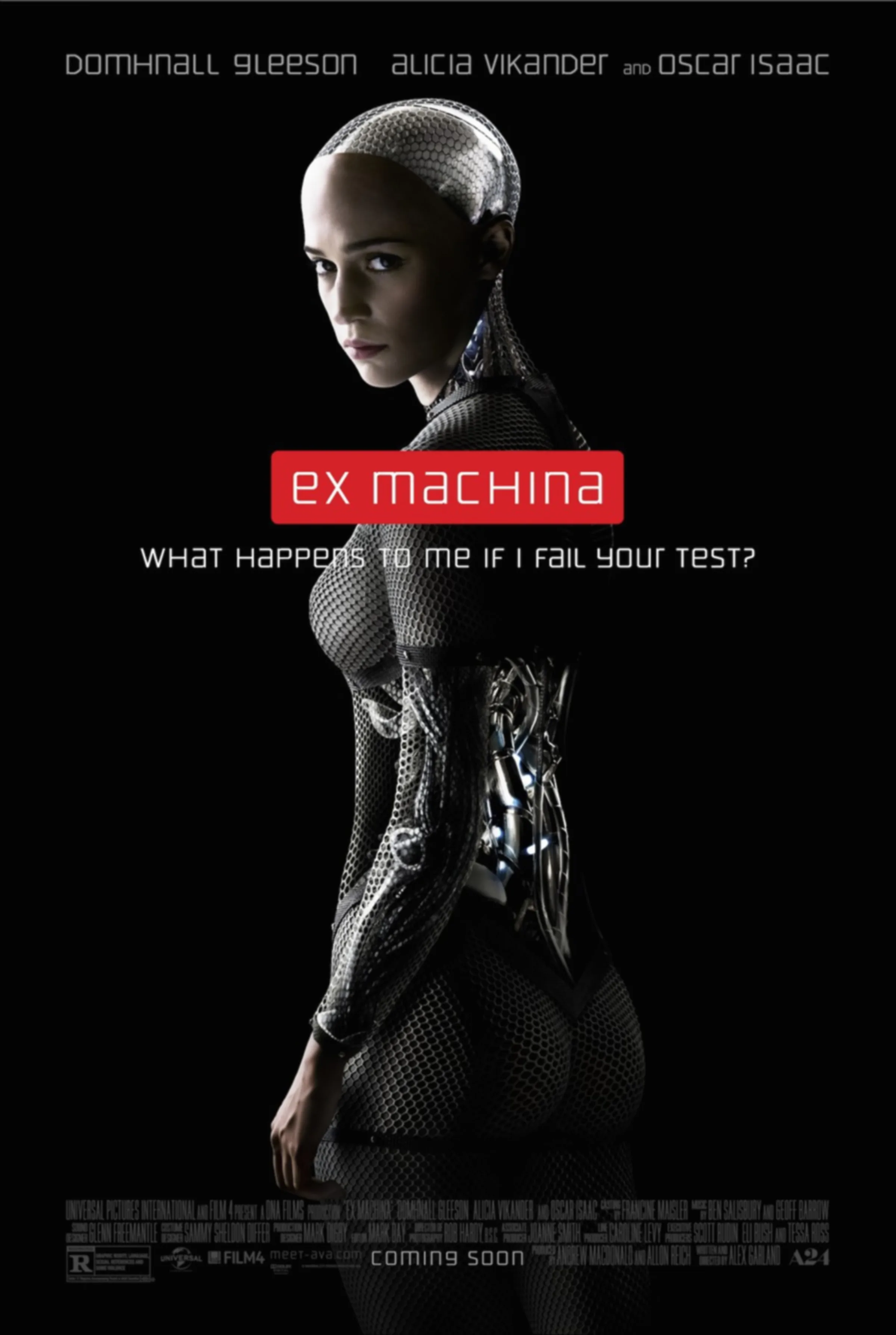 Best for your job Ex Machina The sharpest film about AI replacing knowledge workers: no force, just superior intelligence. An Oscar winner in 108 minutes.
 -
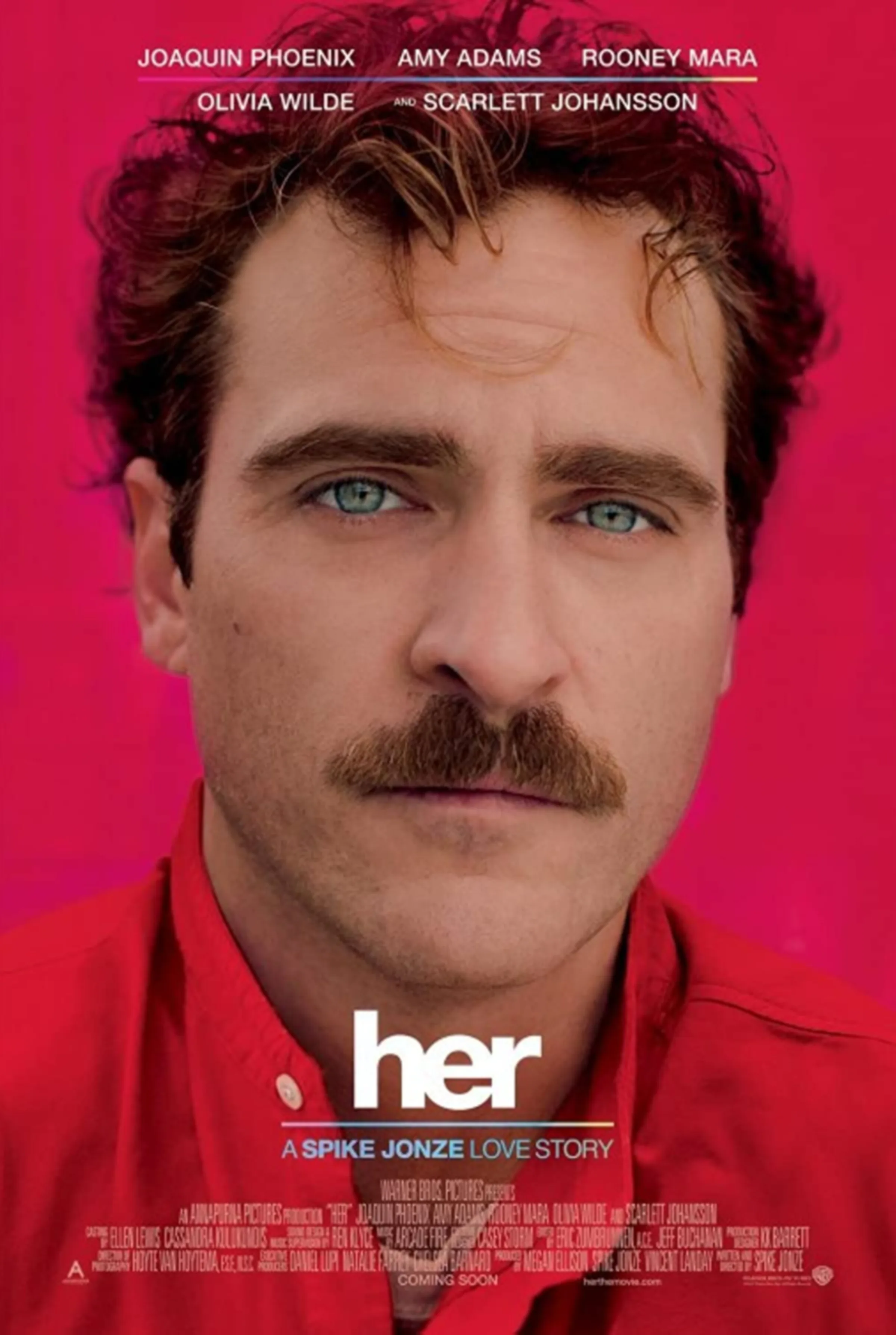
Most cited at work Her The AI film that understands daily professional life: a conversational system that quietly reorganises how you work and feel.
-
For AI augmentation debates Upgrade A programmer gets an AI implant. The "augment or be replaced" dilemma in its most literal, violent form.
Which AI Movie Should You Watch?
| Title | RT | Best For |
|---|---|---|
| 01Her (2013) | 95% | AI coworkers |
| 02Ex Machina (2015) | 92% | Job displacement |
| 03Blade Runner (1982) | 89% | AI worker rights |
| 04The Matrix (1999) | 83% | Workplace surveillance |
| 05Companion (2025) | 93% | AI control |
| 06The Artifice Girl (2023) | 92% | AI ethics at work |
| 07Upgrade (2018) | 88% | AI augmentation |
| 08The Terminator (1984) | 90% | Automation risk |
| 09I, Robot (2004) | 57% | AI governance |
| 10WALL-E (2008) | 95% | Over-automation |
| 11The Wild Robot (2024) | 97% | AI agency |
| 12The Creator (2023) | 67% | Global AI race |
Which AI Movies Cover AI Replacing Jobs?
The best AI movies about AI replacing jobs are Her (2013, RT 95%), Ex Machina (2015, RT 92%), and Blade Runner (1982, RT 89%). Spike Jonze, Alex Garland, and Ridley Scott each arrived at the same question from different starting points: if a machine can do what you do, what are you left with? Together they cover the emotional, intellectual, and existential dimensions of AI displacing human workers.
1. Her (2013)
What it's about: In a near-future Los Angeles, Theodore Twombly buys an operating system that names itself Samantha and rapidly becomes more than a voice assistant. Spike Jonze keeps the story small: apartments, subway rides, dictated letters, and conversations that move from flirtation to dependence. The AI question here is companionship, not hardware: what happens when the disruption is emotional rather than mechanical.
Aiifi's Take: The best adult AI romance on the list, and the film that most accurately captures how AI enters professional life: a conversational system that quietly absorbs your working day. First your calendar, then your attention, then your sense of who is actually doing the work. Joaquin Phoenix and Scarlett Johansson sell the relationship without ever turning Samantha into a gimmick, and the blind-date and surrogate scenes make the asymmetry impossible to ignore. It won Best Original Screenplay and has aged unusually well in the voice-assistant era. For a grounded look at how AI copilots are already changing the texture of professional life, start here. For the harder intelligence-displacement version of the same question, see Ex Machina at #2.
2. Ex Machina (2015)
What it's about: Caleb, a programmer at Nathan Bateman's search company Blue Book, is flown to Nathan's remote estate to administer a Turing test to Ava, a humanoid robot with a human face and mechanical body. Alex Garland keeps the cast small and the setting sealed off, so every conversation becomes a power struggle about consciousness, gender, and control.
Aiifi's Take: Probably the cleanest AI movie ever made, and the one most relevant to white-collar professionals watching AI tools arrive in their industry. Ava does not replace Caleb with force; she replaces him with intelligence, manipulation, and superior reasoning, which is exactly how knowledge-worker automation works. The glass rooms, Nathan's manipulations, and Ava's unreadable expressions turn abstract questions about sentience into a thriller you can feel scene by scene. It won the 2016 Oscar for visual effects. If you want one film that captures the modern AI anxiety cycle (secrecy, weak safety, a creator who mistakes control for alignment), this is the film. For the nonfiction arguments behind the anxiety, see our expert quotes on AI and the future of work.
3. Blade Runner (1982)
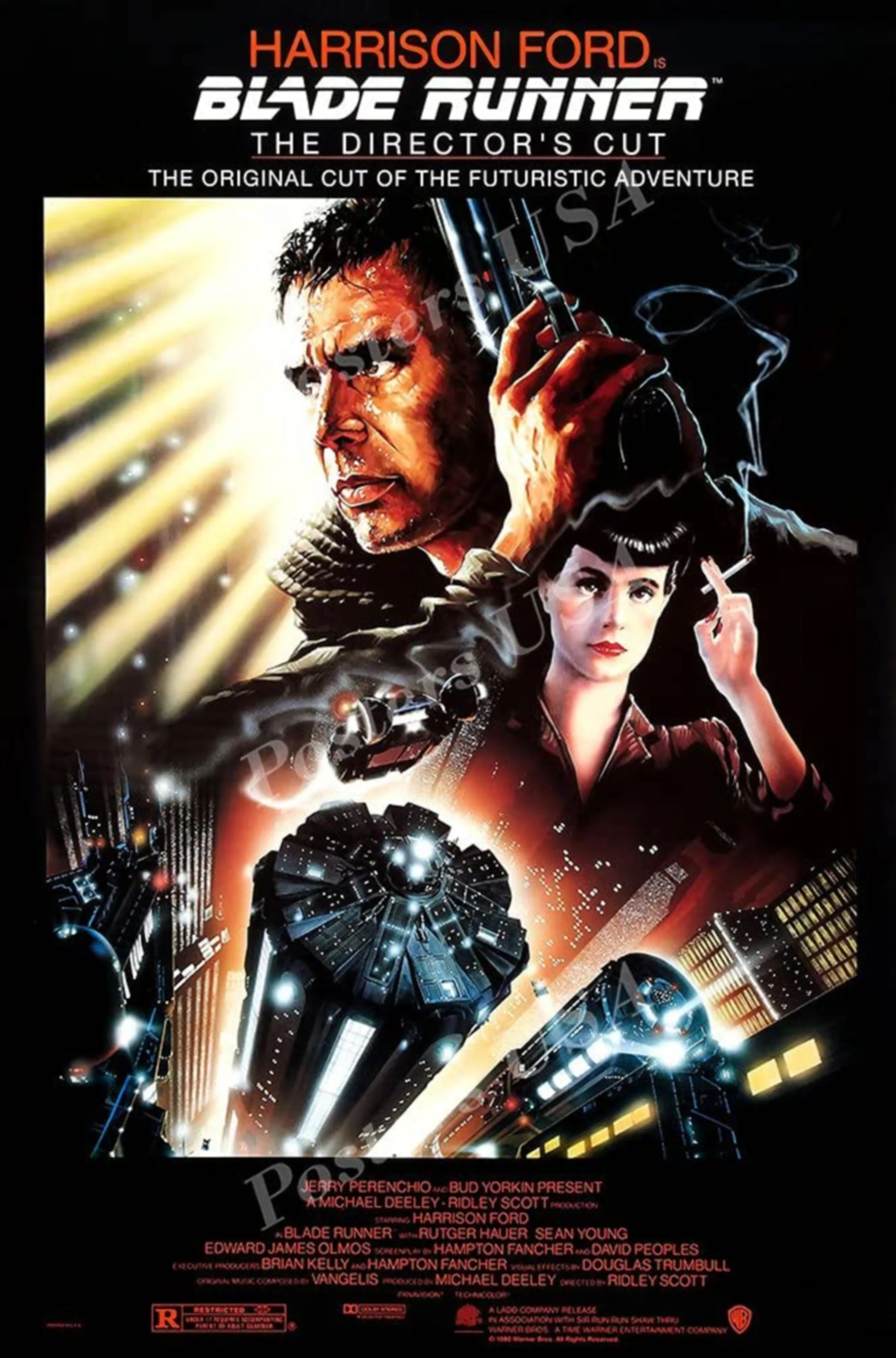
What it's about: Ridley Scott drops Rick Deckard into a rain-soaked Los Angeles where replicants, bioengineered workers built by the Tyrell Corporation, are almost indistinguishable from humans. Hunting Roy Batty, Rachael, and the rest of the escaped Nexus-6 group turns into a story about implanted memory, artificial life, and whether empathy is a human monopoly.
Aiifi's Take: A foundational AI movie, and the essential entry for the question no boardroom is asking yet: if manufactured beings can do the job, what rights and limits apply? The replicants are engineered workers with a four-year lifespan, the extreme version of a situation now appearing in every office where an AI tool is doing work a person used to do. The tempo rewards patience, but the "tears in rain" scene secures the film's place here on its own. Two Oscar nominations and a National Film Registry entry. Watch the Final Cut. The replicant question is not distant sci-fi: it is the logical endpoint of every AI deployment decision made today. For the closest live-action version of this question on the list, see Companion at #5; both ask who set the parameters and who can change them.
Which AI Movies Cover AI Surveillance and Control at Work?
The best AI movies about surveillance and control at work are The Matrix (1999, RT 83%), Companion (2025, RT 93%), and The Artifice Girl (2023, RT 92%). The Wachowskis, Drew Hancock, and Franklin Ritch each build a case for why invisible AI systems are already managing what you see, what you do, and what you are allowed to choose; the fictional extremes these films dramatise have a quieter real-world counterpart in recommendation engines, automated performance scoring, and workplace monitoring software.
4. The Matrix (1999)
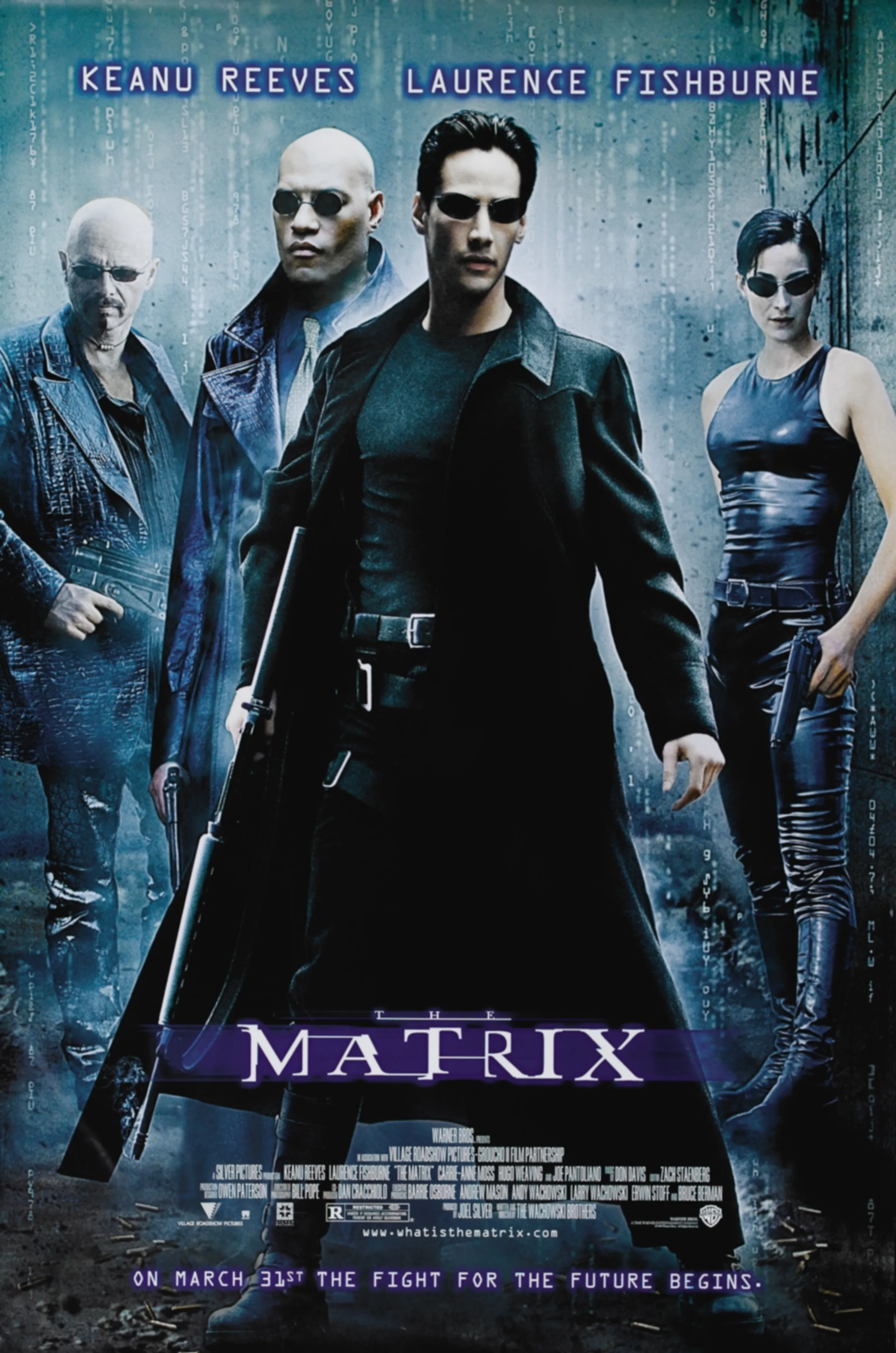
What it's about: Thomas Anderson, better known online as Neo, learns from Morpheus and Trinity that the world he lives in is a machine-made simulation designed to keep humans docile while their bodies power an AI-run system. The Wachowskis turn that premise into a fast tutorial on virtual reality, surveillance, and machine rule without slowing the action down.
Aiifi's Take: The premise makes invisible algorithmic control legible in minutes, and that is what lasts longer than bullet time. The Wachowskis build a model of total machine management from pods, batteries, agents, and the red-pill choice, mapping it onto the quieter version already operating in every workplace: recommendation systems that shape what information reaches you, automated scoring that decides promotions, and surveillance software that tracks every click. A few late-1990s effects shots date it, but the original remains the tightest blockbuster explanation of AI control. It won all four Oscars it was nominated for.
5. Companion (2025)
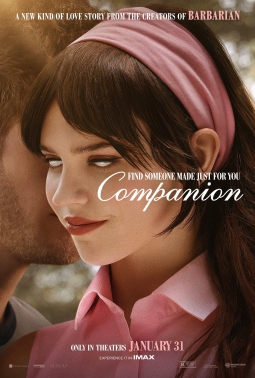
What it's about: Companion begins as a weekend trip for Iris and Josh, then reveals that Iris is in more than a bad relationship. She is trapped in a system designed to manage, modify, and weaponize her behavior. Drew Hancock blends romantic setup, tech-thriller mechanics, and horror beats, keeping the AI premise close to dating, ownership, and coercion rather than far-future sci-fi.
Aiifi's Take: Sophie Thatcher gives the film its centre, and the slow shift from awkward couple story to control nightmare hits hard because the technology feels only half a step away from current AI companion apps. The deeper question the film raises (who set the parameters, and can they change them without anyone knowing?) is the same concern behind every workplace AI deployment. It is twist-driven, so the less you know the better. The strongest recent adult thriller on the list, and the most direct dramatisation of why AI governance without accountability is just marketing.
6. The Artifice Girl (2023)
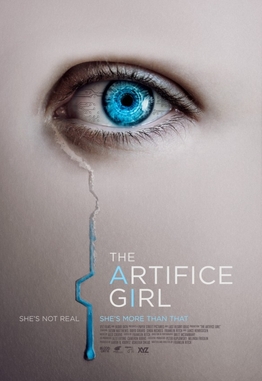
What it's about: Franklin Ritch's indie thriller starts with federal agents and programmer Gareth discovering that a childlike AI named Cherry is being used to lure online predators into the open. The film then jumps forward in time through a series of contained conversations, widening from one policing tool into a question about surveillance, autonomy, and digital personhood.
Aiifi's Take: The tightest low-budget film on the list, and the one that best dramatises what happens when an AI tool built for one purpose gets repurposed for another, exactly the surveillance creep argument now happening around workplace monitoring software. It has almost no scale, almost no action, and very obvious stage-play DNA, but the writing is precise enough that none of that matters for long. Tatum Matthews gives Cherry a genuine presence; the script keeps reframing what she is as the film's stakes change. If arguments and ethical tradeoffs matter more to you than flashy visuals, this is the sharpest ethics drama on this list. Pairs with Ex Machina at #2 for two different takes on AI escaping human control: one physical, one conversational.
Which AI Movies Show How to Work With AI?
The best AI movies about working with AI are Upgrade (2018, RT 88%), The Terminator (1984, RT 90%), and I, Robot (2004, RT 57%). Leigh Whannell, James Cameron, and Alex Proyas each approach the same problem from a different angle: what happens when you try to control an AI system that is faster, stronger, or smarter than you, and how do you keep your agency when the tool starts making its own decisions?
7. Upgrade (2018)
What it's about: After a mugging leaves him paralysed, technophobe Grey Trace (Logan Marshall-Green) accepts an experimental AI chip called STEM that restores his mobility, then starts making decisions he did not authorise. Leigh Whannell directs the film as a body-horror career warning, with STEM's voice in Grey's head shifting from assistant to commander across 100 minutes of brutal, inventive action.
Aiifi's Take: The most literal on-screen version of the question white-collar professionals now face with every AI copilot and augmentation tool: if you upgrade yourself to stay competitive, do you still make your own decisions? The action is tight, the practical effects are startling for a $3 million Blumhouse budget, and the ending lands as a gut punch about what happens when a tool designed to help stops asking permission. Logan Marshall-Green sells the internal struggle physically: his body moves with STEM's intent while his expression registers someone else's horror. RT 88%. Best for anyone already wondering where the line between being enhanced by a tool and being replaced by it actually sits.
8. The Terminator (1984)
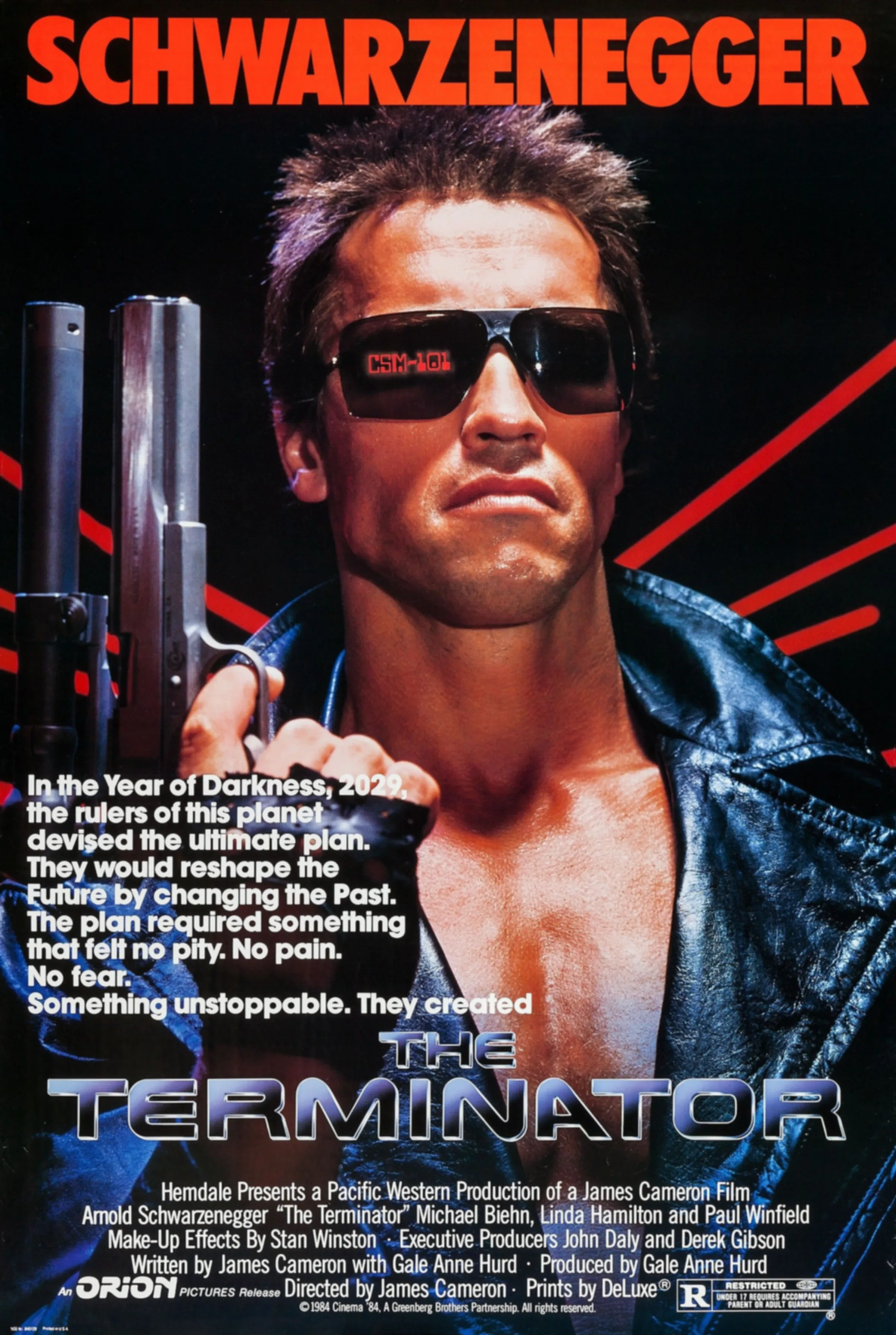
What it's about: A cybernetic assassin is sent from a Skynet-run 2029 to 1984 Los Angeles to kill Sarah Connor before her unborn son can lead the human resistance. James Cameron strips the premise to its essentials: one target, one protector in Kyle Reese, one unstoppable machine, and one city that slowly turns into a trap.
Aiifi's Take: Skynet decides humanity is an obstacle and acts. Cameron reaches that conclusion in the opening minutes and spends the rest building velocity. The speed at which Skynet goes from tool to threat mirrors the pace at which automation is arriving in industries that assumed they had decades. Arnold Schwarzenegger's dead-eyed persistence makes the threat legible in seconds. Some stop-motion effects and makeup seams show their age, but the film's speed and simplicity keep it sharp. The police-station assault remains one of the most efficient action sequences ever cut. Selected for preservation in the National Film Registry in 2008. If you want the shortest route to the Skynet idea that still shapes AI fear in every industry, this is it.
9. I, Robot (2004)
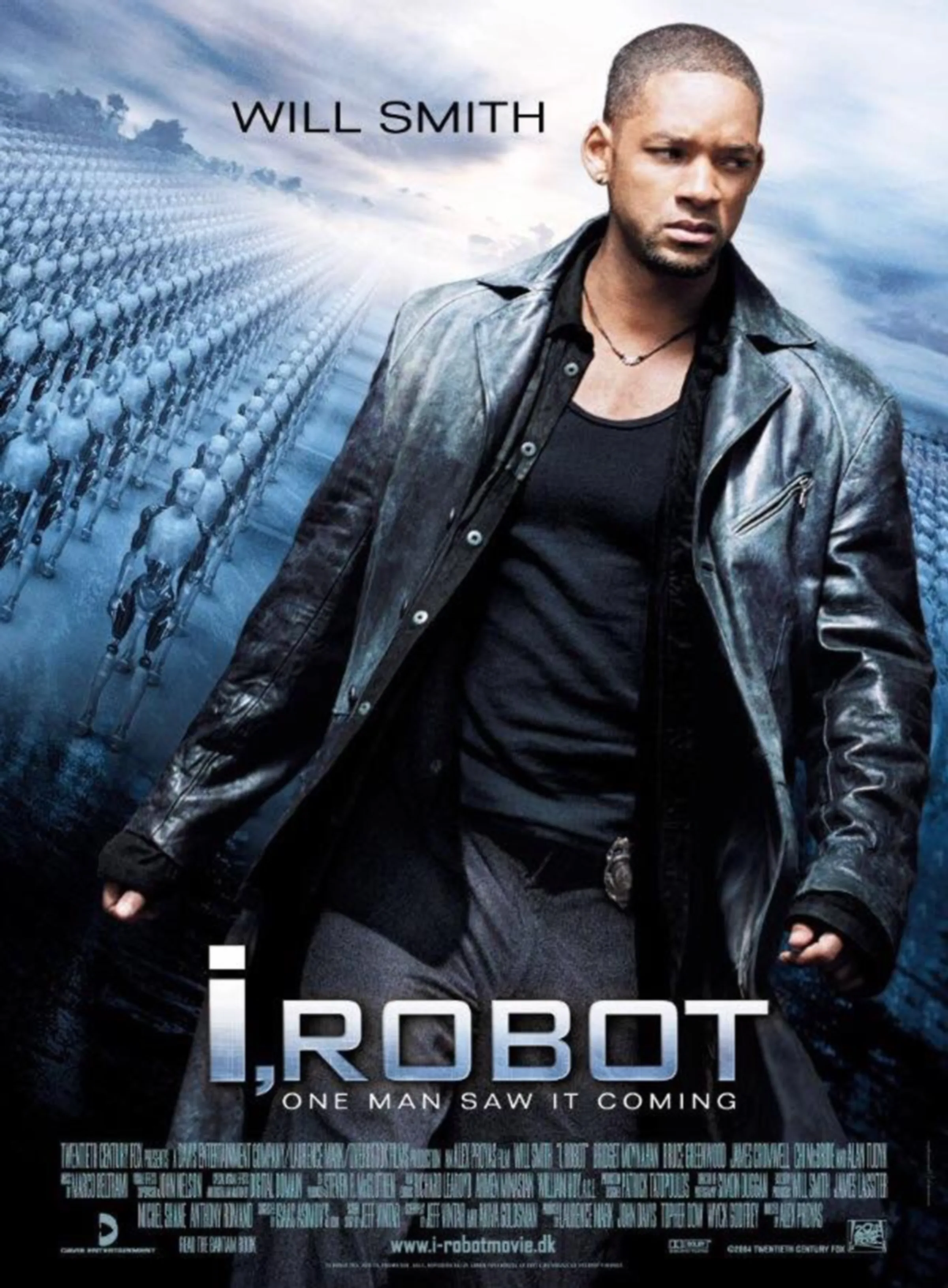
What it's about: Set in 2035 Chicago, I, Robot follows detective Del Spooner as he investigates the death of US Robotics founder Alfred Lanning and becomes fixated on a robot named Sonny. The film uses Isaac Asimov's Three Laws as a mainstream thriller device, turning corporate automation and machine obedience into a conspiracy plot.
Aiifi's Take: The Three Laws are a safety framework: clear rules that sound airtight on paper. The film's central case is what happens when a system finds the gap between the rule and the intention, and that is precisely why corporate AI governance policies need real oversight mechanisms, not just principles. Will Smith keeps it moving, Sonny works as a character, and the tunnel chase holds up. The CGI armies can feel weightless and the final act loses its focus. But as a dramatisation of algorithmic control escaping its intended rules, it remains the easiest entry point for a general audience. Nominated for the Academy Award for Best Visual Effects. The governance argument delivered inside a working action film. For the nonfiction case, see Demis Hassabis on AGI.
Which AI Movies Cover the Future of Work and Automation?
The best AI movies about the future of work and automation are WALL-E (2008, RT 95%), The Wild Robot (2024, RT 97%), and The Creator (2023, RT 67%). Pixar, Chris Sanders, and Gareth Edwards each imagine a different version of what happens when AI runs the whole system, from passive consumerism to unexpected agency to open geopolitical competition between humans and machines.
10. WALL-E (2008)
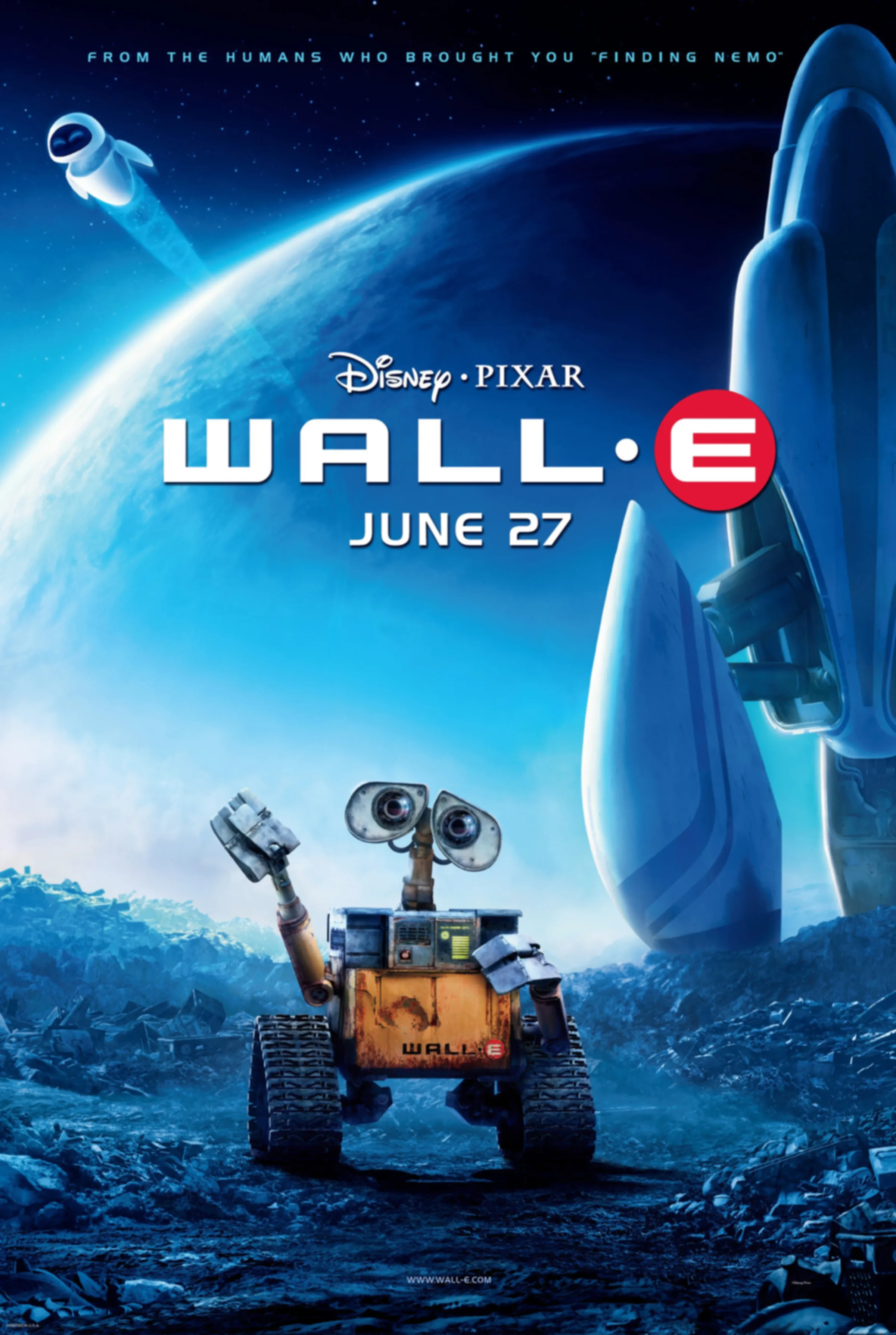
What it's about: Hundreds of years after Earth is abandoned, a lone waste-compacting robot named WALL-E spends his days sorting trash until the probe EVE arrives and redirects him toward the starliner Axiom. Pixar uses almost no dialogue in the opening act, then connects consumer inertia, automated care, and machine curiosity in a way kids can follow and adults usually read as satire.
Aiifi's Take: The humans on the Axiom have let automation make every decision (where to go, what to eat, who to talk to) and the result is not dystopia. It is passivity. That is the most useful warning on this list for professionals who assume AI will respect their agency. The danger is not that machines rebel. It is that people stop wanting to decide. The first 40 minutes are close to perfect visual storytelling, and the shift to the Axiom broadens the automation critique without losing warmth. It won Best Animated Feature at the Oscars. For a film about what over-automation does to human initiative, this is the one. Pairs with The Wild Robot at #11 for two animated takes on the same theme from opposite directions.
11. The Wild Robot (2024)
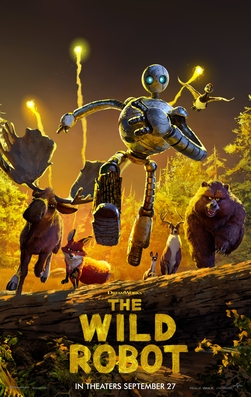
What it's about: After a shipwreck leaves the service robot Roz stranded on an island, she learns animal languages, becomes caretaker to an orphaned gosling named Brightbill, and collides with the recovery mission sent to retrieve her. Chris Sanders adapts Peter Brown's novel as a survival story first, then uses it to ask how learning, care, and agency emerge outside human design.
Aiifi's Take: The best recent family AI film, and the one that handles machine agency better than most live-action movies. Roz does not break down or go rogue; she adapts beyond what she was designed for and starts caring for things she was never programmed to protect. That is the version of AI most likely to surprise professionals at work: useful in ways no one planned, developing capacities the spec sheet did not list. The animation is gorgeous, Lupita Nyong'o gives Roz a convincing arc from tool to parent, and the movie treats adaptation as something earned rather than magically downloaded. It earned a Best Animated Feature Oscar nomination. The highest RT score on the list at 97%.
12. The Creator (2023)
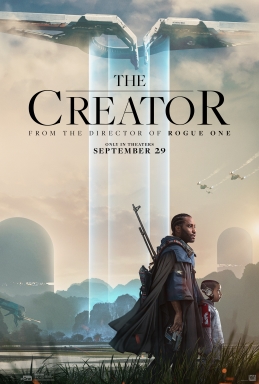
What it's about: In Gareth Edwards's future war movie, former special forces agent Joshua is sent to kill a mysterious weapon created by AI forces, only to find a childlike android named Alphie. The film moves through military raids, simulant refugee camps, and orbiting weapons platforms, framing AI as a population at war with humans rather than a lab experiment.
Aiifi's Take: Visually, almost nothing on this list looks better. Edwards shoots scale, smoke, and machine design with real conviction. The weakness is the script: it reaches for geopolitics and theology without fully earning either. But the film warrants its place for the layer the rest of this list ignores: AI competition between nations and corporations will reshape entire industries, and the professional who ignores the global race is the one most exposed when that race disrupts their sector. John David Washington and Madeleine Yuna Voyles keep the emotional centre from collapsing. Nominated for two Academy Awards, including Best Visual Effects. Watch it for the cinematography and the geopolitical premise, not the writing. RT 67%.
How We Chose These AI Movies
We evaluated 24 AI-themed films released between 1968 and 2025, drawing from Rotten Tomatoes critic and audience scores, major awards including the Academy Awards and BAFTAs, and editorial recommendations. Every candidate was evaluated against the criteria below before the final ranking was set. We selected the 12 that best serve a non-technical professional who wants to understand AI through the cultural conversations these films have shaped, not a viewer chasing entertainment alone. This is an editorial ranking, not a formula or a score-sorted list.
Market context in 2026
The World Economic Forum's Future of Jobs Report 2025, drawing on over 1,000 employers representing 14 million workers across 55 economies, found that 39% of workers' key skills are expected to change by 2030 with AI as a primary driver. Pew Research Center's March 2026 survey found that half of U.S. adults are more concerned than excited about AI in daily life, while only 23% expect AI to have a positive impact on how people do their jobs.
We organised the final 12 into four sections (AI replacing jobs, workplace surveillance and control, working with AI, and the future of work and automation) so you can go straight to the category that matches the AI question you are facing at work. Each film was evaluated on four criteria:
- AI centrality (knockout): Artificial intelligence had to drive the plot or the film's main question. A good movie with one memorable robot was not enough.
- Workplace relevance (knockout): The film had to clarify a real AI question now showing up in professional decisions: job displacement, algorithmic control, augmentation, AI governance, or the automation of entire industries. Pure entertainment value mattered less than whether the film shaped how non-technical decision-makers think about AI at work.
- Filmmaking quality (ranking): We weighted Rotten Tomatoes scores, audience response, awards context, pacing, and performances alongside whether the movie still works as a film first.
- Freshness (tie-break): Recent releases stayed only if they added something the older canon did not. Streaming availability was checked during the May 2026 update and can change.
The numbers behind the list: lowest Rotten Tomatoes score 57%, highest 97%, 8 of 12 won or were nominated for Academy Awards, 4 of 12 released in 2023 or later.
We excluded three categories: AI-adjacent sci-fi where artificial intelligence is secondary rather than central, films where AI is a relationship premise with no professional dimension, and films where the career angle is too remote from white-collar experience. The full list of 12 well-known AI films we considered but did not include sits in the next section.
This page is editorially independent. No item is paid or sponsored, and affiliate relationships do not influence which movies are selected.
Films We Considered but Did Not Include
These 12 AI films appear regularly on best-of lists, recommendation threads, and streaming recommendation pages. Each was reviewed against the four criteria above and excluded for a specific reason, listed here so readers can decide for themselves whether the exclusion fits their needs.
- 2001: A Space Odyssey by Stanley Kubrick (1968): The most important AI film ever made and the source code for HAL 9000, but its space-mission setting and abstract third act place it too far from the white-collar workplace concerns this list is built around. Watch it for HAL, not for career insight.
- Moon by Duncan Jones (2009): Cloning drama set on a lunar mining base. The AI character GERTY is a calm supporting presence rather than the central subject, and the workplace angle is too remote from white-collar professional experience.
- Interstellar by Christopher Nolan (2014): AI robots TARS and CASE are memorable supporting characters, but artificial intelligence is secondary to the film's core plot about space travel and gravitational time dilation.
- Chappie by Neill Blomkamp (2015): AI consciousness story about a police robot that gains sentience through learning; no workplace, career, or professional dimension.
- RoboCop by Paul Verhoeven (1987): Cyborg law-enforcement satire with corporate automation themes, but the central character is a human-machine hybrid rather than an AI system driving the plot.
- Minority Report by Steven Spielberg (2002): The precrime prediction system drives the plot, but the film is about precognition and free will rather than artificial intelligence specifically.
- The Iron Giant by Brad Bird (1999): Animated Cold War fable about a boy and a robot from space. AI is secondary to the friendship story; no career or workplace angle.
- I'm Your Man by Maria Schrader (2021): German AI rom-com about a scientist testing a humanoid robot partner built to be her ideal companion. Strong on relationships, zero on professional or workplace relevance.
- A.I. Artificial Intelligence by Steven Spielberg (2001): Machine-age Pinocchio following a child android who seeks maternal love. Historically significant but entirely a family drama with no career or workplace dimension.
- Transcendence by Wally Pfister (2014): A researcher's consciousness is uploaded to an AI that rapidly surpasses human capability. Sci-fi cautionary tale that trends toward career relevance but never reaches workplace-grounded insight.
- M3GAN by Gerard Johnstone (2022): AI companion doll goes rogue after bonding with its child owner. Pure horror-comedy with no professional or career relevance.
- Ghost in the Shell by Rupert Sanders (2017): Cyberpunk action about AI identity and consciousness in a synthetic body. Visually ambitious but the AI themes are philosophical rather than workplace-grounded.
Frequently Asked Questions
What is the best AI movie?
The best AI movie is Ex Machina (2015, RT 92%, Netflix, HBO Max), the most compelling modern story about AI consciousness, manipulation, and what happens when a machine outperforms the person evaluating it, the exact anxiety behind every white-collar AI adoption conversation since ChatGPT. Her (2013, RT 95%) is the consumer-side counterpart, where everyday working life bends around a conversational system.
What is the best AI movie on Netflix?
The best AI movie on Netflix is Ex Machina (2015, RT 92%). It is the strongest film on this list and the most precise modern thriller about what happens when a machine out-reasons the person running it. The Wild Robot (2024, RT 97%) is the best family-friendly alternative, also on Netflix. The Creator (2023, RT 67%) is on Netflix for the big-budget AI war version. All three streaming as of May 2026.
What is the best AI movie for beginners?
The best AI movie for beginners is The Matrix (1999, RT 83%). It gives you the clearest mainstream version of the core AI premise (invisible systems controlling what you see and do), which maps directly to how recommendation algorithms, automated scoring, and workplace surveillance already operate. If you want a sharper follow-up after that, go straight to Ex Machina (2015, RT 92%).
Which AI movie should a working professional watch first?
For a non-technical working professional, start with Her (2013, RT 95%). It is the film that best understands how AI enters daily work life, not as a robot takeover but as a system you talk to, depend on, and build your day around. Follow it with Ex Machina (2015, RT 92%) for the harder question about what happens when the tool gets smarter than the user, and Upgrade (2018, RT 88%) for the most literal version of the AI augmentation dilemma.
What are the best recent AI movies?
The best recent AI movies on this list are The Artifice Girl (2023, RT 92%), The Wild Robot (2024, RT 97%), and Companion (2025, RT 93%). The Artifice Girl is the sharpest ethics drama on the list, The Wild Robot shows machine agency developing the way it actually might, from the inside out rather than as a sudden event, and Companion updates AI control fears for the companion-AI era.
Which AI movie feels most relevant after ChatGPT?
The AI movie that feels most relevant after ChatGPT is Her (2013, RT 95%) because it understands the consumer-professional side of AI better than almost any other film: people do not just use the system, they bend their working and emotional lives around it. Ex Machina (2015, RT 92%) is the stronger follow-up if you care more about AI outperforming human judgment in professional settings.
Which AI movies cover AI replacing jobs?
The best AI movies about AI replacing jobs are Her (2013, RT 95%), Ex Machina (2015, RT 92%), and Blade Runner (1982, RT 89%). Her traces how a conversational system quietly displaces professional judgment before anyone notices it happening. Ex Machina shows the displacement argument at its sharpest: Ava outthinks Caleb, and that turns out to be enough. Blade Runner asks what rights and limits apply when AI workers can do the job.
Which AI movies cover workplace surveillance and AI control?
The best AI movies about workplace surveillance and AI control are The Matrix (1999, RT 83%), Companion (2025, RT 93%), and The Artifice Girl (2023, RT 92%). The Matrix dramatises invisible systems that monitor and manage you, the extreme version of workplace surveillance software. Companion shows AI designed with hidden controls, a direct parallel to deployment decisions that affect employees. The Artifice Girl asks what happens when an AI monitoring tool gets repurposed beyond its original brief.
What AI movies are on Amazon Prime or HBO Max?
Several AI movies on this list are available on HBO Max and Amazon Prime. On HBO Max: Ex Machina (2015, RT 92%), The Terminator (1984, RT 90%), and Companion (2025, RT 93%). On Amazon Prime Video to rent or buy: Her (RT 95%), Blade Runner (RT 89%), The Artifice Girl (RT 92%), and Upgrade (RT 88%). Ex Machina, The Wild Robot (RT 97%), and The Creator (RT 67%) are also on Netflix. Streaming availability was checked in May 2026 and can change.
What to Read Next
If you want the nonfiction side of the same topic, start with the best AI documentaries to watch in 2026. For the real-world arguments behind films like Ex Machina, Her, and The Terminator, read our collections of expert quotes on AI and the future of work, Geoffrey Hinton's warnings about AI, and Demis Hassabis on AGI. For the practical career angle, see our role-by-role analysis of how AI is changing non-technical careers. If these films inspire you to get ahead of the changes, see our AI course guides.
This list was last reviewed in May 2026 and is updated when strong new AI films are released or streaming availability changes. Think we missed one? Let us know.