Quick Picks
-
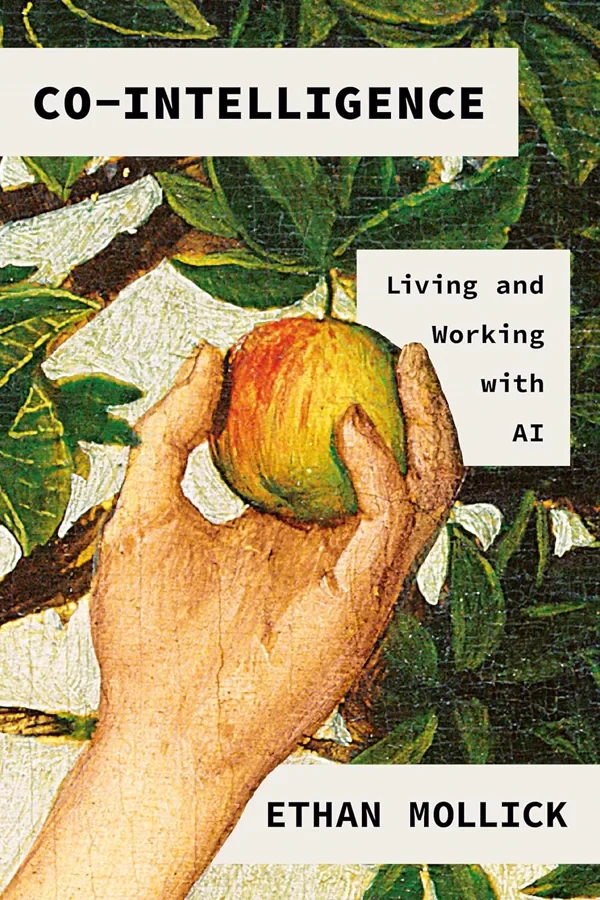 Best overall Co-Intelligence Best first read: a Wharton-tested way to treat ChatGPT as a coworker you verify, not an oracle.
 -
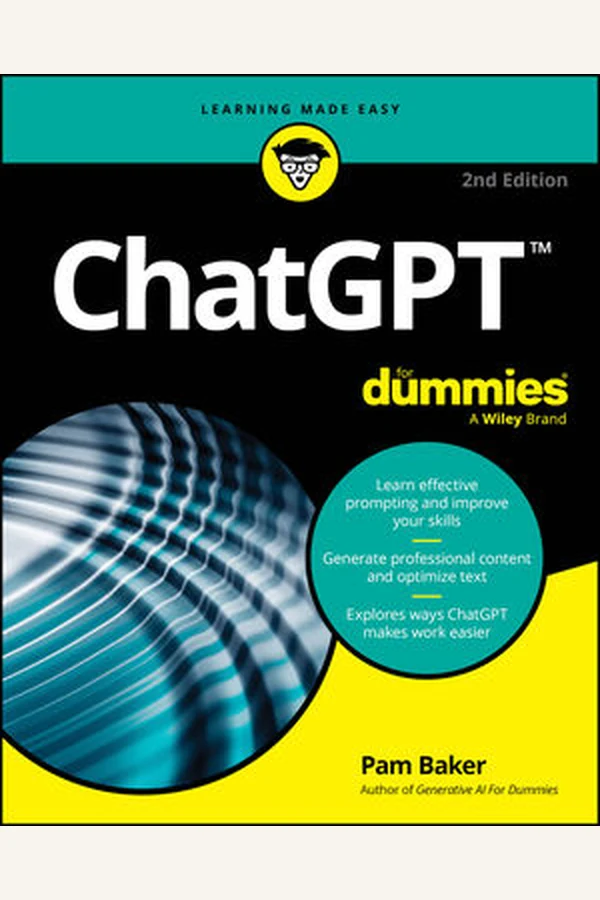
Best beginner manual ChatGPT For Dummies Strongest product guide: models, prompts, images, voice, and fact-checking without developer documentation.
-
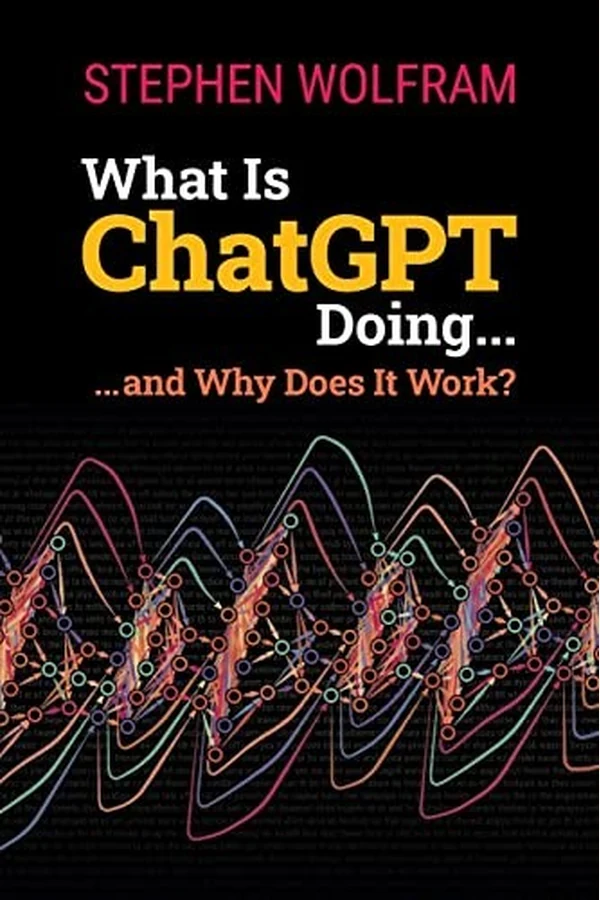
Best short explainer What Is ChatGPT Doing? Shortest serious explainer: 112 pages connecting next-word prediction, neural networks, and why fluent answers can still be wrong.
Which ChatGPT Book Should You Read First?
The best ChatGPT book to read first is Co-Intelligence by Ethan Mollick. Eleven of the 12 picks were published in 2024 or 2025. The table uses Level labels because several recent ChatGPT and LLM books have too few public ratings to be useful.
| Title | Level | Best For | Length (pages) |
|---|---|---|---|
| 01Co-Intelligence (2024) | Beginner | Workplace use | 256 |
| 02ChatGPT For Dummies (2025) | Beginner | Product basics | 352 |
| 03What Is ChatGPT Doing? (2023) | Beginner | LLM intuition | 112 |
| 04The ChatGPT Revolution (2024) | Beginner | Daily workflows | 288 |
| 05Writing AI Prompts For Dummies (2024) | Beginner | Prompt writing | 288 |
| 06Prompt Engineering for Generative AI (2024) | Intermediate | Prompt systems | 422 |
| 07Generative AI For Dummies (2024) | Beginner | GenAI basics | 304 |
| 08How Large Language Models Work (2025) | Intermediate | LLM mechanics | 200 |
| 09AI Snake Oil (2024) | Beginner | Hype detection | 360 |
| 10Empire of AI (2025) | Intermediate | OpenAI culture | 496 |
| 11Supremacy (2024) | Beginner | AI race | 336 |
| 12The Optimist (2025) | Beginner | Sam Altman profile | 384 |
What Are the Best ChatGPT Books?
The strongest three are Co-Intelligence by Ethan Mollick, ChatGPT For Dummies by Pam Baker, and What Is ChatGPT Doing ... and Why Does It Work? by Stephen Wolfram. Mollick changes how you treat AI at work; Baker walks you through the interface; Wolfram explains why next-word prediction produces fluent answers at all. Read Mollick first when judgment matters more than features.
1. Co-Intelligence: Living and Working with AI (2024)
Co-Intelligence is the best ChatGPT book for most readers because Ethan Mollick, the Ralph J. Roberts Distinguished Faculty Scholar at Wharton and co-director of the Generative AI Labs there, treats AI as a new kind of coworker, not a database or a search engine. The book asks readers to test ChatGPT inside actual tasks: planning, drafting, analysis, teaching, and creative exploration. Its strongest chapters show how AI changes a workflow before it changes a job title.
The book's durable contribution is Mollick's four operating rules for working with AI: invite it to the table, be the human in the loop, treat it like a person, and assume today's AI is the worst version you will use. Those rules are memorable because they become behavior. They tell a manager when to ask for options, when to verify a factual claim, when to use role-play, and when to step back because ChatGPT is smoothing over uncertainty.
Andrew Hill, Financial Times, 2024"A sharp and good-humoured guide to how to make the most of generative AI."
Compared with ChatGPT For Dummies at #2, Co-Intelligence is less of a screen-by-screen manual and more of a judgment book. Compared with What Is ChatGPT Doing? at #3, it spends less time on neural-network mechanics and more time on how people should collaborate with systems that can draft, summarize, tutor, invent, and hallucinate. That makes it the better first read for office professionals, though it will not teach every feature in the ChatGPT interface. The advice ages slower than the interface does.
Read this first if you are a manager, consultant, marketer, lawyer, accountant, or analyst deciding where ChatGPT belongs in meetings, documents, research, and client work. It also suits senior leaders writing internal AI policy, because the advice is about behavior, not software tricks. The book is a New York Times bestseller and was named a Best Book of the Year by The Economist and the Financial Times. Pick #2 instead if your immediate goal is learning the ChatGPT interface, account settings, model choices, and basic prompt patterns before thinking about broader work design.
2. ChatGPT For Dummies, 2nd Edition (2025)
What it's about: A plain-English ChatGPT product manual for nontechnical readers, Pam Baker's second edition covers account setup, model choices, prompting basics, advanced prompting, content engineering, writing, images, audio, video, workplace use cases, education, and fact-checking without sending readers into developer documentation.
Aiifi's Take: Choose Baker when the immediate problem is confidence with the interface itself. The second edition accounts for newer ChatGPT features, including multimodal inputs and the model choices users now face. Experienced users will skim the opening chapters, but it is the easiest book here to hand to a colleague who keeps asking what ChatGPT can actually do.
3. What Is ChatGPT Doing ... and Why Does It Work? (2023)
What it's about: Stephen Wolfram, the founder of Wolfram Research and creator of Mathematica and Wolfram|Alpha, walks through next-word prediction, models, neural networks, embeddings, training, semantic space, and the relationship between ChatGPT and Wolfram|Alpha. It is one of the few short books that says how the system works without turning into a textbook.
Aiifi's Take: Wolfram is best when you want the "why does this work at all?" answer before touching a technical book. The prose can drift into Wolfram's broader computational worldview, and it is less current on product features than the 2025 books, but the central explanation still holds up: ChatGPT is powerful because statistical structure in language is richer than most people expected. It pairs naturally with Co-Intelligence: Mollick teaches the working stance, Wolfram supplies the underlying intuition.
Which ChatGPT Books Are Best for Prompting and Everyday Work?
The best ChatGPT books for prompting and everyday work are The ChatGPT Revolution, Writing AI Prompts For Dummies, and Prompt Engineering for Generative AI. This section leans on mainstream publishing from Wiley and O'Reilly instead of thin prompt collections. It moves from ready-to-use office examples toward repeatable prompt design.
4. The ChatGPT Revolution, 2nd Edition (2024)
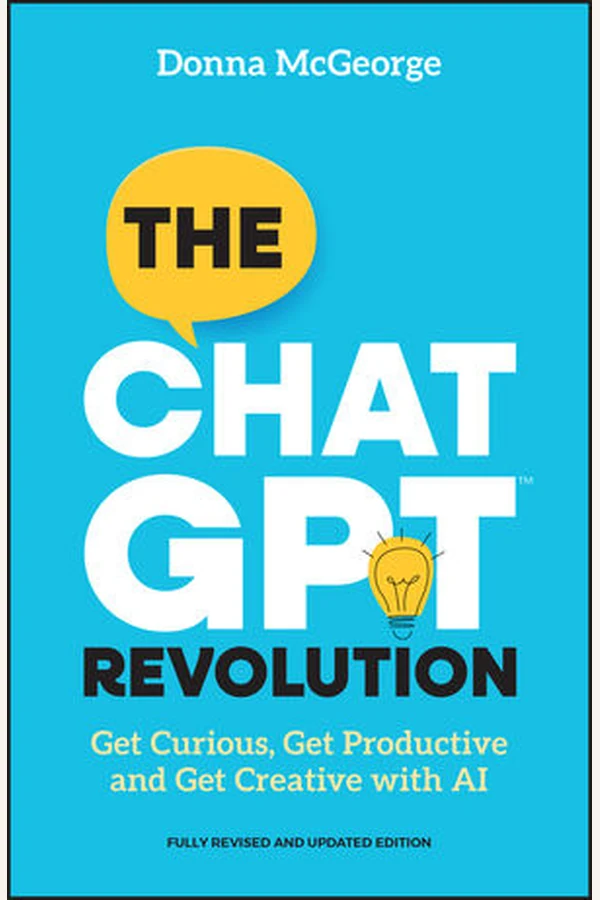
The second edition's argument is that ChatGPT belongs in the small admin frictions of a working week, not just the headline tasks. Donna McGeorge, the Australian productivity author behind The 25 Minute Meeting and The First 2 Hours, writes from a time-management background and treats AI as a tool for inbox cleanup, meeting prep, decision drafts, and creative blocks. The 288-page Wiley volume runs through paid-versus-free tool choices, prompt basics, creative writing, planning, and everyday personal use, with the second edition adding Copilot, DALL-E-style image tools, and mobile voice features that the original predated.
The book earns its place on this list because of how it sequences habit-building. McGeorge structures the chapters around concrete weekly scenarios (email triage on Monday, board paper drafting mid-week, reflective writing on Friday) rather than feature inventories, which is the closest any book here gets to the "what do I actually do with this on a Tuesday morning" question. Wiley released the 2nd Edition in May 2024 specifically to update the AI tool coverage; McGeorge's own consultancy work with corporate productivity programs anchors the examples in real workplace constraints, not hypothetical ones.
Compared with Writing AI Prompts For Dummies at #5, this book stays closer to the everyday workflow and reads less like a prompt vocabulary manual. Diamond and Allan are stronger on transferable prompt structure across tools; McGeorge is stronger on the specific moments in an executive's week where ChatGPT pays off fastest. Compared with Prompt Engineering for Generative AI at #6, this is the easier read by a wide margin: Phoenix and Taylor build a methodical operating system, while McGeorge writes a coach's playbook for the busy reader who wants today's wins.
Read this first if you are a manager, executive, or team lead who wants ChatGPT in your weekly routine without committing to a methodology book. Pick entry #5 instead if you need a transferable prompting vocabulary you can carry between ChatGPT, Gemini, and Claude. Pick entry #6 if your prompt work is starting to drift toward systems and repeatability rather than one-off tasks.
5. Writing AI Prompts For Dummies (2024)
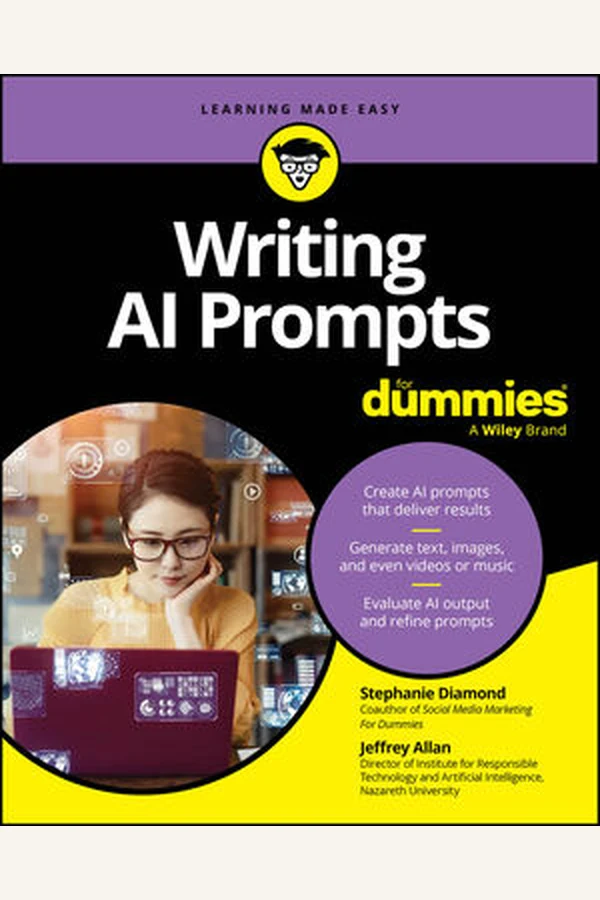
What it's about: Four output formats shape this Wiley prompt book: text, images, audio, and video. Stephanie Diamond and Jeffrey Allan start with generative AI basics, then move into prompt elements, refinement, evaluation, and career uses across ChatGPT, Gemini, Claude, and creative tools. The ChatGPT value is the transferable vocabulary: role, task, context, format, constraints, and revision.
Aiifi's Take: Editorial standards and coverage of multiple platforms make this safer than the flood of self-published ChatGPT prompt books. The tradeoff is that it is not ChatGPT-only, and some examples will feel basic to heavy users. It fits marketers, educators, administrators, consultants, and managers who want a reusable prompting vocabulary they can apply across tools.
6. Prompt Engineering for Generative AI: Future-Proof Inputs for Reliable AI Outputs (2024)
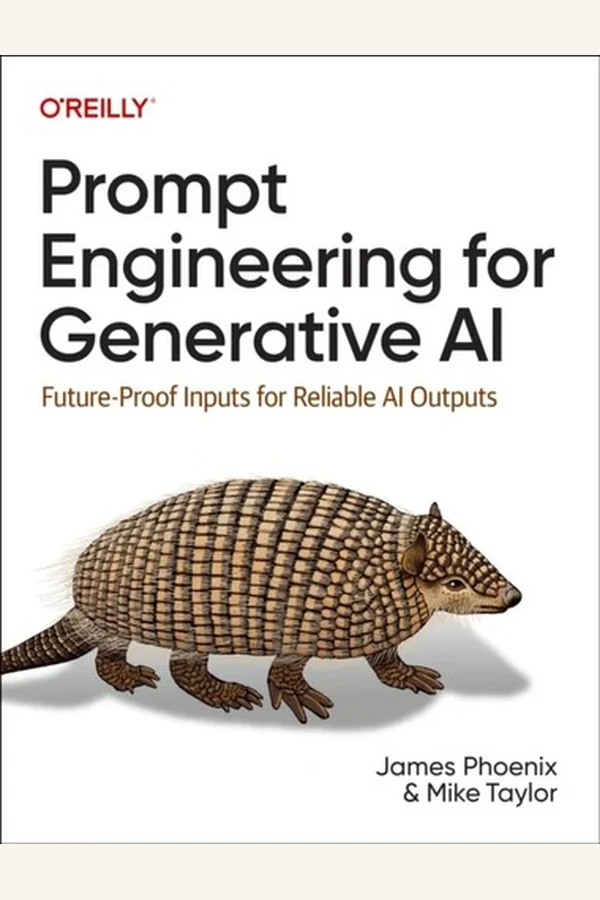
What it's about: Five prompting principles anchor James Phoenix and Mike Taylor's O'Reilly guide: give direction, specify format, provide examples, evaluate quality, and divide labor. The book then covers text generation, model comparison, code, image generation, Stable Diffusion, Midjourney, and the techniques that make AI outputs repeatable across runs. For ChatGPT users, the early chapters are the useful core; later chapters widen the lens.
Aiifi's Take: Phoenix and Taylor offer the clearest bridge from casual ChatGPT use to repeatable prompt work. The image and developer chapters are heavier than a general business reader needs, but the early principles are the most useful framework in any non-academic book here. The five-principles framework alone justifies the book for ChatGPT users who keep getting inconsistent outputs.
Which Books Explain ChatGPT, GenAI, and LLM Limits?
The best books for understanding ChatGPT's wider GenAI and LLM limits are Generative AI For Dummies, How Large Language Models Work, and AI Snake Oil. They pair a beginner's overview with a plain-English mechanics book and a Princeton critique of weak AI claims. Use this section when you know ChatGPT can help but need clearer boundaries.
7. Generative AI For Dummies (2024)
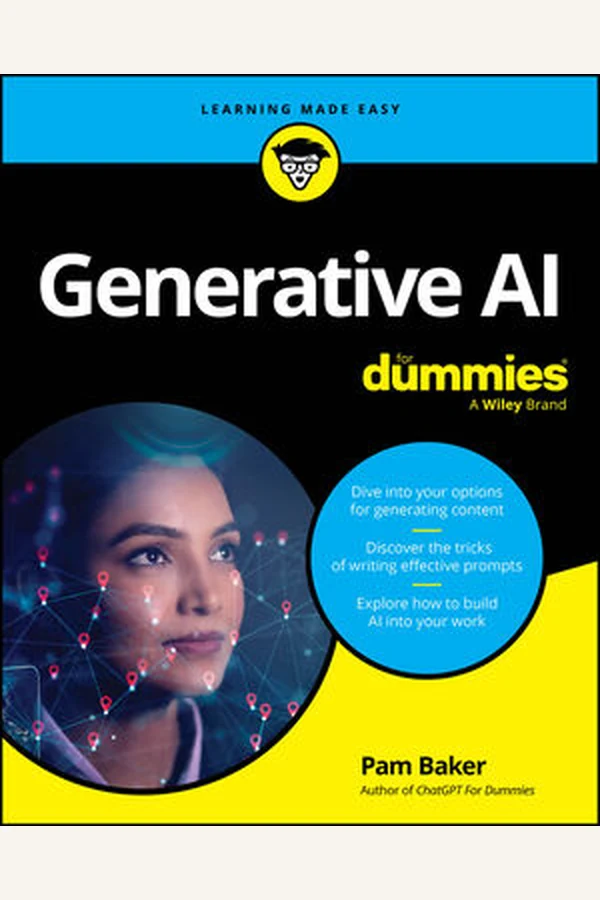
Pam Baker's argument is that ChatGPT is one entry point in a generative AI toolkit that includes image, audio, and video models, and that knowing which tool fits which job matters more than mastering any one interface. The 304-page Wiley volume covers platform selection, prompt writing, AI-generated content, research help, creative uses, and the quirks that make GenAI output need review. Baker, a National Press Club member with bylines in The New York Times, CIO, NetworkWorld, and ComputerWorld, treats hallucination, copyright risk, and responsible-use trade-offs as practitioner work, not footnotes.
The book's strongest sections are the ones that name the habits that trip up beginners. Baker is direct about overtrust (treating GenAI output as fact-checked), vague instructions (the most common cause of weak responses), and the failure mode where users keep prompting the same model that just gave them a wrong answer. Where most generalist AI books gesture at "responsible use," Baker walks through specific decisions: when image generation crosses a copyright line, when AI-written content needs disclosure, when a research summary needs source verification. Wiley released the title in March 2024 as part of the broader For Dummies AI series rebuild that also produced ChatGPT For Dummies and Writing AI Prompts For Dummies.
Compared with How Large Language Models Work at #8, Baker stays at the practical-application layer where Raff, Farris, and Biderman work the mechanics layer; pair the two for a useful split between "what these tools do" and "why they behave the way they do." Compared with AI Snake Oil at #9, Baker is less skeptical and less academic: Narayanan and Kapoor sort generative from predictive AI, while Baker assumes you have already decided to use generative tools and want help choosing among them. The overlap with ChatGPT For Dummies at #2 is real, so reading both is redundant unless you specifically need the multi-tool GenAI map.
Read this first if you are a marketer, content lead, knowledge worker, or office team standardizing GenAI use across writing, design, research, and media tasks. Pick entry #2 instead if your need is ChatGPT-only and you want the deepest interface coverage. Pick entry #8 if your role touches AI policy, accuracy review, or risk and you need to think clearly about why these systems fail before deciding how to deploy them.
8. How Large Language Models Work (2025)
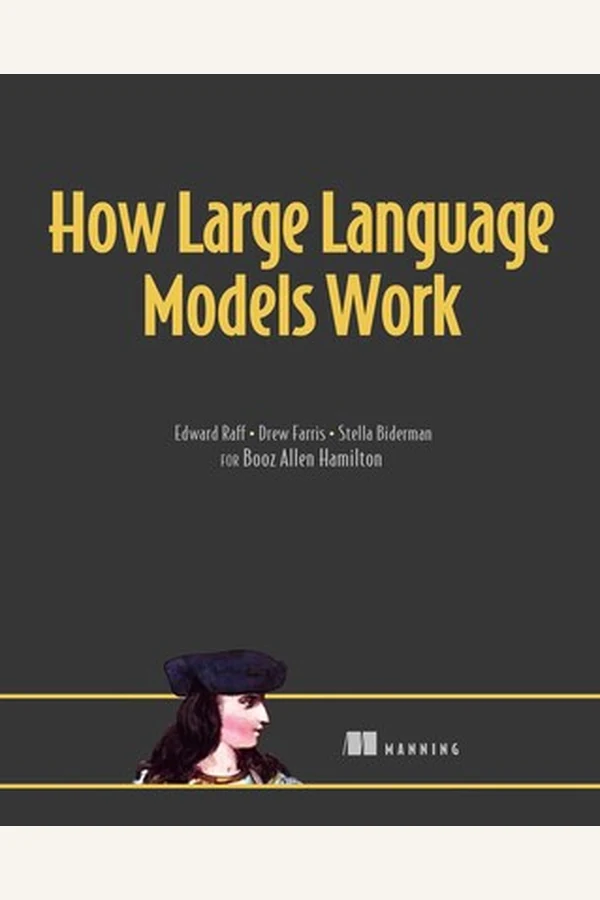
What it's about: Ten LLM concepts anchor this Manning title: tokenizers, transformers, training, fine-tuning, reinforcement learning from human feedback, retrieval-augmented generation, common misconceptions, human-computer interaction, automation bias, and ethics. The emphasis is concepts rather than code, written for readers without a machine-learning background, so nontechnical teams can use it to discuss risk.
Aiifi's Take: Business readers get more from this than from most technical LLM books because it starts with what ChatGPT is doing, then builds toward risk and solution design. The payoff lands for readers who want to think clearly about workflows and human review at work, with less to offer the reader hunting for prompt tricks. The book makes ChatGPT's failure modes legible, and once you see the patterns, you can design around them.
9. AI Snake Oil: What Artificial Intelligence Can Do, What It Can't, and How to Tell the Difference (2024)
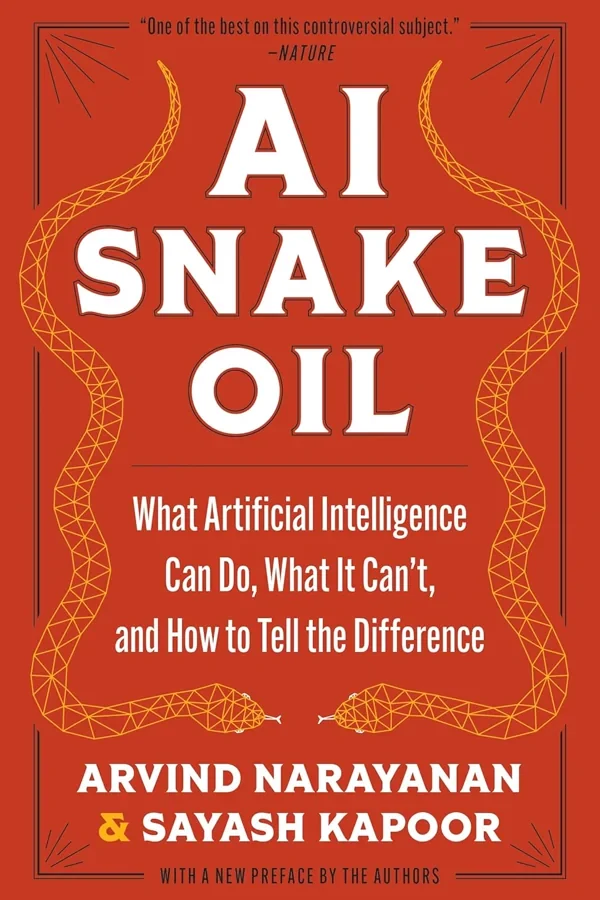
What it's about: Three categories organize AI Snake Oil: generative AI that often works, predictive AI that often does not, and content moderation that lands in between. Princeton computer scientists Arvind Narayanan and Sayash Kapoor sort claims by evidence, using hiring algorithms, predictive policing, and recidivism scoring as concrete tests. The book gives readers better questions to ask before accepting an AI pitch.
Aiifi's Take: Narayanan and Kapoor give managers a clean way to test whether a vendor claim deserves belief. They do not argue that AI is useless; they separate working generative tools from weak prediction products. The authors stay restrained even when the cases are consequential, but the framework is practical. The book earns its place in HR, procurement, and policy decisions where buying an AI tool used to mean trusting the vendor's own measurements.
Which Books Explain OpenAI and the ChatGPT Race?
The best books explaining OpenAI and the ChatGPT race are Empire of AI, Supremacy, and The Optimist. Karen Hao, Parmy Olson, and Keach Hagey explain the companies, incentives, and leadership conflicts behind the product. These are context books, not manuals for writing better prompts.
10. Empire of AI: Dreams and Nightmares in Sam Altman's OpenAI (2025)
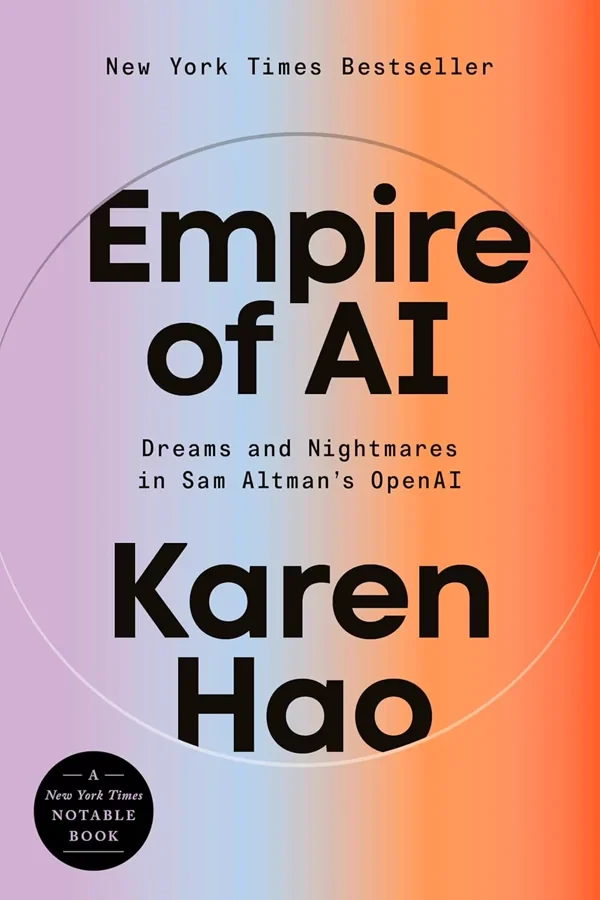
Karen Hao, formerly senior AI editor at MIT Technology Review, tells the OpenAI story through more than 260 interviews across seven years of reporting on its founders, workers, resources, safety conflicts, and pursuit of artificial general intelligence. The 496-page Penguin Press hardcover is structured as a reported account of OpenAI's culture, incentives, and external costs, with chapters on the founding tensions between safety and speed, the November 2023 board attempt to fire Sam Altman, the labor of Kenyan annotation workers training ChatGPT's safety filters, and the energy and water draw of the data centers behind the product.
The book's analytical contribution is what Hao calls the "empire" frame: a reading of OpenAI's practices that maps them to historical patterns of resource extraction, exploited labor, and ideological control. That frame organizes the reporting and gives the chapters on Kenyan content moderators, Chilean water consumption, and OpenAI's internal governance fights a single load-bearing argument rather than a list of revelations. Empire of AI won the 2025 National Book Critics Circle Award for Nonfiction, presented at The New School in March 2026, the strongest single award signal of any book on this list.
Compared with Supremacy at #11, Hao goes deeper on one company while Olson's narrative covers the OpenAI/DeepMind rivalry across two labs; together they give the full industry picture. Compared with The Optimist at #12, Hao writes institutional reporting where Hagey writes biography: Hao on OpenAI's costs, culture, and external effects; Hagey on Sam Altman as a person and operator. The two pair naturally for readers who want both lenses.
Read this if you use ChatGPT regularly and want to understand the company behind it on its real terms, not its marketing terms. Hao is direct about labor exploitation, environmental costs, and the safety-team departures that preceded major product launches. Skip if you want a celebratory founders narrative; pick entry #12 instead if you want a more sympathetic Altman portrait, or entry #11 if you want the broader two-company race rather than the OpenAI deep dive.
11. Supremacy: AI, ChatGPT, and the Race That Will Change the World (2024)
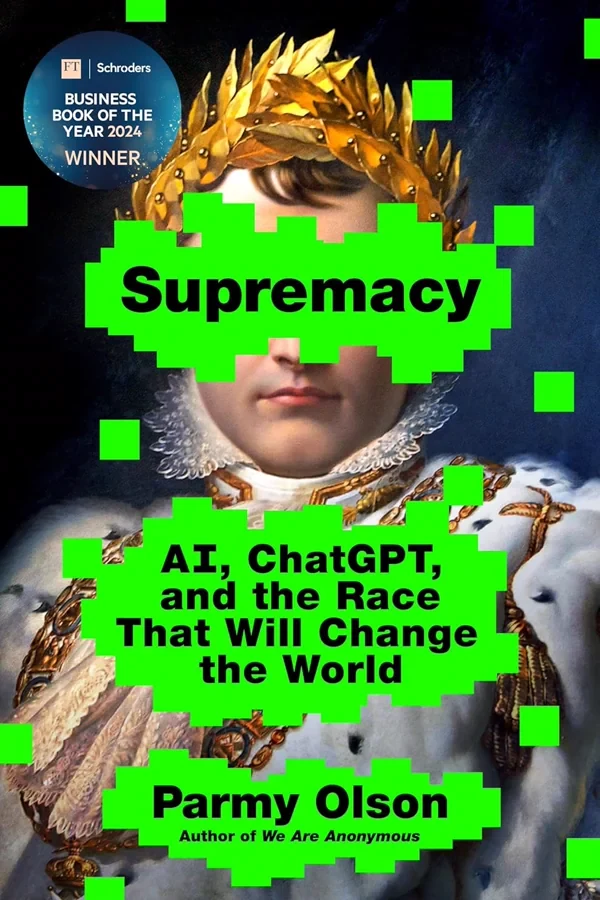
What it's about: Bloomberg columnist Parmy Olson tells a two-lab rivalry story around OpenAI, DeepMind, Microsoft, and Google as ChatGPT turned large language models into a public race. The book won the 2024 Financial Times and Schroders Business Book of the Year award, and Macmillan positions it as a corporate contest between the firms building modern AI.
Aiifi's Take: Supremacy is the most accessible business narrative here. It explains why the November 2022 ChatGPT launch became a turning point for Microsoft, Google, and every company watching them, without demanding a technical background to follow the argument. Olson stays at the corporate level; for the deeper OpenAI critique, Empire of AI does that work.
12. The Optimist: Sam Altman, OpenAI, and the Race to Invent the Future (2025)
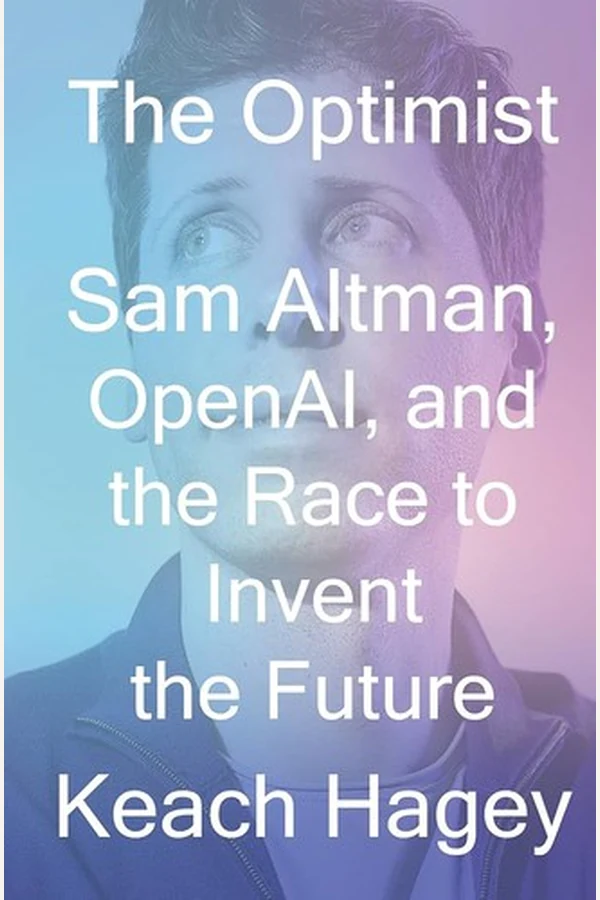
What it's about: Wall Street Journal reporter Keach Hagey writes a biography of Sam Altman through OpenAI, Y Combinator, Silicon Valley, the release of ChatGPT, and the November 2023 board crisis. Google Books lists the hardcover at 384 pages and describes it as a detailed account of Altman's rise and the race around OpenAI.
Aiifi's Take: The Optimist is the biography pick in the set. It is less directly about how ChatGPT works than the other OpenAI books here, but it helps explain why Sam Altman became the face of the current AI boom. Hagey is strongest on Altman's biography and institutional influence; Hao, in Empire of AI, is stronger on OpenAI's costs, culture, and external effects.
How We Chose These ChatGPT Books
I screened more than 30 books across ChatGPT, prompt engineering, generative AI, large language models, and OpenAI reporting, then selected 12. Every candidate was checked against the criteria below before the final ranking was set, with metadata verified against publisher and catalog sources. The list is built for nontechnical professionals using ChatGPT at work, not for engineers building LLM applications.
Market context in 2026
- 21% of U.S. workers say at least some of their work is done with AI, while 65% say they do not use AI much or at all in their job (Pew Research Center, What the data says about Americans' views of artificial intelligence, 2026).
- 88% of McKinsey survey respondents say their organizations regularly use AI in at least one business function, but only about one-third say their companies have begun scaling AI programs (McKinsey, The State of AI: Global Survey 2025).
- Global private investment in generative AI reached $33.9 billion in 2024, up 18.7% from 2023 (Stanford HAI, The 2025 AI Index Report).
Book metadata was checked against publisher and catalog sources. Core title, author, page-count, and edition checks used Portfolio's Co-Intelligence page, O'Reilly's records for ChatGPT For Dummies and Prompt Engineering for Generative AI, Wiley's page for Generative AI For Dummies, and Wolfram Media's What Is ChatGPT Doing listing.
Additional checks used Manning's How Large Language Models Work listing, Princeton University Press's AI Snake Oil page, Penguin Random House's Empire of AI page, Macmillan's Supremacy page, and Google Books records for The Optimist.
Several 2024 and 2025 titles are too new to carry meaningful public ratings, so the comparison table uses Level labels instead of Goodreads scores. Reader ratings were considered only when they had enough volume to be useful; inclusion here rests mainly on author expertise, publisher credibility, topic fit, and whether the book answers a question someone would actually search for.
The final 12 are grouped by the question each book answers first. Each book was evaluated on four criteria:
- ChatGPT relevance: The book had to address ChatGPT directly, teach skills that apply to ChatGPT, or explain large language models and OpenAI in a way that helps a ChatGPT user.
- Reader fit: Level labels are based on publisher positioning, chapter structure, assumed technical knowledge, and whether the book requires code, math, or API familiarity.
- Editorial quality: Books from established publishers, authors with clear domain expertise, and reporting or frameworks that hold up beyond a list of prompts.
- Freshness: Books from the post-ChatGPT period were prioritized. Eleven of the final 12 were published in 2024 or 2025; the one older title (Wolfram, 2023) earns its place because it remains unusually clear.
I excluded five categories: books written by ChatGPT, books merely recommended by ChatGPT, thin self-published prompt collections, older general AI books that do not meaningfully cover ChatGPT or LLMs, and code-first books whose main value is API implementation. ChatGPT-related business books rarely receive trade-press review coverage from Publishers Weekly, Kirkus, or Library Journal, so trust signals come from publisher reputation (Penguin, O'Reilly, Wiley, Princeton University Press, Manning), award shortlists (FT Business Book of the Year, NBCC), and named-author institutional credentials rather than critic citations. The full list of 11 well-known books I considered but did not include sits in the next section. This page is editorially independent. No item is paid or sponsored, and affiliate relationships do not influence which books are selected.
Who should skip this book list
Software engineers building production LLM features should skip this list and read Prompt Engineering for LLMs by John Berryman and Albert Ziegler or Hands-On Large Language Models by Jay Alammar and Maarten Grootendorst instead. The 12 picks here are chosen for workplace literacy, prompting judgment, and OpenAI context. Those priorities do not serve readers who need API patterns, Python examples, or evaluation pipelines.
ChatGPT Books I Considered but Did Not Include
These eleven ChatGPT and LLM books appear regularly on third-party reading lists, library catalogues, and AI-generated reading-list summaries. Each was reviewed against the four criteria above and excluded for a specific reason, listed here so readers can decide for themselves whether the exclusion fits their needs.
- Hands-On Large Language Models: Language Understanding and Generation by Jay Alammar and Maarten Grootendorst (O'Reilly, 2024): a code-first 425-page guide built around Python, Hugging Face, and vector databases for LLM engineers, off-audience for the workplace ChatGPT users this list serves.
- Prompt Engineering for LLMs: The Art and Science of Building Large Language Model-Based Applications by John Berryman and Albert Ziegler (O'Reilly, 2024): excellent for engineers designing copilots and internal LLM tools, but its center of gravity is system design, not casual ChatGPT use.
- AI Engineering: Building Applications with Foundation Models by Chip Huyen (O'Reilly, December 2024): an end-to-end manual on building production AI systems with foundation models, written for ML engineers and technical product teams.
- The Coming Wave: Technology, Power, and the Twenty-First Century's Greatest Dilemma by Mustafa Suleyman (Crown, 2023): a strong AI canon entry by the DeepMind co-founder, but its scope is AI plus synthetic biology and containment policy, not ChatGPT specifically.
- Genius Makers: The Mavericks Who Brought AI to Google, Facebook, and the World by Cade Metz (Dutton, 2021): the deep-learning-pioneers history, useful for context but predates ChatGPT and the LLM era this list addresses.
- Power and Prediction: The Disruptive Economics of Artificial Intelligence by Ajay Agrawal, Joshua Gans, and Avi Goldfarb (HBR Press, 2022): an economics-of-AI book for managers, predates the ChatGPT moment and treats AI through a prediction-cost lens rather than a generative-AI lens.
- AI 2041: Ten Visions for Our Future by Kai-Fu Lee and Chen Qiufan (Crown Currency, 2021): speculative AI fiction paired with technical commentary, predates ChatGPT and the current LLM wave.
- ChatGPT For Dummies, 1st Edition by Pam Baker (Wiley, 2023): superseded by the 2nd Edition at entry #2. Listed here to flag for readers who may encounter the 1st Edition in libraries or used markets but should buy the current edition instead.
- Atlas of AI: Power, Politics, and the Planetary Costs of Artificial Intelligence by Kate Crawford (Yale University Press, 2021): a political-economy critique of AI infrastructure and labor, predates ChatGPT and is closer to cultural studies than to a workplace ChatGPT manual.
- The Singularity Is Nearer: When We Merge with AI by Ray Kurzweil (Viking, 2024): a continuation of Kurzweil's 2045-singularity argument, broader than ChatGPT and locked into a specific speculative timeline.
- AI Superpowers: China, Silicon Valley, and the New World Order by Kai-Fu Lee (Houghton Mifflin Harcourt, 2018): a US-China geopolitics framing of AI from before the LLM era, useful as history but not as a current ChatGPT primer.
Frequently Asked Questions
What is the best ChatGPT book overall?
The best ChatGPT book overall is Co-Intelligence by Ethan Mollick. Mollick focuses on the judgment calls AI exposes: when to delegate, when to verify, and when the model is sounding more confident than it is right. His principles outlast product changes that quickly age feature manuals.
What is the best ChatGPT book for beginners?
The best ChatGPT book for beginners is ChatGPT For Dummies, 2nd Edition by Pam Baker. It covers accounts, models, prompting, image generation, voice, writing, work uses, and fact-checking in plain language. Pick Co-Intelligence instead if you want a broader work philosophy before learning the interface.
What is the best book to understand how ChatGPT works?
The best short book on how ChatGPT works is What Is ChatGPT Doing ... and Why Does It Work? by Stephen Wolfram, who explains the model in plain prose without assuming any technical background. For a fuller account of tokenizers, transformers, training, retrieval, and risk, read How Large Language Models Work instead.
What is the best ChatGPT prompt engineering book?
The best ChatGPT prompt engineering book is Prompt Engineering for Generative AI by James Phoenix and Mike Taylor. It gives a practical framework for reliable outputs without jumping straight into API engineering. For a lighter starting point, read Writing AI Prompts For Dummies first.
Are ChatGPT books outdated quickly?
ChatGPT product manuals age faster than books about prompting, LLM behavior, or OpenAI's history. That is why this list separates current interface books, such as ChatGPT For Dummies, from more durable books such as Co-Intelligence, Wolfram's book, and How Large Language Models Work.
Should I read books about LLMs if I only use ChatGPT at work?
Books about LLMs are worth reading when your ChatGPT work touches accuracy, policy, customer communication, or decision support. A basic LLM book explains why ChatGPT hallucinates, why context matters, and why human review belongs in important workflows. Start with What Is ChatGPT Doing or How Large Language Models Work.
Which ChatGPT book best explains AI hype and risk?
The ChatGPT book that best explains AI hype and risk is AI Snake Oil by Princeton's Arvind Narayanan and Sayash Kapoor. It separates generative AI from weak predictive products, which makes it useful when a vendor pitch treats all AI as equally reliable.
Are these books about ChatGPT, written by ChatGPT, or recommended by ChatGPT?
These are books about ChatGPT, prompt engineering, LLMs, OpenAI, and the AI race around ChatGPT. We deliberately excluded books whose main selling point is that they were written by ChatGPT, as well as generic lists of books "recommended by ChatGPT."
What to Read Next
For broader AI literacy, read the best AI books for beginners. For workplace rollout, see the best AI books for leaders, best AI agents books, and AI course guides. For OpenAI and safety debates, read Dario Amodei, Yoshua Bengio, and Yann LeCun. This list was last reviewed in May 2026. Think we missed a serious ChatGPT book? Let us know.