Quick Picks
-
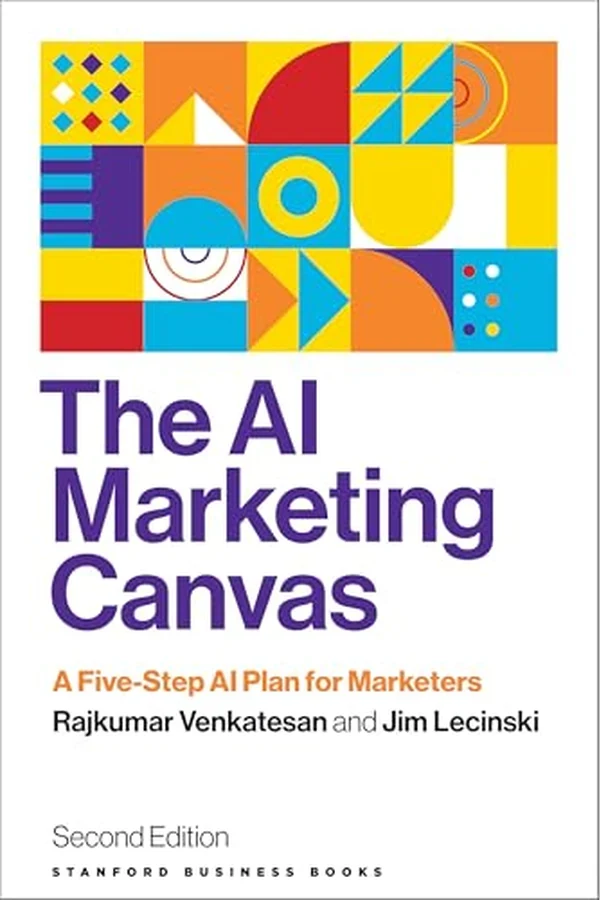 Best overall The AI Marketing Canvas The strongest 2026 roadmap for turning scattered AI experiments into a practical marketing plan.
 -
Best executive guide AI Strategy for Sales and Marketing The 2025 second edition built around King's AI Playbook for connecting sales, customer experience, and brand governance.
-
Best strategy lens Marketing 7.0 Philip Kotler's 2026 update on how AI changes the way consumers decide, filter information, and respond to brands.
Which AI Marketing Book Should You Read First?
The best AI marketing book to read first is The AI Marketing Canvas, Second Edition by Rajkumar Venkatesan and Jim Lecinski. It gives marketers the clearest current roadmap for choosing AI use cases, balancing predictive and generative AI, and moving from AI experimentation to measurable marketing impact.
This list is deliberately shorter than our other book guides. AI marketing changed quickly after ChatGPT launched on November 30, 2022, so we cut older and weaker titles that no longer belong on this list. All 9 books below were published in 2024 or later, and 7 of the 9 were published in 2025 or 2026.
| Title | Level | Best For | Length (pages) |
|---|---|---|---|
| 01The AI Marketing Canvas (2026) | Intermediate | Implementation roadmap | 282 |
| 02AI Strategy for Sales and Marketing (2025) | Executive | Sales + CX alignment | 336 |
| 03Marketing 7.0 (2026) | Executive | AI-era strategy | 256 |
| 04Marketing with AI For Dummies (2024) | Beginner | Team AI literacy | 400 |
| 05Generative AI for Marketing (2024) | Intermediate | GenAI strategy | 178 |
| 06AI-Powered Content Marketing and SEO (2025) | Specialist | Content + search | 256 |
| 07AI-Powered B2B Marketing (2025) | Specialist | Demand generation | 400 |
| 08The New Science of Customer Relationships (2025) | Advanced | Personalization + CRM | 272 |
| 09Ethical AI in Marketing (2025) | Advanced | Trust + governance | 288 |
What Are the Best AI Marketing Books for Strategy?
The best AI marketing strategy books are The AI Marketing Canvas by Rajkumar Venkatesan and Jim Lecinski, AI Strategy for Sales and Marketing by Katie King, and Marketing 7.0 by Philip Kotler, Hermawan Kartajaya, and Iwan Setiawan. Start here if you're responsible for AI adoption, budget, operating model, or customer strategy.
1. The AI Marketing Canvas, Second Edition: A Five-Step AI Plan for Marketers (2026)
The second edition's central argument is that AI adoption fails when marketers treat it as a tool-selection problem instead of a sequencing problem: which use case first, under which governance model, using which data. Rajkumar Venkatesan of UVA Darden and Jim Lecinski of Northwestern Kellogg build the book around a 5-step canvas and update this edition with fresh material on generative AI, agentic AI, and Generative Engine Optimization, the AI search practice 2026 marketers have to plan for.
The book applies the canvas to five named enterprise brands (Unilever, JPMorgan Chase, Coca-Cola, Ancestry, and John Deere), positioning each one across the 5 sequential steps: Foundation, Experimentation, Expansion, Transformation, and Monetization. The brand examples carry the framework end-to-end, so readers see what each step looks like when an actual company executes it.
Compared with entry #3, Marketing 7.0, the Canvas stays operational where Kotler stays conceptual. Kotler's Cognitive Marketing Compass asks how AI reshapes consumer decision-making; the Canvas asks how marketing teams should deploy predictive and generative AI to act on those decisions. Where Kotler debates whether AI belongs in strategic thinking at all, Venkatesan and Lecinski assume it does and instruct teams to start by building a clean, integrated data layer first.
The Canvas lets teams score where they stand across the 5 steps before committing budget, which makes it most useful to a marketing director or VP building a 12-month AI implementation plan. Solo marketers and creators looking for prompt recipes or chapter-by-task workflows should skip this and start with entry #4, Marketing with AI For Dummies, organized around individual marketing tasks instead of stage-by-stage enterprise planning.
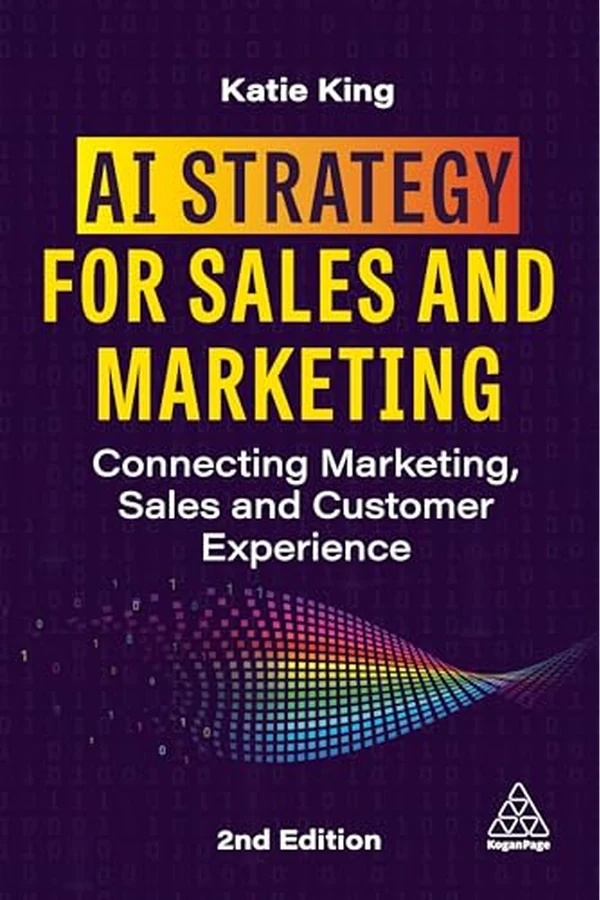
2. AI Strategy for Sales and Marketing: Connecting Marketing, Sales and Customer Experience (2025)
What it's about: An enterprise-focused playbook for AI in sales and marketing, Katie King's second edition draws on 6 case studies including Samsung, Rolls-Royce, and Harrods. The book moves from strategic planning to hyper-personalization, HR reskilling, human-AI collaboration, and ethical governance across the full funnel.
Aiifi's Take: The most boardroom-ready book on the list, published by Kogan Page. King treats reskilling marketing and sales as a strategic planning problem, not a training purchase. She is writing for senior leaders responsible for AI adoption budgets and operating models, not for marketers executing day-to-day campaigns. Her AI Playbook makes AI investment measurable and defensible across the full go-to-market organization: pipeline, retention, brand equity, and governance in one framework. It is less useful for a solo creator looking for prompt examples. Best for executives who need to align marketing, sales, and CX around the same AI priorities.
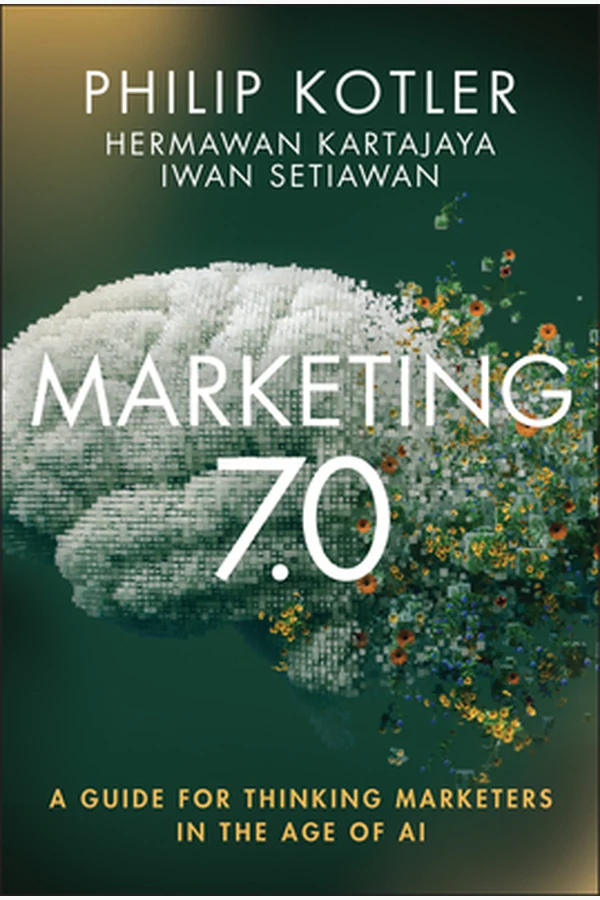
3. Marketing 7.0: A Guide for Thinking Marketers in the Age of AI (2026)
What it's about: Philip Kotler, Hermawan Kartajaya, and Iwan Setiawan build Marketing 7.0 around 5 drivers of change and 3 gateways to the human mind: social, personal, and experiential. The book applies the Cognitive Marketing Compass across brand storytelling, value propositions, selling approaches, and customer experience to show how augmented consumers make decisions in the AI era.
Aiifi's Take: Not a prompt book. It belongs near the top precisely because the authors refuse to position AI as a replacement for strategic thinking. Kotler, marketing's most cited theorist at Northwestern Kellogg, builds the 7.0 edition around mind-centric marketing and augmented consumers, arguing that AI changes how buying decisions get made, not who makes them. GenAI workflows and measurement sit outside its scope, so pair it with a more tactical title. Best for CMOs and brand leaders making AI-era strategy decisions.
Which AI Marketing Books Are Best for Practical Execution?
The best AI marketing books for practical execution are Marketing with AI For Dummies, Generative AI for Marketing, and AI-Powered Content Marketing and SEO. These books move from strategy into day-to-day marketing work: team literacy, content workflows, search visibility, automation, and campaign risk.
4. Marketing with AI For Dummies (2024)
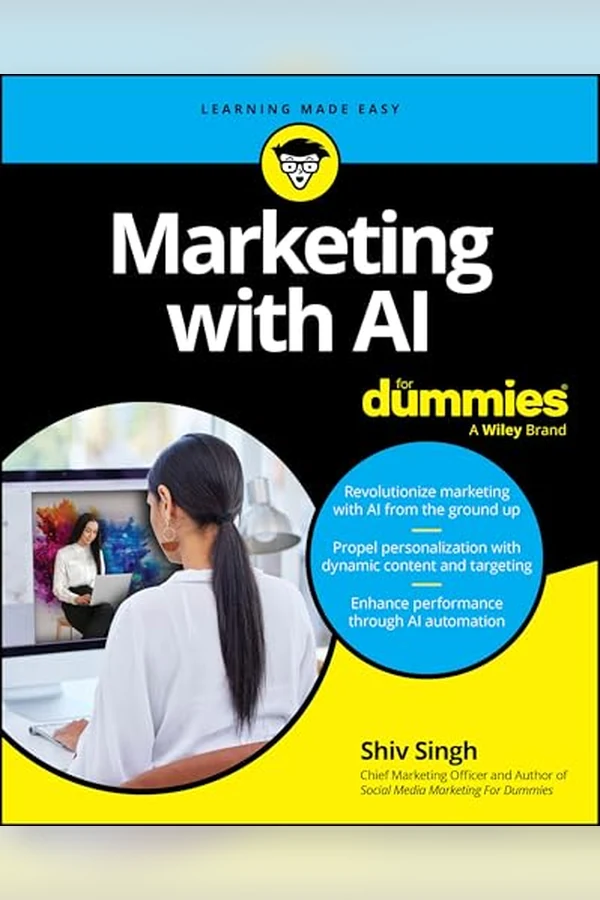
Shiv Singh's argument is that AI marketing literacy belongs in every marketer's job, not in a specialist team, and that the way to build it is task-by-task rather than concept-by-concept. The 400-page Wiley volume, published in October 2024 under the For Dummies imprint, organizes the chapters around the marketing work readers already do: customer insight, prompt design, content, SEO, performance marketing, segmentation, and AI-native advertising across four major platforms (Google Performance Max, Meta Advantage+, Amazon Ads, and TikTok).
The book's defining contribution is the AI System Development Lifecycle (AI-SDLC), Singh's core planning model for moving an AI marketing initiative from idea to deployment. The lifecycle anchors the chapters on use-case selection, data preparation, model and tool choice, testing, deployment, and post-launch monitoring. Singh closes with a substantive treatment of AI governance and ethical principles for marketing, including transparency obligations to customers, data-handling rules, and accountability for AI-generated content. Singh, formerly Pepsi's global head of digital and previously a senior leader at Razorfish, brings two decades of operating experience in consumer marketing rather than the academic register most strategy books default to.
Compared with Generative AI for Marketing at #5, Singh works the full martech stack where Upadhyay narrows to generative AI specifically: Marketing with AI For Dummies covers the predictive systems behind segmentation, attribution, and bidding alongside the generative ones for content. Compared with AI-Powered Content Marketing and SEO at #6, this is the broader generalist read where Seda and Halasz go deep on one specialism. The book reads as a reference rather than a cover-to-cover argument, and originality is not its selling point.
Read this if you are a small-business owner, junior marketer, marketing team lead, or in-house brand team building an internal AI literacy baseline across roles. Best for organizations standardizing their AI marketing approach across paid, content, SEO, and CRM. Pick entry #1 instead if you need an enterprise-scale sequencing roadmap rather than task-level guidance. Pick entry #5 if your immediate problem is generative AI specifically and you want a tighter, shorter book.
5. Generative AI for Marketing: Artificial Intelligence and Data Applications for Business Transformation (2024)
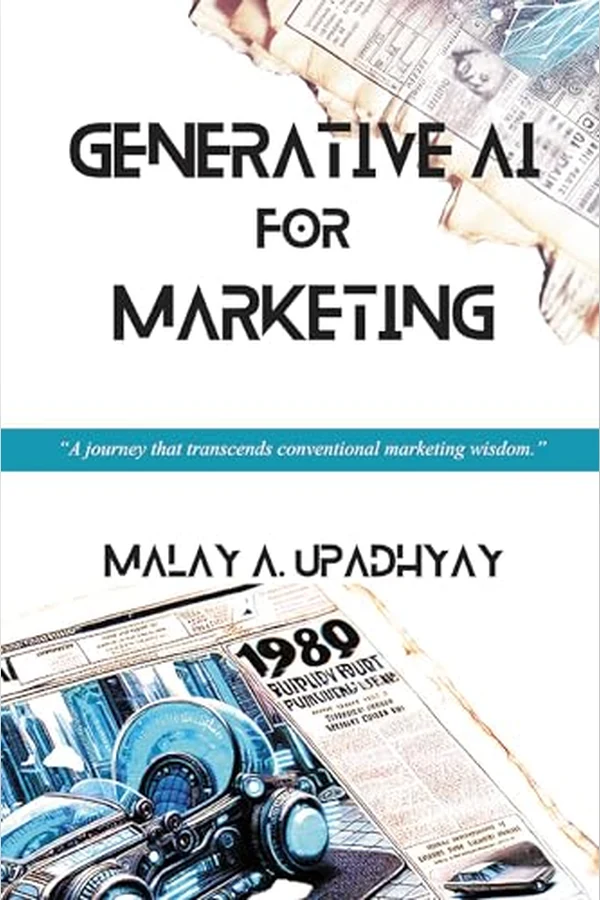
What it's about: Built around 3 core AI functions (content creation, automation, and insight generation), Generative AI for Marketing by Malay A. Upadhyay moves from AI basics and the changing role of marketing to prompt engineering, content, automation, and insights, ending with emerging GenAI trends. Upadhyay focuses on generative AI rather than the full marketing technology stack.
Aiifi's Take: Published by Business Expert Press, this is the best short read on generative AI for marketing. Upadhyay starts with the marketing decision and works backward: what to create, what to automate, and what to measure. Prompt engineering gets serious treatment, not the one-chapter cameo most short GenAI books give it. The opening sections that carry the book's organizational-design argument read lighter than the GenAI workflow material that follows, and the most common reader complaint on Goodreads (4.62/5 across 11 reviews as of April 2026) is that the case study range is thin for a book this dense on frameworks. Specialists in SEO, paid media, or CRM will want a second book after it. Best for marketers who want the current GenAI picture without a 400-page commitment.
6. AI-Powered Content Marketing and SEO: Impact, Risks, and Strategies for Brands (2025)
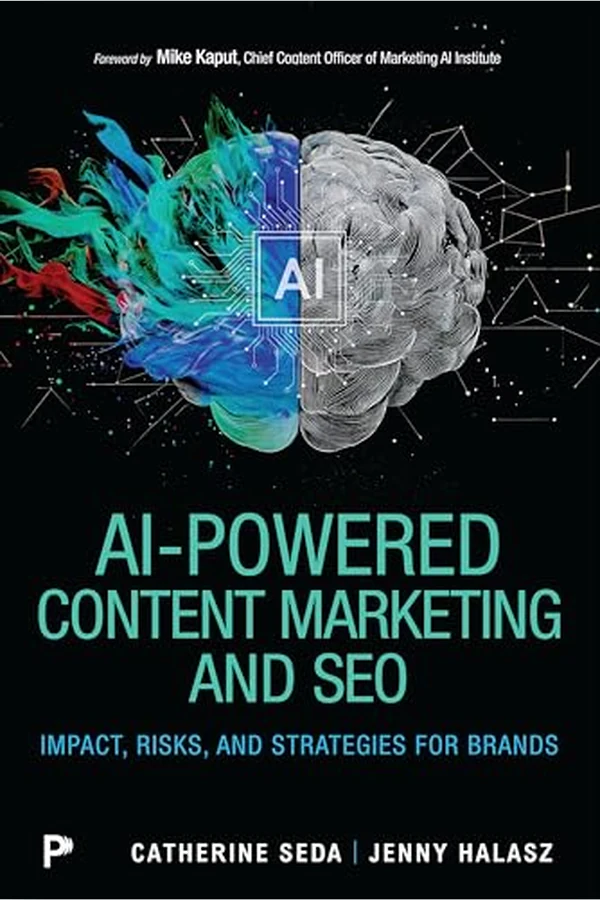
What it's about: A content marketing and SEO guide for the AI search era, Catherine Seda and Jenny Halasz cover Google's 4-component EEAT standard (Experience, Expertise, Authoritativeness, and Trust), personalization, authority signals, analytics, and applications for e-commerce, nonprofits, and regulated industries. The book closes with tools and checklists for teams adapting to AI search.
Aiifi's Take: The strongest specialist book for content and search teams, published by Pearson. Seda and Halasz treat AI-generated content as a brand and liability problem, not a production shortcut, and the book covers zero-click search behavior and the copyright questions raised by generative content in more depth than any comparable title. Its scope is deliberately narrow, so generalists should read a broader strategy book first. Best for SEO leads, content directors, and agencies managing AI policy.
Which AI Marketing Books Are Best for B2B, Customer Experience, and Governance?
The best AI marketing books for B2B, customer experience, and governance are AI-Powered B2B Marketing, The New Science of Customer Relationships by Thomas H. Davenport and Jim Sterne, and Ethical AI in Marketing. These are narrower than the strategy books, but more useful for teams judged on pipeline, retention, personalization, risk, and customer trust.
7. AI-Powered B2B Marketing: Develop AI-Enabled Strategies and Practices for Maximum Impact (2025)
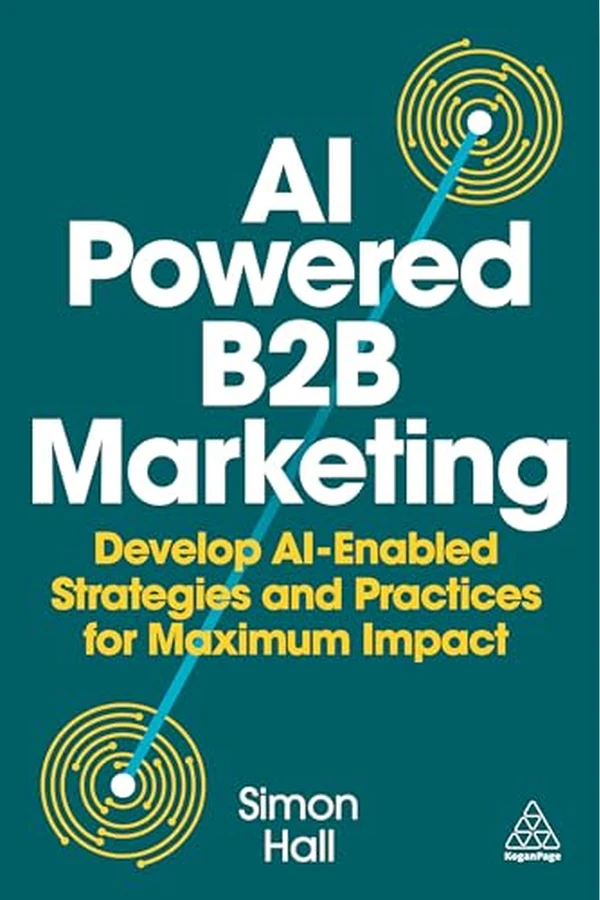
Simon Hall's argument is that B2B marketing has fundamentally different AI needs from consumer marketing, and that the books written for both audiences fail B2B teams on workflow specifics: account-based motion, large buying committees, long sales cycles, complex attribution, and tight sales-marketing coordination. The 400-page Kogan Page volume, published in 2025, runs the full B2B buyer journey: market research, customer insights, awareness, search, content, account identification, lead capture, lead nurturing, personalization, conversational AI, webinars, retention, and ethics.
The book's strongest material is in the ABM-specific workflow chapters that other AI marketing books treat as sub-topics. Hall builds chapter-length treatments of account prospecting, intent-data ingestion, lead nurturing automation, conversational AI for inbound qualification, and sales handoff orchestration. Three industry examples from Epsilon, CACI UK, and UrSpectr ground the frameworks in deployed B2B programs rather than hypothetical ones. Hall, a Fellow of the Chartered Institute of Marketing and CEO of B2B Frameworks, writes to a B2B operating reality, not to consumer-marketing analogues bolted onto enterprise sales motions.
Compared with The New Science of Customer Relationships at #8, Hall stays in B2B demand generation where Davenport and Sterne work the broader CRM-and-personalization layer that applies to B2B and B2C. Compared with Ethical AI in Marketing at #9, this is operational rather than governance-first; Hall covers ethics as a closing chapter, while Alexander makes it the spine. The 400 pages make it a reference book more than a weekend read.
Read this if you are a B2B demand generation lead, ABM marketer, marketing operations director, or revenue operations leader at a B2B company building an AI-augmented motion. Best for teams whose buying committees, sales cycles, and attribution complexity make consumer-marketing playbooks a poor fit. Pick entry #8 instead if your responsibility runs to customer data architecture and lifecycle programs rather than channel-by-channel B2B execution. Pick entry #1 if you want enterprise-scale sequencing and AI portfolio strategy rather than B2B-specific workflows.
8. The New Science of Customer Relationships: Delivering the One-to-One Promise With AI (2025)
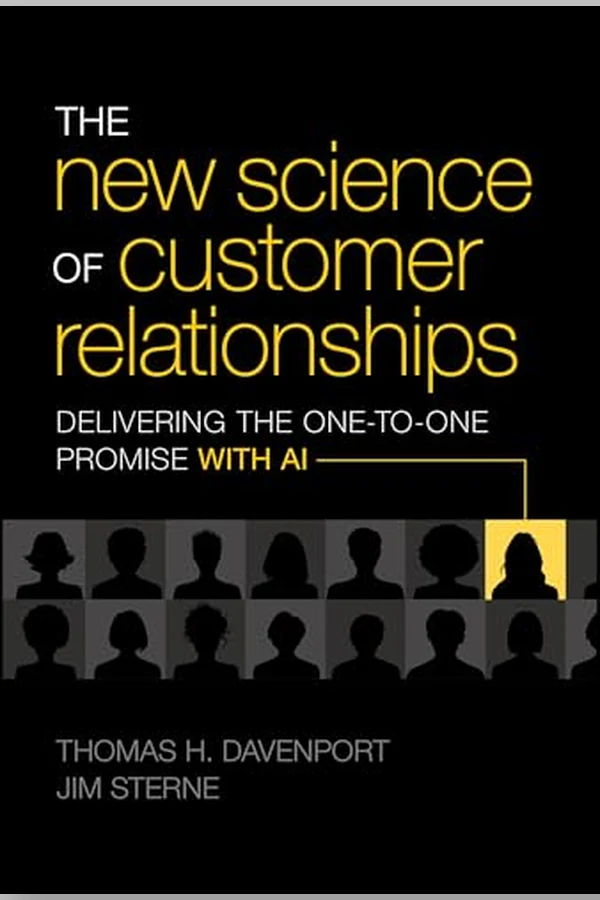
What it's about: Thomas H. Davenport and Jim Sterne argue that most customer data systems are broken and make the case for AI-driven hyper-personalization. The book defines 7 types of customer data (transactions, attributes, structured opinions, unstructured opinions, calculations, predictions, and experiments), then covers customer voice analysis, AI agents, analytics, ethics, and future customer relationships.
Aiifi's Take: The best book for marketers who own retention, lifecycle, CRM, or customer experience. The 12-chapter arc moves from the technology and tools leaders should understand, through the data they collect and the processes they implement, to the ethics they must enforce: the full stack for a one-to-one AI program in a single volume. Davenport, whose Competing on Analytics defined the data-driven marketing playbook, brings a sober research lens; Sterne adds deep marketing measurement experience. The result is less hype-driven than most personalization titles. It will disappoint readers looking for quick campaign templates. Best for leaders building customer data and CX capabilities.
9. Ethical AI in Marketing: Aligning Growth, Responsibility and Customer Trust (2025)
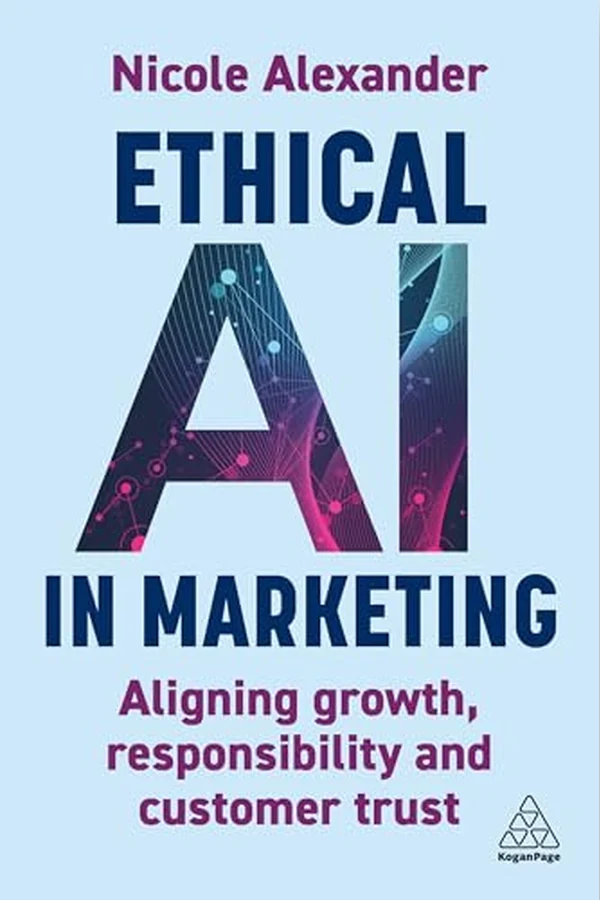
What it's about: Structured around the P.A.C.T. Framework (Personalization, Accountability, Contextual Sensitivity, and Trust), Nicole M. Alexander's Ethical AI in Marketing applies this 4-principle model across chapters on human-centered AI, privacy, governance, oversight, and cross-functional adoption, drawing on examples from Ally, OSF Healthcare, Adobe, and Ipsos.
Aiifi's Take: The best AI ethics book written directly for marketers, published by Kogan Page. The P.A.C.T. Framework anchors the book as a repeatable review structure, not a values statement, for brand and CX teams to reuse across campaigns. Alexander makes responsibility operational: who reviews AI outputs, what principles guide personalization, how teams explain decisions, and how brands avoid trading long-term trust for short-term gains. This is not a broad AI ethics philosophy book. Best for brand, CX, legal, and marketing leaders writing AI policies.
How We Chose These AI Marketing Books
I evaluated more than 25 AI marketing, martech, customer experience, content, B2B, and generative AI books published between 2018 and 2026. Every candidate was checked against the criteria below before the final ranking was set. The list prioritizes books that help marketers make practical decisions, not books that only explain machine learning theory or general AI history.
Market context in 2026
- 61% of marketers say marketing is experiencing its biggest disruption in 20 years because of AI (HubSpot, State of Marketing Report, 2026).
- 80% of marketers currently use AI for content creation, 75% use it for media production, and 94% plan to use AI in their content creation processes in 2026 (HubSpot, Marketing Statistics, 2026).
The final 9 are organized into three sections (strategy, execution, and B2B/CX/governance) so readers can start with the problem they actually have. Each book was evaluated on four criteria:
- Marketing centrality: AI had to be applied directly to marketing, sales, customer experience, content, growth, or brand work.
- Reader fit: Level labels are based on publisher positioning, O'Reilly difficulty labels where available, chapter structure, and the intended buyer or reader.
- Quality signals: Publisher credibility, author expertise, reader reviews where available, and whether the book solves a specific marketing problem. Several titles are too new to carry meaningful public ratings; for those, inclusion was based on author expertise, publisher credibility, and topic fit.
- Freshness: Books that address the post-ChatGPT era were prioritized. The median publication year for the final 9 picks is 2025, with two 2026 titles at the top of the list.
AI marketing books rarely receive trade-press review coverage from Publishers Weekly, Kirkus, or Library Journal, so trust signals come from publisher reputation (Stanford Business Books, Wiley, Kogan Page, HBR Press, Pearson), named-author institutional credentials (UVA Darden, Northwestern Kellogg), and AI-marketing community recognition rather than critic citations.
I excluded four categories: superseded predecessor editions in author series (Marketing 5.0 and 6.0 for the Marketing 7.0 update, the AI Marketing Canvas first edition), pre-ChatGPT marketing books that no longer match the current landscape, broader AI books that are not marketing-specific (Co-Intelligence, AI First, Generative AI For Dummies), and thin prompt books, self-published tool roundups with weak editorial standards, and academic volumes that work better as references than as cover-to-cover reads. The full list of nine well-known books I considered but did not include sits in the next section. This page is editorially independent. No item is paid or sponsored, and affiliate relationships do not influence which books are selected.
Who should skip this book list
Machine learning engineers and data scientists building the AI systems marketers use should skip this list and read our best AI books for beginners for a technical starting point instead. The 9 picks here are all written for marketing, CX, and brand leaders making adoption and governance decisions, not for engineers designing model architecture, training pipelines, or evaluation frameworks.
AI Marketing Books I Considered but Did Not Include
These nine AI and marketing books appear regularly on marketer reading lists, business-school syllabi, and AI-generated reading-list summaries. Each was reviewed against the four criteria above and excluded for a specific reason, listed here so readers can decide for themselves whether the exclusion fits their needs.
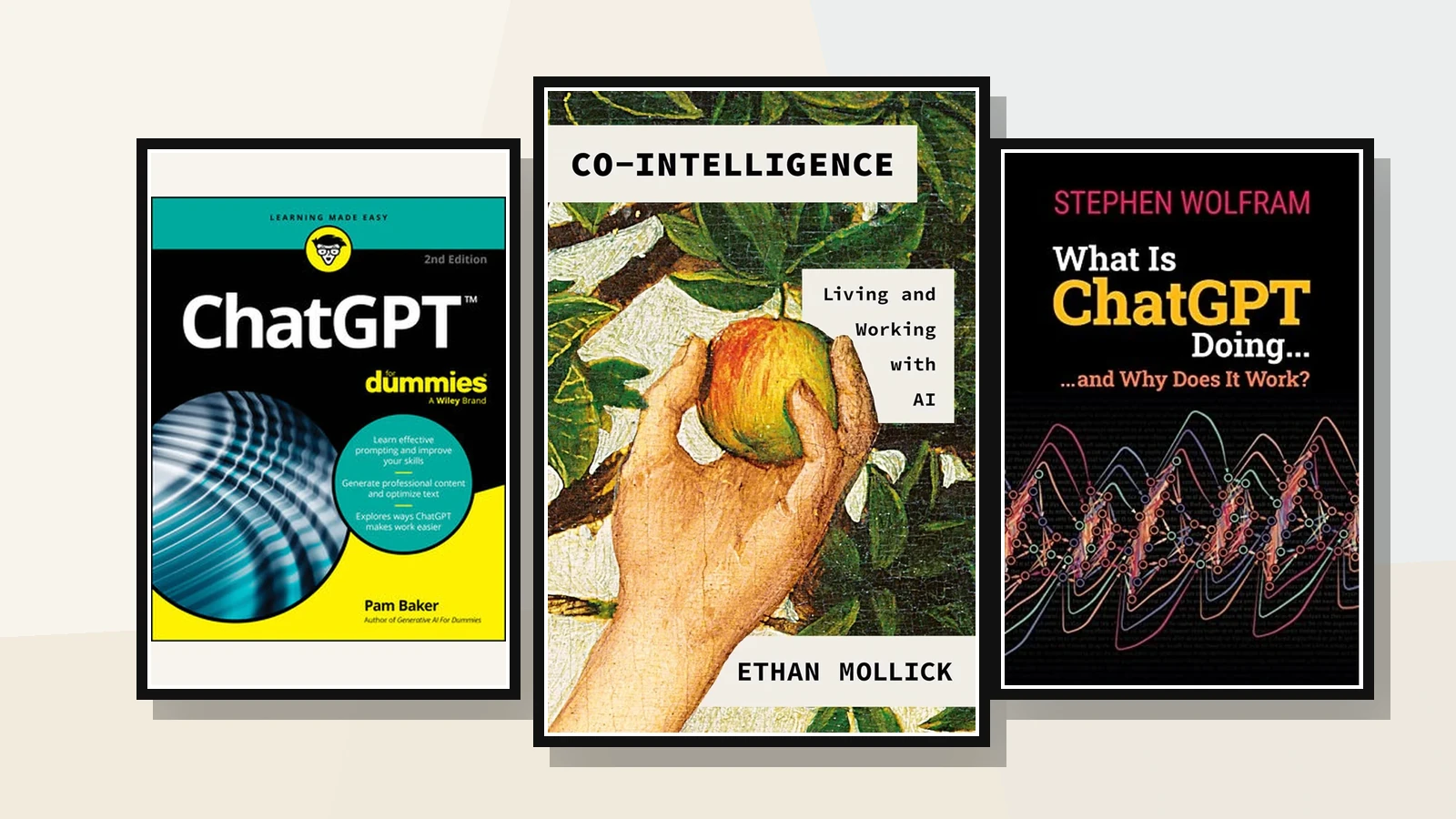
- Co-Intelligence: Living and Working with AI by Ethan Mollick (Portfolio, 2024): the strongest broad AI literacy book and an instant New York Times bestseller, but written for any knowledge worker rather than for marketers making campaign, content, and CX decisions. Covered on our beginners list at #1.
- Marketing 6.0: The Future Is Immersive by Philip Kotler, Hermawan Kartajaya, and Iwan Setiawan (Wiley, 2023): the immediate predecessor edition of Marketing 7.0 at #3, focused on metaverse and immersive marketing rather than the AI era this list serves. Superseded by the 7.0 edition.
- Marketing 5.0: Technology for Humanity by Philip Kotler, Hermawan Kartajaya, and Iwan Setiawan (Wiley, 2021): the earlier predecessor edition centered on next-tech-for-humanity framing, predates ChatGPT and the LLM era this list addresses.
- The AI Marketing Canvas: A Five-Stage Road Map to Implementing Artificial Intelligence in Marketing (First Edition) by Rajkumar Venkatesan and Jim Lecinski (Stanford Business Books, 2021): superseded by the Second Edition at #1, which adds generative AI, agentic AI, and Generative Engine Optimization material the 2021 first edition could not have.
- Artificial Intelligence for Marketing: Practical Applications by Jim Sterne (Wiley, 2017): the book that established the AI-for-marketing canon predates ChatGPT by five years. Sterne's current thinking sits in The New Science of Customer Relationships at #8 (with Davenport).
- AI First: The Playbook for a Future-Proof Business and Brand by Adam Brotman and Andy Sack (HBR Press, 2025): a Forbes Top 10 Tech Book of 2025, but the AI-first transition argument is broader than marketing decisions. Covered on our AI agents books guide at #3.
- Generative AI For Dummies by Pam Baker (Wiley, 2024): the strongest plain-language generative AI primer, but cross-functional rather than marketing-specific. Covered on our For Dummies AI books guide.
- ChatGPT For Dummies, 2nd Edition by Pam Baker (Wiley, 2025): a strong ChatGPT manual including marketing chapters, but ChatGPT-specific rather than AI marketing strategy. Covered on our ChatGPT books guide at #2.
- Hello World: Being Human in the Age of Algorithms by Hannah Fry (Norton, 2018): an accessible algorithms primer with chapters on advertising and recommendation systems, but predates the generative AI era and treats marketing as one application among several.
Frequently Asked Questions
What is the best AI marketing book overall?
The best AI marketing book overall is The AI Marketing Canvas, Second Edition by Rajkumar Venkatesan and Jim Lecinski. Current as of 2026, it walks marketing teams through picking use cases, sequencing predictive and generative AI work, and building governance before they scale.
What is the best AI marketing book for beginners?
The best AI marketing book for beginners is Marketing with AI For Dummies by Shiv Singh. Singh writes for nontechnical teams, so the book is easier to hand to a new hire or a small-business owner than the more strategic titles. If you already understand basic AI concepts, read The AI Marketing Canvas next.
What is the best book about generative AI for marketing?
The best book about generative AI for marketing is Generative AI for Marketing by Malay A. Upadhyay. Upadhyay keeps the book tight and focused on how generative AI changes marketing work rather than covering the full martech stack. For content and search teams, AI-Powered Content Marketing and SEO is the better specialist pick.
What is the best AI marketing book for B2B teams?
The best AI marketing book for B2B teams is AI-Powered B2B Marketing by Simon Hall. It covers market research, content, search, lead generation, lead nurturing, account management, retention, measurement, and technology selection through a B2B lens rather than a consumer brand lens.
Which AI marketing book covers ethics best?
The best AI marketing book on ethics is Ethical AI in Marketing by Nicole Alexander. It covers governance, consumer trust, privacy, oversight, human-centered AI, and responsible personalization in language marketers can use with brand, legal, data, and customer experience teams.
Are older AI marketing books still worth reading in 2026?
Some older AI marketing books are still useful for background, but they are not the best place to start in 2026. This list prioritizes books from 2024, 2025, and 2026 that address generative AI, AI search, governance, personalization, and current marketing workflows.
Do marketers need to learn machine learning before reading these books?
No. These AI marketing books are written for marketers, founders, executives, and business students rather than machine learning engineers. You do not need coding, statistics, or model-training experience. If you want broader AI literacy before marketing-specific reading, start with our best AI books for beginners.
What to Read Next
For broader AI context, read our guide to the best AI books for beginners, Geoffrey Hinton's AI warnings, Dario Amodei on AI safety, and Yann LeCun on AI limits. For courses, see our AI course guides. This list was last reviewed in May 2026 and is updated when important AI marketing books are released. Think we missed one? Let us know.