Quick Picks
-
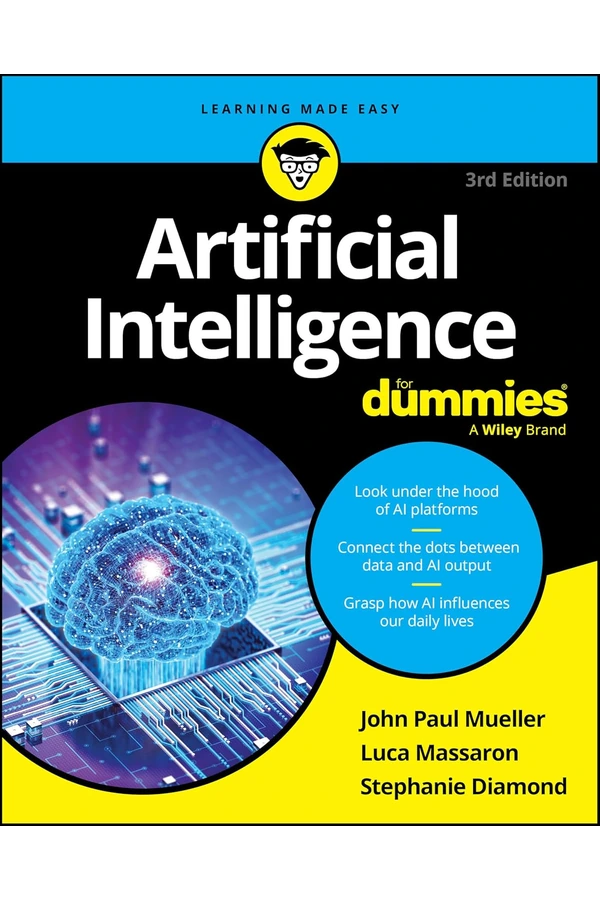 Best first read Artificial Intelligence For Dummies, 3rd Edition The canonical foundation: Mueller, Massaron, and Diamond's six-part walk through algorithms, hardware, and generative AI for non-technical readers.
 -
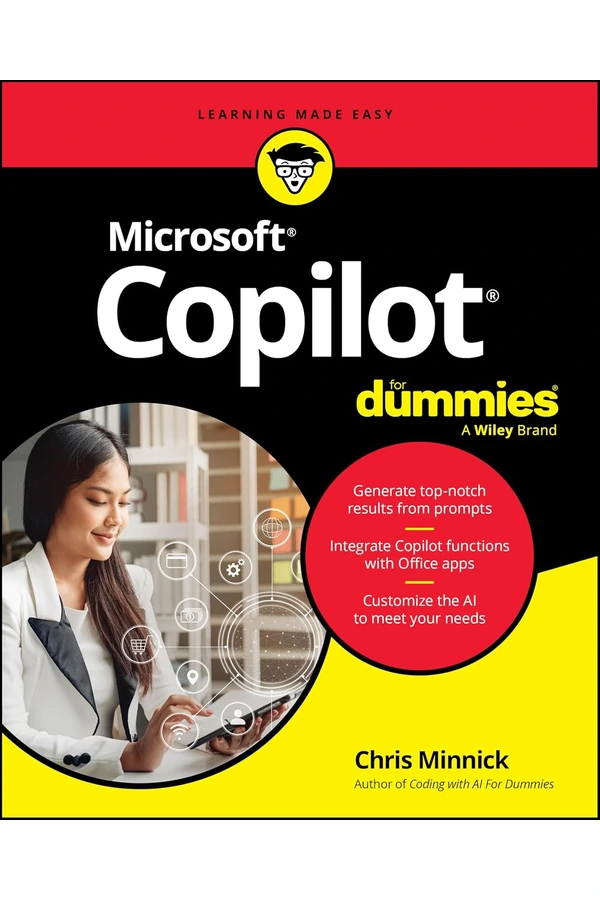
Most career-relevant Microsoft Copilot For Dummies Chris Minnick walks Copilot through Word, Excel, PowerPoint, Outlook, and Teams: the AI book most likely to pay off next week at a Microsoft 365 shop.
-
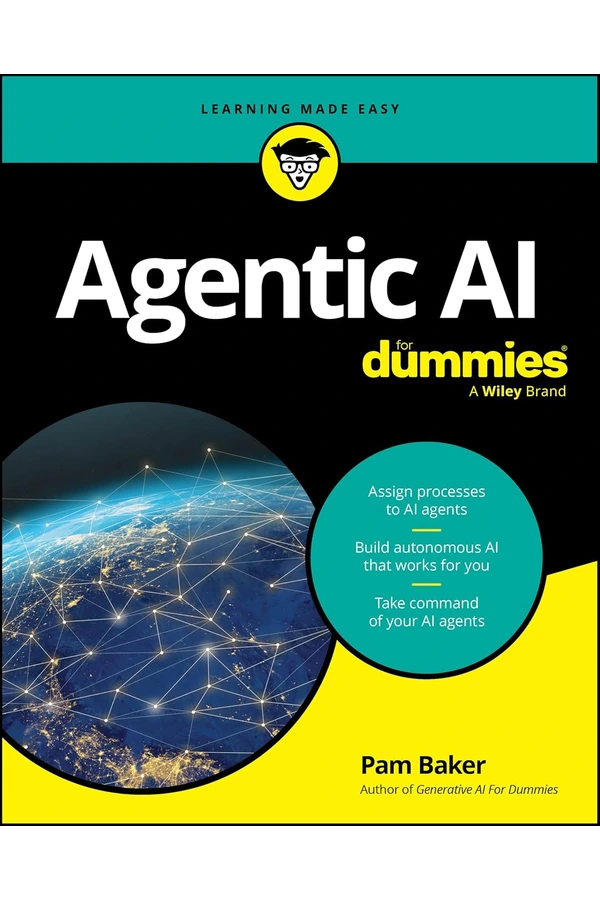
Newest release Agentic AI For Dummies Pam Baker's third AI title for Wiley, and the only For Dummies book covering autonomous agents in plain language for non-developers.
Which For Dummies AI Book Should You Read First?
The best For Dummies AI book to read first is Artificial Intelligence For Dummies, 3rd Edition, because it covers the foundations every other pick on this list assumes. The 9 picks span 304 to 752 pages, published 2024 to 2026, grouped by foundations, workplace tools, and role-specific applications. The table uses Level instead of Goodreads rating because 7 of 9 titles are too new to carry meaningful aggregate ratings.
| Title | Level | Best For | Length (pages) |
|---|---|---|---|
| 01Artificial Intelligence For Dummies, 3rd Edition (2024) | Beginner | Foundational primer | 368 |
| 02Generative AI For Dummies (2024) | Beginner | Prompt fundamentals | 304 |
| 03AI All-in-One For Dummies (2025) | Beginner | Single-volume reference | 752 |
| 04Microsoft Copilot For Dummies (2024) | Beginner | Microsoft 365 use | 320 |
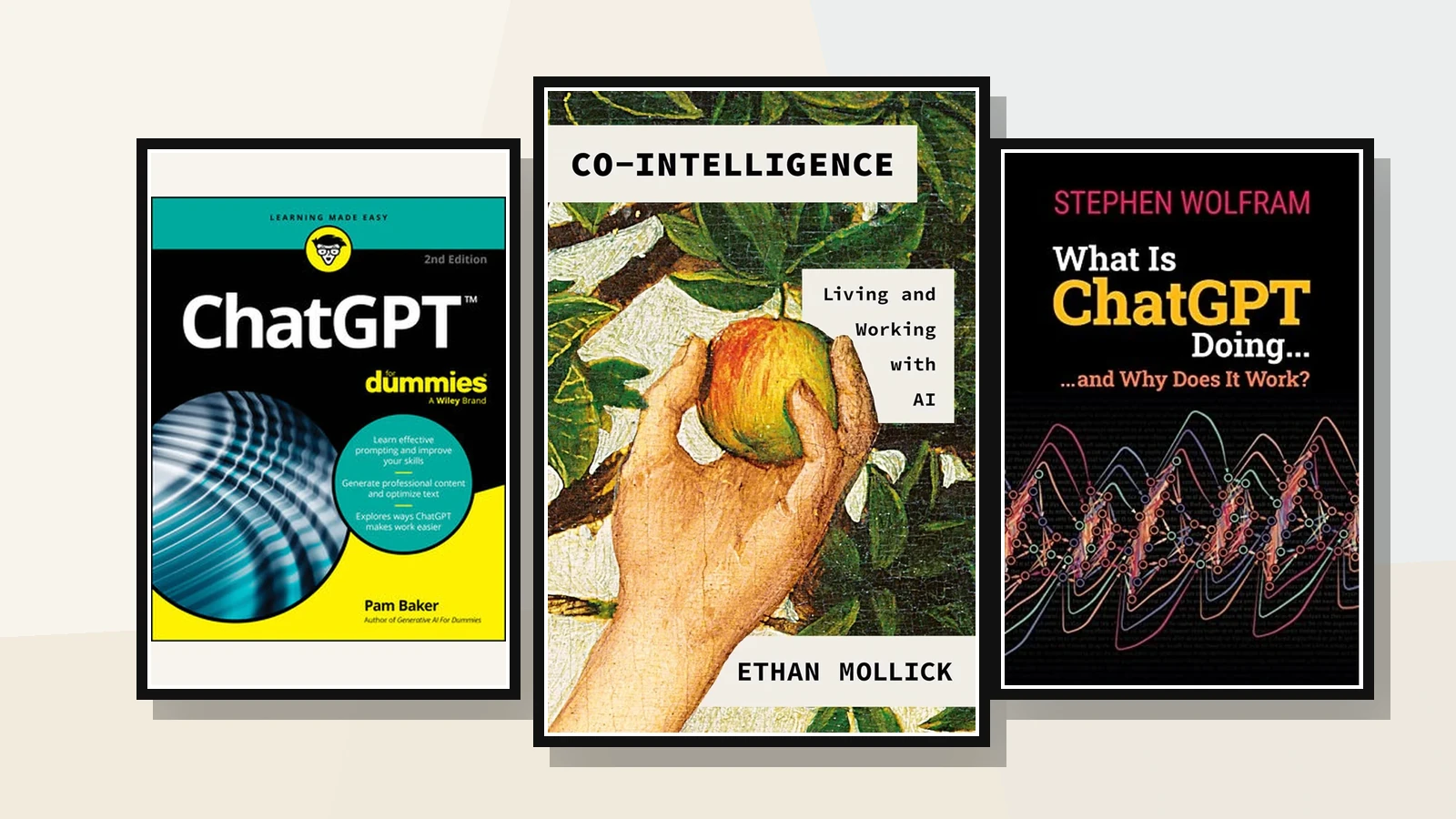
| 05ChatGPT For Dummies, 2nd Edition (2025) | Beginner | ChatGPT prompting | 352 |
| 06Agentic AI For Dummies (2025) | Intermediate | Autonomous agents | 352 |
| 07AI in Business For Dummies (2025) | Specialist | Business rollout | 316 |
| 08Training & Development with AI For Dummies (2026) | Specialist | L&D practitioners | ~352 |
| 09AI Chatbots For Dummies (2025) | Specialist | No-code chatbots | 409 |
What Are the Best For Dummies Books on AI Foundations?
The best For Dummies books on AI foundations are Artificial Intelligence For Dummies, 3rd Edition by Mueller, Massaron, and Diamond, Generative AI For Dummies by Pam Baker, and Artificial Intelligence All-in-One For Dummies. Massaron is a Google Developer Expert; the 3rd Edition appeared in November 2024. The three move from foundations through prompting to a single-volume desk reference.
1. Artificial Intelligence For Dummies, 3rd Edition (2024)
Six parts carry the argument that a non-technical professional needs working models for how algorithms learn from data and what the underlying hardware does, not just hands-on experience with one tool. John Paul Mueller, Luca Massaron, and Stephanie Diamond move through Fundamentals, Data, Algorithms and Learning, Hardware, Applications and Generative AI, and Specialised Applications. The 3rd Edition (Wiley, November 2024) is the current one; many third-party references still cite the 2018 2nd Edition.
The book reads as a workshop on how AI actually behaves rather than a survey of tools. The hinge between foundational AI theory and consumer-facing tools sits in the middle of the book, and the discussion of deep learning processors as a separate AI acceleration category beside GPUs is the kind of detail almost no consumer AI book gets to. Autonomous-vehicle decision-making becomes the running case study for how AI handles ambiguous inputs, more useful than a generic "what is AI" sketch.
Compared with Generative AI For Dummies at entry #2, this book operates a layer below: Mueller and team work on algorithms, data quality, and hardware, while Pam Baker stays on prompts and tool output. AI All-in-One For Dummies at entry #3 reuses chapter material from this title in a wider-but-shallower compilation, so this remains the place to read the foundations slowly rather than skim them.
Read this first if you are a non-technical professional who needs to talk credibly about AI to vendors, leadership, or technical staff, and who wants the full algorithms-to-hardware stack in one volume. Mueller has written 117+ technical books across AI and ML; Massaron is a Kaggle Grandmaster and Google Developer Expert. Readers who only want practical Copilot or ChatGPT skills should start at entry #4 or entry #5 and come back to this for context.
2. Generative AI For Dummies (2024)
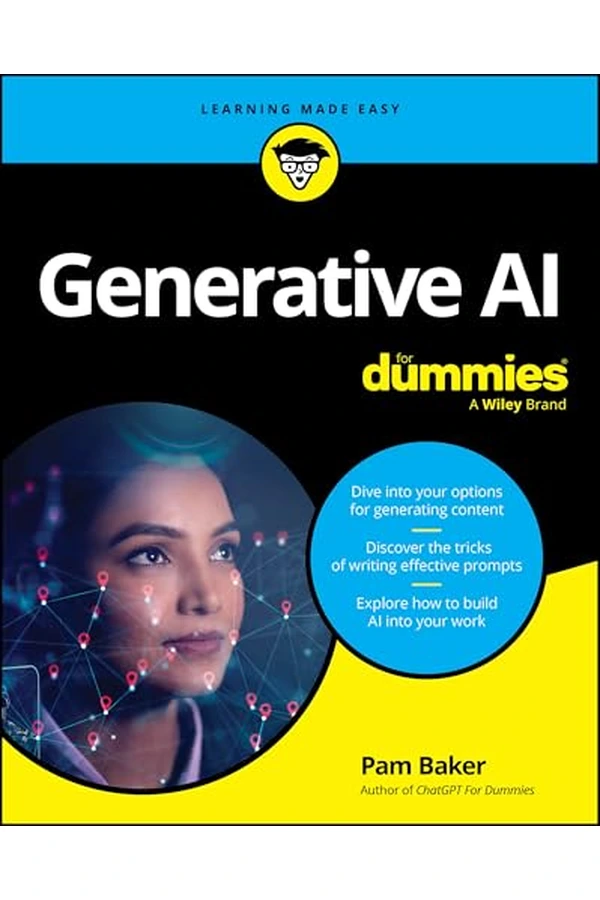
What it's about: Pam Baker structures the 2024 Wiley volume around generative AI fundamentals, prompt engineering as a discipline, and three applied domains: writing, image creation, and creative collaboration. Baker, a National Press Club member with bylines in The New York Times, CIO, NetworkWorld, and ComputerWorld, treats hallucination, copyright risk, and responsible-use trade-offs as practitioner work, not footnotes.
Aiifi's Take: The cleanest plain-English treatment of prompt engineering for knowledge workers, and the most practical foundation for getting useful output from any current chat or image model. Baker's worked examples carry the prompt-anatomy chapters where most prompting books wave at theory. Tools and model capabilities have moved on since publication, so cross-reference vendor docs. Right for non-technical professionals already using ChatGPT or Copilot occasionally. The "Generative AI for Dummies" PDF circulating online is Snowflake marketing collateral, not Baker's Wiley title.
3. Artificial Intelligence All-in-One For Dummies (2025)
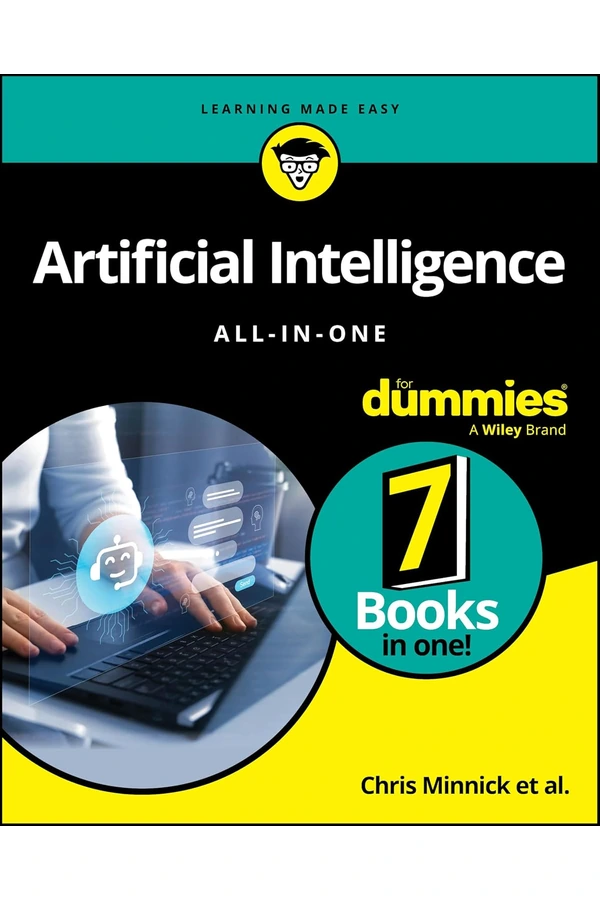
What it's about: Ten contributing authors share the byline on this 752-page Wiley compilation that draws material from Artificial Intelligence For Dummies, Generative AI For Dummies, Microsoft Copilot For Dummies, and AI in Business For Dummies. The 2025 update adds Copilot Studio agent building and a dedicated Responsible AI Movement section. The agent-building section is the most distinctive content for non-developers.
Aiifi's Take: A reference best read chapter by chapter, and most valuable as a desk lookup for whichever AI topic comes up next. Buyers who would otherwise pick up three or four standalone For Dummies AI titles get one physical volume. The compilation means depth on any single topic is shallower than the standalone book, and readers who already own two of the constituent titles will find it repetitive. The right call only if breadth matters more than depth.
Which For Dummies Books Cover the AI Tools You Will Use at Work?
The best For Dummies books on AI workplace tools are Microsoft Copilot For Dummies by Chris Minnick, ChatGPT For Dummies, 2nd Edition, and Agentic AI For Dummies, both by Pam Baker. Baker's two close a continuous arc from generative prompting to autonomous agents. Together they cover Microsoft 365 stacks, ChatGPT, and the agentic shift.
4. Microsoft Copilot For Dummies (2024)
Microsoft 365 Copilot is the AI tool most non-technical white-collar professionals meet first at work, and Chris Minnick's argument is that its productivity value comes from using it inside the apps you are already in, not from treating it as a separate chat tool. The 320-page Wiley volume runs four parts: meeting Copilot across chat, web, mobile, and Copilot+ PC; getting work done across Word, Excel, PowerPoint, Outlook, and Teams; jumpstarting productivity with custom Copilots and plugins; and a Part of Tens.
The middle section is where Copilot earns its place on a workplace shelf. The Word chapter works through integration end to end (drafting, summarising, rewriting), the Excel chapter walks through data analysis with named worked examples, and a later chapter covers plugin architecture as a path beyond out-of-the-box features. Minnick is CEO of training studio WatzThis? and has run developer training across Pluralsight, O'Reilly Video, Ed2Go, and Skillshare for 25 years, with web and mobile project work for Fortune 500 clients including Microsoft and Stanford.
Compared with ChatGPT For Dummies, 2nd Edition at entry #5, this book sits inside a different stack: Copilot is the tool an enterprise IT department has already paid for, while ChatGPT is the tool individuals and smaller firms reach for first. Minnick also wrote Coding with AI For Dummies (the developer-targeted AI-coding book that did not make this list), which means he has seen Copilot from both sides: inside Word and inside an IDE.
Pick this up if your employer pays for Microsoft 365 and you want Copilot for daily writing, spreadsheets, slides, and email instead of a separate chat tool. Workers at Google Workspace, Notion, or Slack-first companies will find limited transfer here, and should pick entry #5 instead. Anyone tracking where Copilot is heading as agents go autonomous should also read entry #6.
5. ChatGPT For Dummies, 2nd Edition (2025)
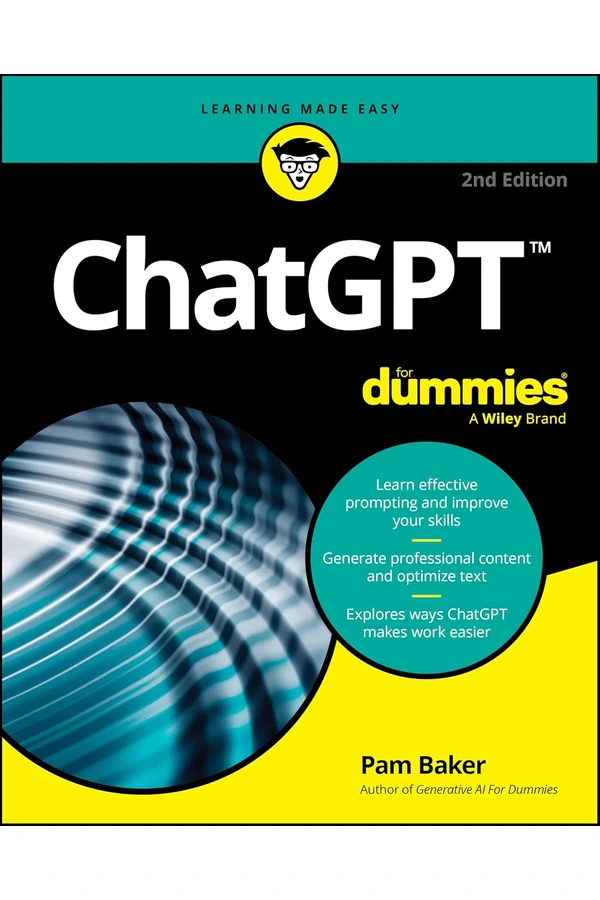
What it's about: The April 2025 second edition refreshes Pam Baker's ChatGPT guide for the GPT-4o and o1 lineup. The 352-page Wiley volume opens with account setup and model selection, runs through prompting fundamentals and advanced techniques, then closes with eight vertical chapters across marketing, HR, legal, journalism, healthcare, finance, IT, and education. Baker treats vertical prompting as a distinct skill.
Aiifi's Take: The right tool-specific guide for ChatGPT users at small or mid-sized firms without an enterprise Copilot or Gemini deployment, and for anyone who wants industry-specific prompting examples in one volume. The HR and marketing chapters walk through worked prompts rather than principles in the abstract. The single-tool focus means limited treatment of Claude, Gemini, or open-source alternatives that may better fit specific compliance needs. Best read as a companion to entry #2, not a substitute.
6. Agentic AI For Dummies (2025)
What it's about: Pam Baker's third Wiley AI title closes a continuous arc from Generative AI For Dummies through ChatGPT For Dummies to autonomous agents. The 352-page book opens with a framework distinguishing agentic from generative AI, walks through agent planning and implementation, then covers five domain applications (healthcare, business operations, marketing, content, education) and three critical challenges: alignment, transparency, and bias.
Aiifi's Take: The only For Dummies title covering the autonomous-agent shift in plain language, and the right primer for readers who already understand generative AI and want to grasp what changes when AI starts taking multi-step actions. Baker's delegation framework and her treatment of alignment problems handle AI safety in plain language for non-technical readers. The agent platform space moves fast and skips several enterprise platforms by name, so treat this as the conceptual primer for the field.
Which For Dummies Books Apply AI to Your Role and Business?
The best For Dummies books for your role are AI in Business For Dummies by Jeffrey Allan, Training & Development with AI For Dummies by Sheryl Lindsell-Roberts, and AI Chatbots For Dummies by Mirabella and Butow. Allan directs Nazareth University's Institute for Responsible Technology and AI. The three target deployment managers, L&D leads, and chatbot builders.
7. AI in Business For Dummies (2025)
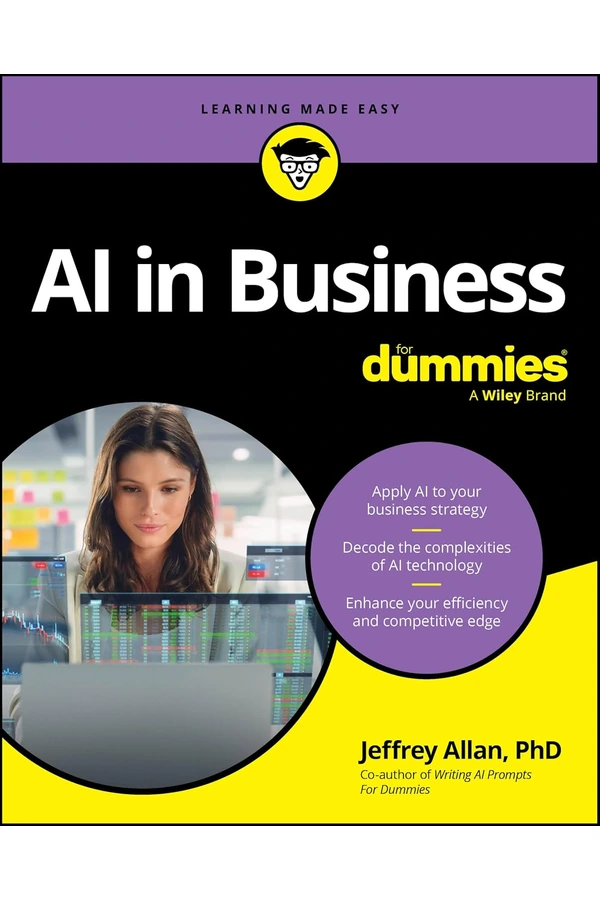
Most business AI pilots fail not because the technology is wrong but because organisations skip change management and pick the wrong starting use case. Jeffrey Allan walks through the decisions that avoid both. The 316-page Wiley book runs through AI capabilities and limitations, business AI tools, workflow automation, sales and customer experience, data analytics, content generation, ethical implementation, and staff adoption strategies. The chapter on common business AI mistakes is treated as a preventive frame for later chapters, not a cautionary aside.
Allan directs the Institute for Responsible Technology and Artificial Intelligence at Nazareth University and is an Assistant Professor in the School of Business and Leadership there. He holds a PhD in International Business with peer-reviewed research on AI-driven productivity and revenue, plus 20+ years across Fortune 500 (SAP, IBM Asia), Silicon Valley startups, and the U.S. State Department. That mix of academic research and operating experience separates him from the journalist and consultant authors who write most of the For Dummies AI catalog.
Compared with Training & Development with AI For Dummies at entry #8, this book runs cross-functional, while Lindsell-Roberts narrows to L&D: the workflow automation, sales-closure, and data-analytics treatments apply across most business units. Where Mueller and Massaron at entry #1 teach how AI works, Allan teaches what to do with it once you have decided to deploy.
Buy this if you are a mid-level manager, business unit lead, or operations manager who has to decide what to deploy and how to roll it out, not how to use a specific tool. Allan's chapters on getting staff and colleagues on board treat change management as a first-class topic. The book is less hands-on than the tool-specific titles in this list, so pair it with entry #4 or entry #5 if you also need next-week productivity skills, and skip if you wanted a primer on how AI itself works.
8. Training & Development with AI For Dummies (2026)
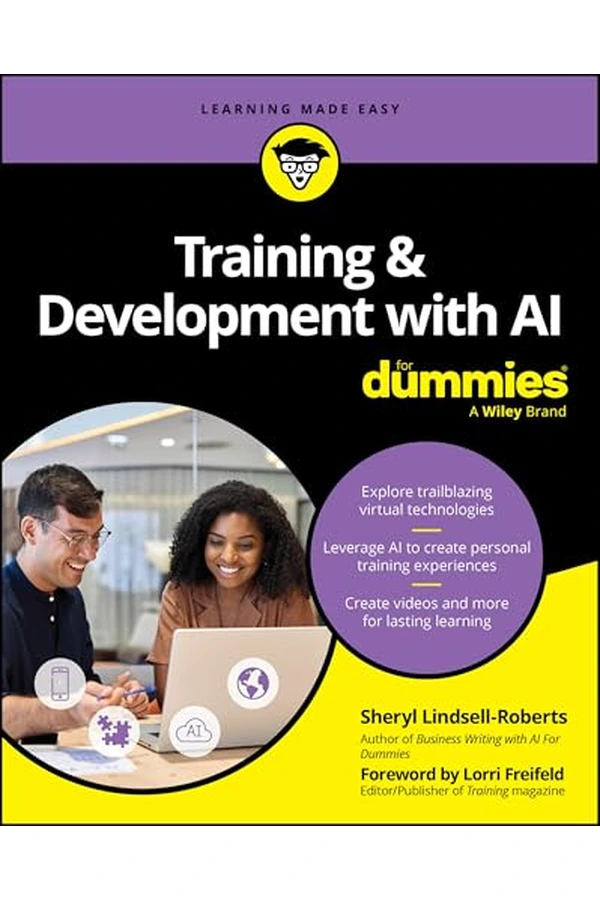
What it's about: 30+ years of training and business writing experience back Sheryl Lindsell-Roberts' six-part argument that AI replaces one-size-fits-all corporate training with adaptive, personalised pathways L&D teams build themselves. The Wiley volume runs through AI-driven instructional design, DIY content creation (personalised training, video, story), virtual training and gamification, and immersive technologies (VR, AR, blockchain). Lindsell-Roberts is an Association for Talent Development member.
Aiifi's Take: The right specialist title for L&D leaders adapting their function to AI-augmented learning, with coverage of adaptive tutors and learner-specific pathways that other titles do not match. The instructional-design section treats AI-assisted design as a methodological shift, not just a tooling upgrade, and the AI-driven gap analysis material feeds learning-path design directly. Outside the L&D function this content has limited use, so the call is straightforward: buy if your role touches training program design, skip otherwise.
9. AI Chatbots For Dummies (2025)
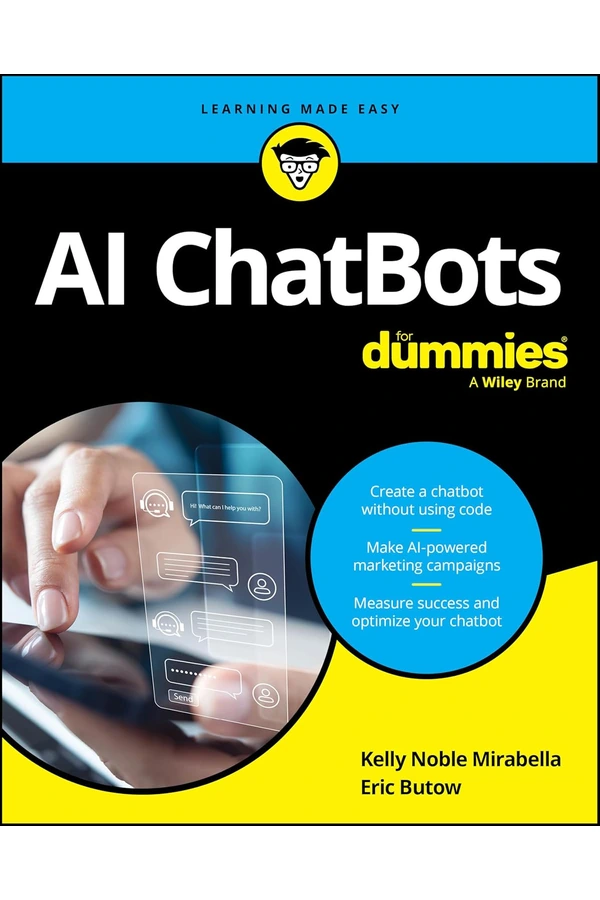
What it's about: A no-code playbook for chatbot deployment, carried by two practitioners: Kelly Noble Mirabella, founder of Baby Got Bot and a 16-year digital marketing consultant, and Eric Butow, author of 57+ technology and business books. ManyChat, Botpress, Voiceflow, and Chatfuel each anchor chapters across lead generation, FAQ deflection, ticket routing, and campaign automation.
Aiifi's Take: A practical no-code deployment guide that uses real platforms as worked examples, not a theoretical treatment of conversational AI. Mirabella's hands-on ManyChat experience anchors the build-without-code chapters in real product behaviour, not vendor-neutral abstraction. The book does not address LLM-powered enterprise agents on Salesforce Einstein, ServiceNow Now Assist, or Microsoft Copilot Studio in depth, so the right reader sits in marketing operations, customer support, or SMB ownership, not an enterprise contact centre. Pair with entry #6 for the broader agentic context.
How We Chose These For Dummies AI Books
I evaluated 17 currently-in-print For Dummies titles spanning AI, machine learning, and data science, published between 2019 and 2026. Sources included the Wiley For Dummies AI catalog, Goodreads aggregates where they exist, the Dummies.com author bios for each contributor, and verified institutional pages including the Google Developer Experts directory and the Nazareth University School of Business and Leadership. Every candidate was checked against the criteria below before the final ranking was set. This is an editorial ranking, not a formula or a score-sorted list.
Market context in 2026
- 75% of global knowledge workers use AI tools regularly, with usage nearly doubling in the previous six months (Microsoft + LinkedIn, 2025 Work Trend Index Annual Report).
- 94% of employers say they are likely to hire candidates with generative AI certifications, and 75% prefer GenAI-proficient candidates over more experienced talent without that proficiency (Coursera, Global Skills Report 2025).
- Nearly half of employees say they want more formal AI training and identify it as the single most effective lever for accelerating AI adoption, while more than one in five report receiving minimal or no support (McKinsey & Company, Superagency in the Workplace, January 2025).
The final 9 picks were chosen against four criteria, applied in this order:
- Topic centrality (knockout): the book had to be a For Dummies title primarily about AI, generative AI, agentic AI, or a current-generation AI tool such as Copilot or ChatGPT. Books on data infrastructure, statistics, or pre-LLM ML applications failed.
- Audience fit (knockout): accessible without coding, math, or data-science background. Test: a marketing director, HR business partner, finance manager, or middle-manager generalist could read straight through. Books pitched at developers, data scientists, or ML engineers failed.
- Quality signals (ranking): Goodreads aggregate rating where 25+ ratings exist; otherwise edition history, author track record across the For Dummies series, and recency.
- Freshness (tie-break): post-2023 publication preferred. Pre-ChatGPT titles only when they remained genuinely useful and had no current replacement.
Several For Dummies AI titles on this list are too new to carry meaningful public ratings. Inclusion was based on topic centrality, audience fit for non-technical professionals, and freshness against the post-ChatGPT moment. The For Dummies category does not receive trade-press review coverage from Publishers Weekly, Kirkus, Library Journal, or major-publication book sections, so trust signals come from publisher reputation, multi-edition lineage, sales volume, and author track record rather than critic citations.
I excluded three categories: coder- and developer-focused titles (Coding with AI For Dummies by Chris Minnick), math- and code-heavy machine learning titles (Machine Learning For Dummies, 3rd Edition, Deep Learning For Dummies, Algorithms For Dummies), and Python and R data science programming titles (Python for Data Science For Dummies, Data Science Programming All-in-One For Dummies). Superseded editions were excluded when a current edition exists, even if the older edition still circulates in libraries and used markets. The full list of 8 well-known For Dummies titles I considered but did not include sits in the next section.
This page is editorially independent. No item is paid, sponsored, or included as part of any commercial relationship.
Who should skip this book list
Software engineers, data scientists, and ML practitioners who write Python or R day-to-day should skip this list and read Machine Learning For Dummies, 3rd Edition by Mueller and Massaron instead. The 9 picks here are weighted toward non-technical white-collar professionals, so they spend more time on plain-language fundamentals, prompting, and rollout judgment than on the linear algebra, hyperparameter tuning, or model-training mechanics a working ML engineer would expect.
For Dummies AI Books I Considered but Did Not Include
These 8 For Dummies titles appear regularly on third-party "best AI books" lists, library catalogues, and AI-generated reading-list summaries. Each was reviewed against the four criteria above and excluded for a specific reason, listed here so readers can decide for themselves whether the exclusion fits their needs.
- Machine Learning For Dummies, 3rd Edition by John Paul Mueller and Luca Massaron (2025): too technical for the article's non-technical white-collar audience. The book teaches readers to write Python and R code that trains models, builds classifiers, and tunes hyperparameters, and it assumes statistical literacy and walks through linear-algebra concepts. Excellent book for the right reader, wrong reader for this list.
- Deep Learning For Dummies by John Paul Mueller and Luca Massaron (2019): deeper into the technical end than Machine Learning For Dummies. Covers backpropagation, convolutional and recurrent networks, and TensorFlow / Keras code at a level that assumes the reader is already comfortable with the ML For Dummies material. Same audience knockout, more so.
- Coding with AI For Dummies by Chris Minnick (2024): written for working developers using AI tools (Copilot, ChatGPT, Cursor) inside their coding workflow. Topics include AI-assisted code generation, refactoring, and debugging in real programming languages. Note that Microsoft Copilot For Dummies (also by Minnick) is the right Copilot title for this audience because it covers Copilot inside Word, Excel, PowerPoint, and Outlook rather than inside an IDE.
- Enterprise AI For Dummies by Zachary Jarvinen (2020): published August 2020, predates ChatGPT and the generative-AI era. Superseded for the senior-leader audience by AI in Business For Dummies (Allan, 2025), which addresses comparable ground with present-day tools and peer-reviewed research.
- Big Data For Dummies by Judith Hurwitz, Alan Nugent, Fern Halper, and Marcia Kaufman (2013): predates the LLM era by a decade. Foundational data infrastructure title rather than an AI title; fails topic centrality when scoped to today's AI rather than data infrastructure broadly.
- Predictive Analytics For Dummies, 2nd Edition by Anasse Bari, Mohamed Chaouchi, and Tommy Jung (2016): predates the LLM moment and addresses traditional ML applications rather than today's generative or agentic AI. Closer to the data-science adjacent shelf than the AI shelf for a 2026 reader.
- Artificial Intelligence For Dummies, 2nd Edition by John Paul Mueller and Luca Massaron (2021): superseded by the 3rd Edition (2024), which is entry #1. Listed here to flag for readers who may encounter the 2nd Edition in libraries or used markets but should buy the current edition instead.
- ChatGPT For Dummies, 1st Edition by Pam Baker (2023): superseded by the 2nd Edition (2025), which is entry #5. Same flag-for-readers reason as AI For Dummies 2nd Edition.
Frequently Asked Questions
Is there a free PDF of AI For Dummies?
No legal full-book PDF of AI For Dummies exists. Copies on sites like bobfarley.us are pirated. Wiley publishes a free official AI For Dummies Cheat Sheet on Dummies.com. Library e-loans via Libby or OverDrive, Kindle Unlimited where applicable, and used copies cover the rest.
Which edition of AI For Dummies is current?
The current AI For Dummies is the Mueller, Massaron, and Diamond 3rd Edition from 2024, not the 2nd Edition from 2018 that many third-party references still list. ChatGPT For Dummies is on its 2nd Edition (Pam Baker, 2025). For every other pick on this list, the listed edition is the only edition.
Why isn't Machine Learning For Dummies on the list?
Machine Learning For Dummies, 3rd Edition by Mueller and Massaron (2025) is the technical follow-on once you finish entry #1. It is the right book if you can already write Python or R and want to train models yourself; it is the wrong book if you are looking for plain-language AI literacy.
Why isn't Enterprise AI For Dummies on the list?
Enterprise AI For Dummies (2020) reads like a different era. If you wanted that book for the senior-leader audience, AI in Business For Dummies (Allan, 2025) is the buy: it sequences modern AI rollout with peer-reviewed research behind the workflow-automation chapters and a treatment of change management that the 2020 title could not have.
Is there an AI For Dummies for seniors or older readers?
No dedicated senior-targeted AI For Dummies title exists. Artificial Intelligence For Dummies, 3rd Edition is the most accessible plain-language treatment for any reader new to AI, and library systems often stock large-print editions of For Dummies titles even when the publisher itself does not produce one.
Is there a Claude For Dummies?
No Claude For Dummies exists in the Wiley catalog as of May 2026. ChatGPT For Dummies, 2nd Edition is the closest substitute because prompting fundamentals (formatting, intent, vocabulary, vertical framing) transfer between chat-style models. Generative AI For Dummies covers the same skill at a model-agnostic level.
Is there a For Dummies AI bundle or all-in-one set?
Yes. Artificial Intelligence All-in-One For Dummies (2025, 752 pages) is the closest single-volume bundle covering AI fundamentals plus Copilot, ChatGPT, business AI, and responsible AI from ten contributing authors of the standalone titles. Buy this if you would otherwise pick up three or four separate For Dummies AI books.
Are these AI For Dummies books available on Kindle and as audiobooks?
All 9 picks are on Kindle. Audible audiobook editions via Tantor Media exist for AI For Dummies, 3rd Edition (Paul Boehmer), Generative AI For Dummies (Cara Firestone), AI All-in-One For Dummies (Nick Mondelli), and ChatGPT For Dummies, 2nd Edition (Angela Juarez). The remaining five are paperback-and-Kindle only.
What to Read Next
For a wider AI reading list outside the For Dummies series, see our best AI books for beginners, best ChatGPT books, and best AI leadership books. To learn AI through courses, see our AI course guides.
This list was last reviewed in May 2026 and is updated when significant new For Dummies AI titles are released. Think we missed one? Let us know.