Quick Picks
-
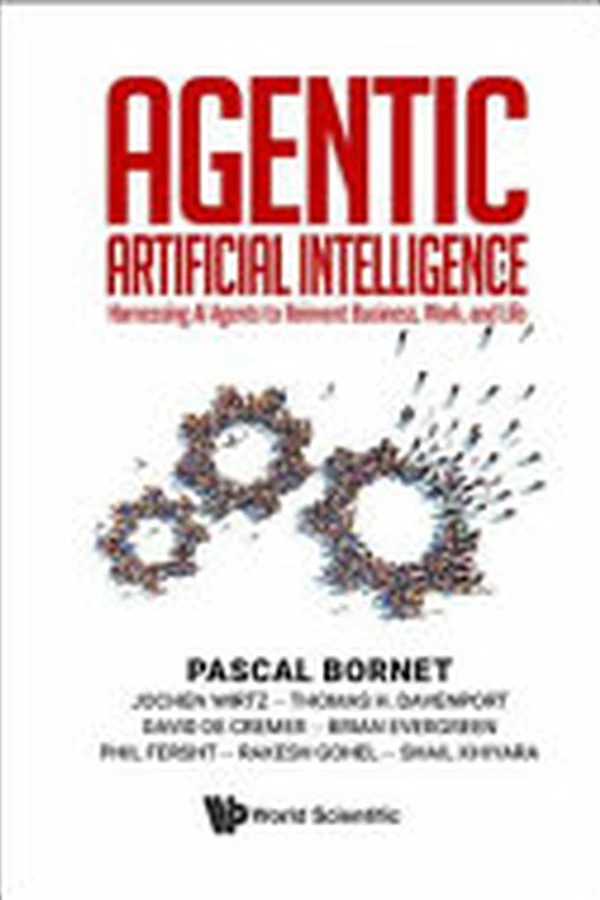 Best overall Agentic Artificial Intelligence Co-authored by 11 senior practitioners across NUS, Babson, Northeastern, and Microsoft Research, all drawing from real agent deployments inside large companies.
 -
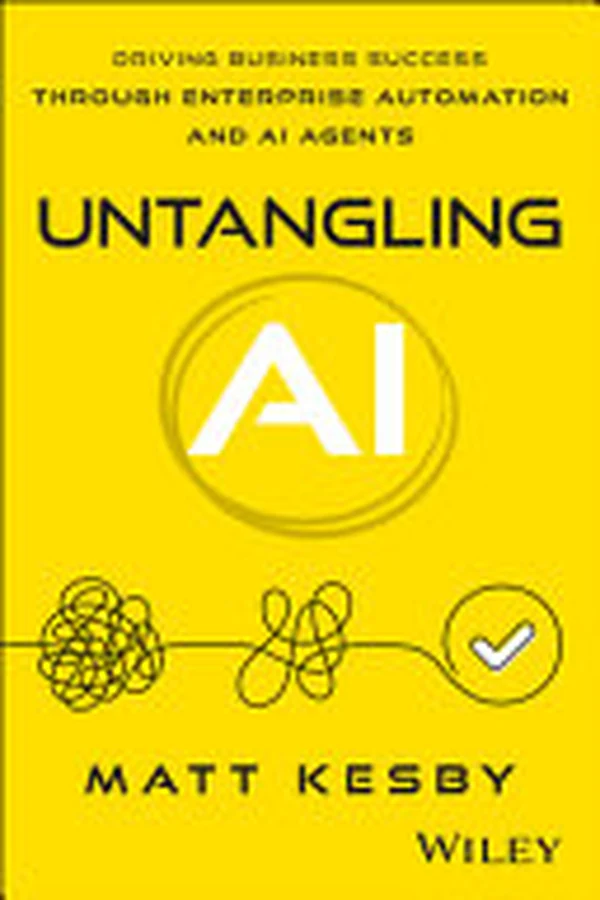
Newest release Untangling AI Treats AI agents as a process problem, not a tools problem: pick the workflow first, then choose the agent.
-
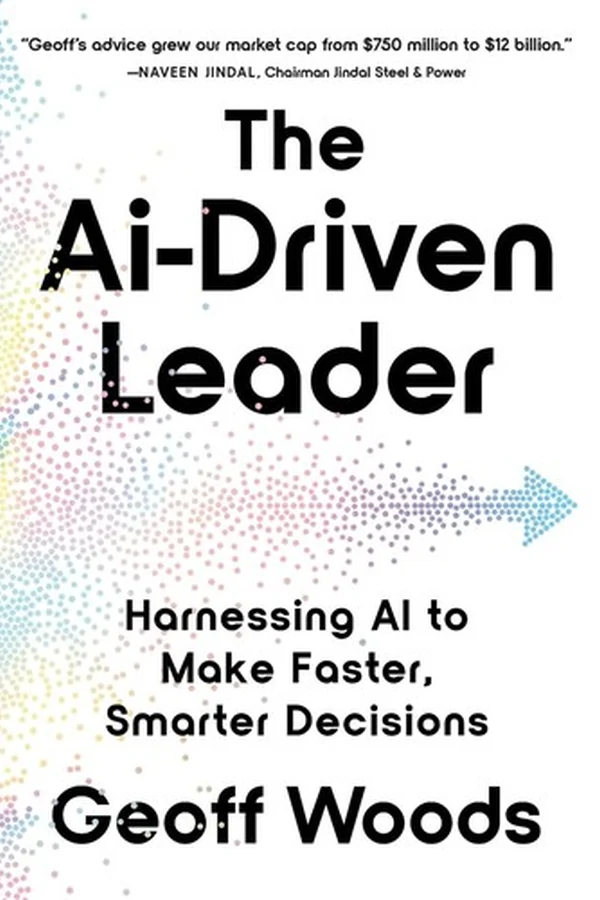
Most read The AI-Driven Leader For senior leaders using AI to challenge their reasoning on hard decisions, not just speed up their inbox.
Which AI Agents Book Should You Read First?
The best AI agents book to read first is Agentic Artificial Intelligence by Bornet, Davenport, Wirtz, and 8 co-authors, because the multi-author casebook covers agent rollout depth no single-author book on this list matches. The 6 picks span 114 to 550 pages, published 2024 to 2026, grouped into top 3 picks and a leaders-and-managers shelf. Goodreads ratings are omitted from the table because 3 of 6 titles are too new or too niche to carry meaningful aggregate scores.
| Title | Best For | Length (pages) |
|---|---|---|
| 01Agentic Artificial Intelligence (2025) | Agentic strategy | 550 |
| 02Untangling AI (2026) | Enterprise rollout | 464 |
| 03AI First (2025) | AI-first transition | 193 |
| 04The AI-Driven Leader (2024) | Decision velocity | 311 |
| 05More Human (2025) | Leadership style | 176 |
| 06Agentic AI for Leaders (2025) | Agent primer | 114 |
What Are the Best AI Agents Books?
The best AI agents books are Agentic Artificial Intelligence by Pascal Bornet and 10 co-authors (Babson, NUS, Northeastern), Untangling AI by Matt Kesby (Wiley, February 2026), and AI First by Brotman and Sack (former Starbucks and Microsoft executives). Each tackles a different angle on deploying agents in real companies without writing code.
1. Agentic Artificial Intelligence: Harnessing AI Agents to Reinvent Business, Work and Life (2025)
Pascal Bornet and 10 co-authors, including Thomas H. Davenport of Babson and Jochen Wirtz of NUS Business School, argue that AI agents are not a new chatbot but a new layer of digital labor: software that perceives, reasons, and acts without prompting from a human supervisor. Drawing on the team's combined experience at McKinsey, Microsoft Research, and HFS Research, the book traces agents from RPA roots to autonomous digital workers, then maps the executive playbook for identifying, scaling, and governing agent projects across three time horizons.
The structural anchor is a 2x2 decision matrix paired with a maturity model. The authors place organizations on two dimensions, autonomy and integration, then walk through phased roadmaps for moving across the matrix. Case studies cite cost reductions of 25 percent or more on customer service agents and customer satisfaction lifts above 40 percent in claims handling, drawn from the authors' combined consulting work at HFS Research, McKinsey, EY, and Microsoft. The book treats governance concretely, naming risk types specific to autonomous systems throughout.
Peter High, Forbes, December 2025"Concise and pragmatic, it is a roadmap for adopting agentic AI responsibly and effectively."
Compare this with Untangling AI at #2, which is a leaner, single-author book that focuses on four foundations of AI adoption but uses fewer case studies. Bornet's anthology is broader and case-richer; Kesby is a better fit for a single executive working alone. AI First at #3 leans heaviest on the agent-economy thesis, drawing on direct interviews with Sam Altman and Reid Hoffman, but covers less of the governance and operations detail Bornet's co-authors provide.
Read this if you are a senior executive or chief AI officer at any company piloting agent projects in 2026. The 2x2 frameworks and maturity model give you something concrete to apply on Monday. Pick a different book if you write code for a living and need a framework manual; this list is for non-technical leaders, not engineers. Pick AI First at #3 if you want a punchier read tied to brand and customer strategy.
2. Untangling AI: Driving Business Success Through Enterprise Automation and AI Agents (2026)
What it's about: A Wiley playbook for non-technical executives that maps the AI adoption lifecycle and identifies where agentic systems can run entire business processes, not isolated tasks. Forbes Technology Council member Matt Kesby, who founded Multiplai Tech and GoTeam, organizes the 464 pages around four foundations (strategy, execution, people, technology) plus a "High-Trust Communication" framework for ethics and security ahead of deployment.
Aiifi's Take: The strongest single playbook in this list for an exec actually piloting agents now. Goodreads ratings have not arrived yet (book just released), so judgment rests on Kesby's prior Mastering the Machine and his decade running Multiplai Tech and GoTeam: operator instinct, not consultancy theory. The High-Trust Communication framework is the standout, putting governance at the front of an agent rollout, not the back. Best for executives in the first 90 days of an agent pilot.
3. AI First: The Playbook for a Future-Proof Business and Brand (2025)
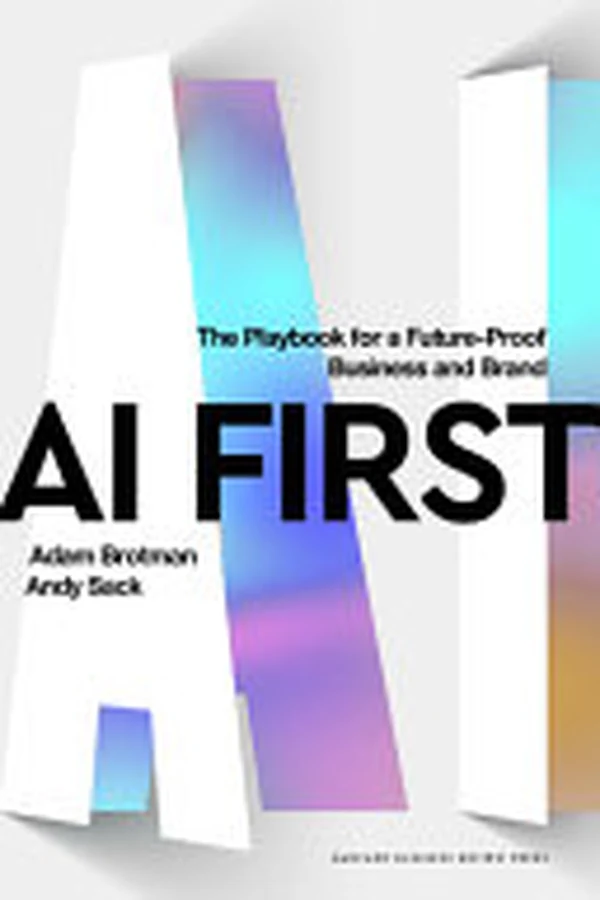
What it's about: Adam Brotman, former Chief Digital Officer at Starbucks, and Andy Sack, former adviser to Microsoft CEO Satya Nadella, draw on interviews with Sam Altman, Bill Gates, and Reid Hoffman to argue that becoming AI-first is a brand and customer-experience question, not just a technology one. The 193-page Harvard Business Review Press book covers job redesign, skills, early wins, and the agent-economy implications Altman names directly.
Peter High, Forbes, December 2025"A clear-eyed guide to what it means to build an 'AI first' organization."
Aiifi's Take: Brotman's Starbucks operator background and Sack's Microsoft adviser network give the book a hands-on tone that polished consultancy titles often lose. The Altman interview, where he predicts agents will handle 95 percent of strategy and agency work, is the spine of the book and one of the sharpest quotes in any 2025 AI book. The 3.47 Goodreads average reflects a divide: readers wanting prescriptive action love it, readers wanting deeper research push back. Best for CMOs, CDOs, and brand leads.
Which AI Agents Books Help Leaders Adapt to Agentic Work?
The best AI agents books for leaders and managers are The AI-Driven Leader by Geoff Woods (former Jindal Steel CGO), More Human by Rasmus Hougaard and Jacqueline Carter (Thinkers50 Top 8 leadership thinker), and Agentic AI for Leaders by Subodh Kumar (Harvard Business School alum). Each treats agents as a leadership problem, not a deployment problem.
4. The AI-Driven Leader: Harnessing AI to Make Faster, Smarter Decisions (2024)
The CRIT framework (Context, Role, Interview, Task) is Geoff Woods's argument for treating AI as a strategic thought partner that interviews executives on their decisions, not a productivity tool that drafts emails. Woods built the framework while serving as Chief Growth Officer at Jindal Steel & Power, the role he held before founding AI Leadership. The 311 pages cover decision velocity, executive prompting, AI-augmented strategy, and the leader's role in setting AI direction across an organisation.
The CRIT walkthroughs are where the book earns its place. Each step is anchored to a worked executive scenario (strategy review, succession planning, board prep) rather than generic prompt templates. Woods argues that executives should reach for AI on the hardest decisions first, not the routine ones, because that is where AI's reasoning capacity exceeds the marginal value of an inbox-summarising tool. The book reached #1 on Amazon's AI and Business bestseller charts and accumulated 1,921 Goodreads ratings, roughly five times the reach of anything else on this list.
Compared with More Human at #5, Woods stays operational where Hougaard and Carter run philosophical: CRIT is a tool you can apply Monday morning, while More Human asks what leaders should become as AI takes over routine cognition. Compared with Agentic AI for Leaders at #6, Woods works at the human-leadership layer (how to think with AI) where Kumar works at the system-design layer (how to deploy autonomous agents in your organisation). Pair Woods with one of the two for full coverage of the executive AI question.
Read this if you are a senior executive or business unit lead who wants AI in real decision-making, not calendar prep. Self-published under Woods's own AI Thought Leadership imprint, so editing and structure are looser than the HBR Press titles. Pick More Human at #5 instead if you want a leadership-style argument grounded in 100+ CEO interviews and a 360-survey methodology. Pick Bornet's Agentic Artificial Intelligence at #1 if you want the case-rich enterprise playbook rather than the personal decision-coach framing.
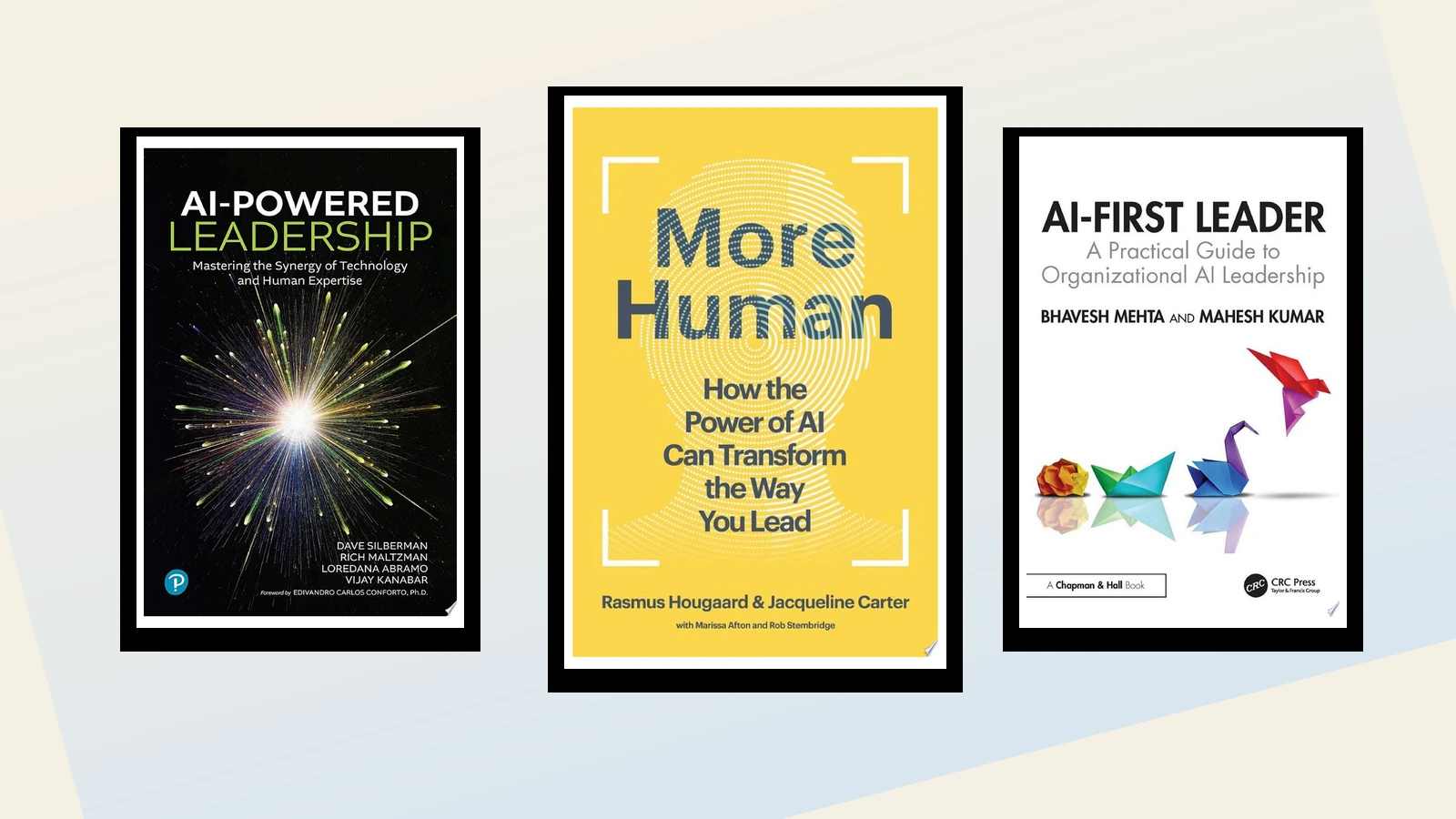
5. More Human: How the Power of AI Can Transform the Way You Lead (2025)
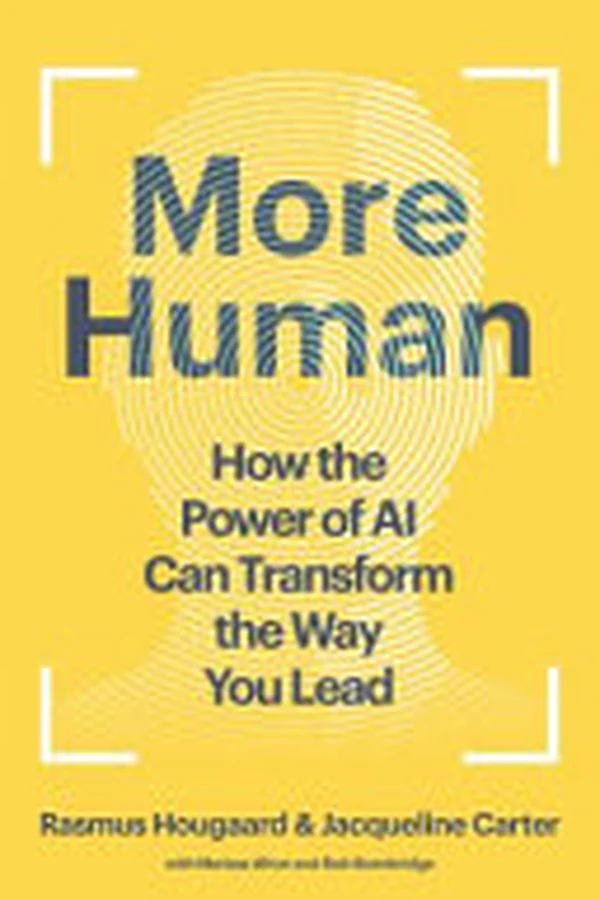
What it's about: A Harvard Business Review Press leadership book arguing that delegating routine cognitive work to AI agents lets executives become more human, not less. Rasmus Hougaard, a Thinkers50 Top 8 Leadership Thinker and author of 53 Harvard Business Review articles, and Jacqueline Carter, both senior partners at Potential Project, build the argument from 100+ CEO interviews and a worldwide 360-degree survey. The 176 pages organize around three qualities the authors say agentic delegation amplifies: awareness, wisdom, and compassion.
Aiifi's Take: The clearest articulation on this list of why agents matter for leadership style, not just productivity. Hougaard and Carter make a pointed argument: most "AI for leaders" content treats AI as another delegation tool, while More Human asks what leaders should do with the bandwidth they reclaim. The 360-survey methodology is a research credential rare in this section. The book runs short on specific agent deployment guidance compared with Bornet at #1; pair the two. Best for CHROs, leadership development heads, and senior executives reshaping teams.
6. Agentic AI for Leaders: Build AI Fluency, Discover Real Opportunities, and Thrive in the Era of Digital Workers (2025)
What it's about: 114 pages from HBS alum Subodh Kumar, founder of Brisk AI after a cross-enterprise AI strategy career. The book is a primer on how generative and agentic AI work, where they create the most value, and how to move from pilots to scaled adoption. Kumar's frame is "digital workers" as a new operating layer alongside human teams, with chapters on balancing innovation with governance.
Aiifi's Take: At 114 pages, Kumar's primer is the fastest read on this list, useful as a 90-minute orientation for a leader who has heard the agent buzzwords but never had them defined. His HBS background and Brisk AI consulting work give the writing a practitioner edge, and the "digital workers" framing is the cleanest single concept any agent primer offers. The Goodreads sample is too small (six ratings) to be a real quality signal. Best for first-time learners and board members preparing for an agent briefing.
How We Chose These AI Agents Books
I evaluated more than 22 AI agents books published between 2023 and 2026, drawing from publisher/category listings in business AI, Goodreads shelves for "agentic AI" and "ai-agents", expert recommendation lists from HBR and McKinsey, and major business book award shortlists. Every candidate was checked against the criteria below before the final ranking was set. The final 6 picks genuinely serve a non-technical executive, leader, or manager. This is fewer than the usual 9, and the cut is deliberate: most 2025-2026 AI agents books are framework manuals (LangChain, LangGraph, multi-agent system construction guides) targeted at software engineers, not non-technical decision-makers. I did not pad with developer titles. When more business-focused AI agents books are published, this list will expand. This is an editorial ranking, not a formula or a score-sorted list.
Market context in 2026
- McKinsey's The state of AI in 2025: Agents, innovation, and transformation (November 2025) found 23% of organizations are scaling an agentic AI system somewhere in their enterprise, with another 39% experimenting. Two-thirds of large organizations have an agent project, but in any single function fewer than 10% have scaled.
- The 2026 Stanford HAI AI Index Report (using Lightcast labor data) tracked the agentic AI skill cluster from 0.06% of US job postings in 2024 to 0.23% in 2025, an increase of more than 280% in a single year and roughly 90,000 postings.
The final 6 are organised into two sections (top 3 picks, leaders and managers) so you can go straight to the area that matches your role. Each book was evaluated on four criteria:
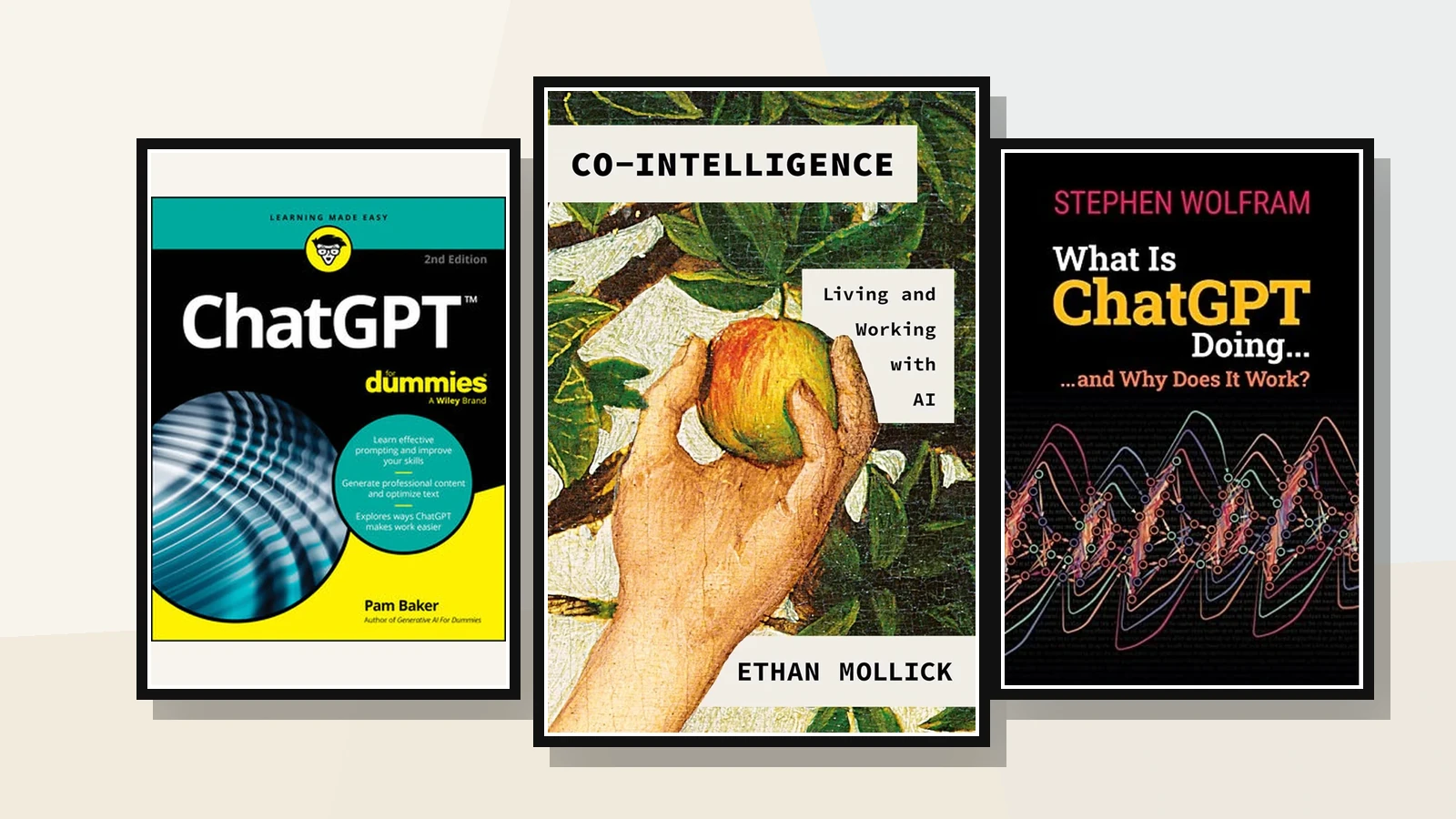
- Agent centrality: AI agents had to be the book's primary subject, not a chapter inside a broader AI safety, generative-AI, or futurism book. Books such as Co-Intelligence (general AI), Empire of AI (industry reporting), and The Coming Wave (AI safety) were strong but excluded as taxonomically off-topic.
- Audience fit: Every pick is for a non-technical executive, leader, or manager. Books for software developers (LangChain or LangGraph manuals, multi-agent system construction guides) and books written for ML researchers were excluded. The line is deliberate: this site serves readers who use AI at work, not readers who build AI from scratch.
- Quality signals: Goodreads ratings and reviews where they exist, publisher prestige (Harvard Business Review Press, Wiley, World Scientific), recognized awards (Forbes Top 10 Tech Books), and named-author credentials at recognized institutions.
- Freshness: The agent space moves quickly. All 6 books on this list were published in 2024 or later, with 5 from 2025-2026. Pre-2024 books are excluded unless they remain definitive on a specific subtopic and no newer book has replaced them.
Several books on this list are too new or too niche to carry meaningful Goodreads volumes (Kesby released within the last few months; Kumar has six ratings; Hougaard and Carter under 50). Recent business AI books for non-technical leaders rarely receive trade-press review coverage from Publishers Weekly, Kirkus, or Library Journal, so trust signals come from publisher reputation (Harvard Business Review Press, Wiley, World Scientific), recognized awards (Forbes Top 10 Tech Books), and named-author institutional credentials rather than critic citations.
I excluded four categories: AI alignment and AI safety books (Christian, Russell, Suleyman, Bostrom), economics-of-AI books (Agrawal, Gans, Goldfarb), framework manuals for software engineers (LangChain, LangGraph, AutoGen, CrewAI handbooks), and titles where agents are a secondary or tangential topic. The full list of seven well-known AI agents books I considered but did not include sits in the next section. This page is editorially independent. No item is paid or sponsored, and affiliate relationships do not influence which books are selected.
Who should skip this book list
Software engineers building agent systems in Python should look elsewhere. This list does not cover LangChain, LangGraph, AutoGen, CrewAI, or other framework manuals; those serve a developer audience that this site does not write for. ML researchers and academic AI scientists should read the latest agent papers on arXiv (search "LLM agent" or "agentic" 2025-2026) instead. The 6 picks here are written for non-technical executives, leaders, and managers, which is the wrong fit if you write code for a living. Complete AI beginners with no business context should start with our best AI books for beginners first, then return here when they need agent-deployment specifics.
AI Agents Books I Considered but Did Not Include
These seven AI agents books appear regularly on developer reading lists, Amazon recommendations for "AI agents", and 2025 agentic-AI roundups. Each was reviewed against the four criteria above and excluded for a specific reason, listed here so readers can decide for themselves whether the exclusion fits their needs.
- AI Agents and Applications: With LangChain, LangGraph, and MCP by Roberto Infante (Manning, 2025): a code-first LangChain and LangGraph manual built around Python examples, written for software engineers, not the non-technical leaders this list serves.
- Learning LangChain: Building AI and LLM Applications with LangChain and LangGraph by Mayo Oshin and Nuno Campos (O'Reilly, 2025): the official-team developer manual for LangChain and LangGraph, useful if you write code, off-audience for executives evaluating agents.
- Building Applications with AI Agents by Michael Albada (O'Reilly, 2025): walks through LangGraph, LangChain, and AutoGen at the code level with vector stores and retrieval-augmented generation, written for engineers not leaders.
- Designing Multi-Agent Systems: Principles, Patterns, and Implementation for AI Agents by Victor Dibia (self-published, November 2025): framework-agnostic but built around 186 code snippets across 15 chapters, aimed at engineers building multi-agent systems from scratch.
- The Multi-Agent AI Project Handbook by Tony Lakeman (2025): fifteen hands-on CrewAI, AutoGen, and LangChain projects useful for developers, off-list for executives who do not write code.
- The AI-Savvy Leader: Nine Ways to Take Back Control and Make AI Work by David De Cremer (Harvard Business Review Press, 2024): a strong leadership book by a co-author of our #1 pick, but its argument is about AI generally rather than agents specifically.
- All Hands on Tech: The AI-Powered Citizen Revolution by Thomas H. Davenport, Ian Barkin, and Chase Davenport (Wiley, 2024): another book by a co-author of our #1 pick, but the subject is generative AI for citizen developers, not autonomous agent deployment.
Frequently Asked Questions
What is the best AI agents book for executives?
The best AI agents book for executives is Agentic Artificial Intelligence by Pascal Bornet and 10 co-authors (2025, Forbes Top 10 Tech Book). It is the longest book on this list at 550 pages and the only one co-authored by 11 practitioners across NUS, Babson, Northeastern, and Microsoft Research. For a shorter alternative, read AI First by Brotman and Sack.
What is the best AI agents book published in 2026?
The best AI agents book published in 2026 is Untangling AI by Matt Kesby (Wiley, February 2026, 464 pages), the only mainstream-publisher 2026 release in this category aimed at non-technical executives. The other recent picks include AI First by Brotman and Sack (HBR Press, 2025) and Agentic Artificial Intelligence by Bornet and co-authors (World Scientific, 2025).
Are AI agents books the same as AI safety or alignment books?
No. AI safety books focus on alignment, control, and existential risk (Russell, Christian, Suleyman); AI agents books focus on autonomous AI systems that act on goals, with most current titles aimed at deploying or building those systems. The two fields overlap on governance but use different methods. For the safety canon, see The Alignment Problem on our beginners list.
What is the best AI agents book on Amazon?
The best AI agents book on Amazon is Agentic Artificial Intelligence by Bornet and co-authors (Goodreads 3.92, 356 ratings). All 6 books on this list are available on Amazon. The most-rated is The AI-Driven Leader by Geoff Woods (3.91, 1,921 ratings), Amazon's #1 bestseller in multiple AI and business categories during 2024-2025.
Which AI agents book is the shortest?
The shortest AI agents book on this list is Agentic AI for Leaders by Subodh Kumar (114 pages, 2025), useful as a 90-minute primer for a leader who has heard the buzzwords but never had them defined. The shortest book from a major publisher is More Human by Hougaard and Carter (176 pages, Harvard Business Review Press, 2025).
Why does this list have six books, not nine?
Because most AI agents books published in 2025-2026 are framework manuals (LangChain, LangGraph, multi-agent system construction) targeted at software engineers, not non-technical executives or managers. We chose not to pad the list with developer titles. The six picks here are the AI agents books worth reading if you do not write code. We will expand the list as more business-focused AI agents books are published.
What to Read Next
For the broader AI canon, see our best AI books for beginners and our best AI ethics books. For the warnings driving the 2025-2026 agent debate, see our collections of Geoffrey Hinton's warnings about AI, Demis Hassabis on AGI, and expert quotes on AI's future. If these books move you to take action, see our AI course guides for next steps.
This list was last reviewed in May 2026 and is updated when significant new AI agents books are released. Think we missed one? Let us know.