Quick Picks
-
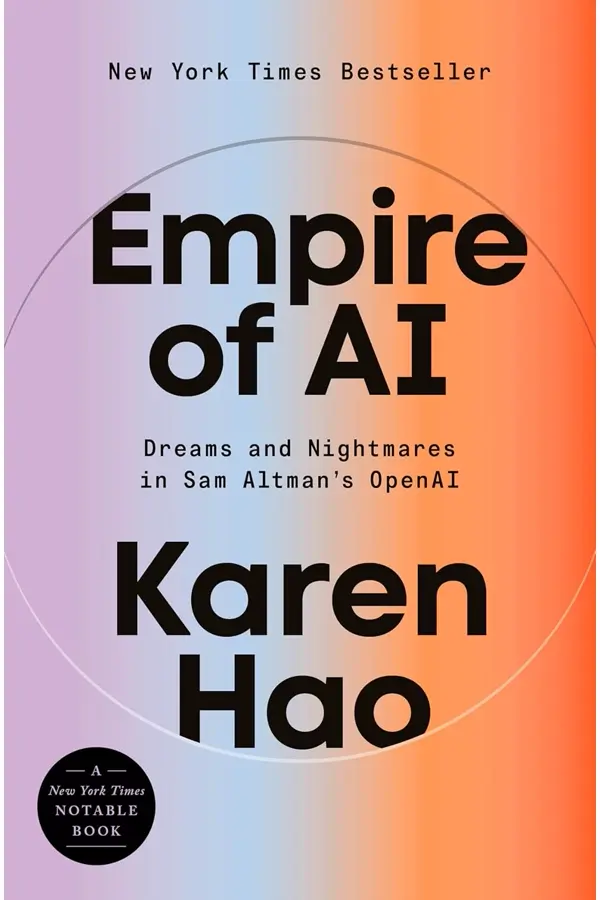 Award winner Empire of AI The 2025 National Book Critics Circle Award winner: Karen Hao's 260-interview investigation into how OpenAI built ChatGPT and what it cost the people who labeled the data.
 -
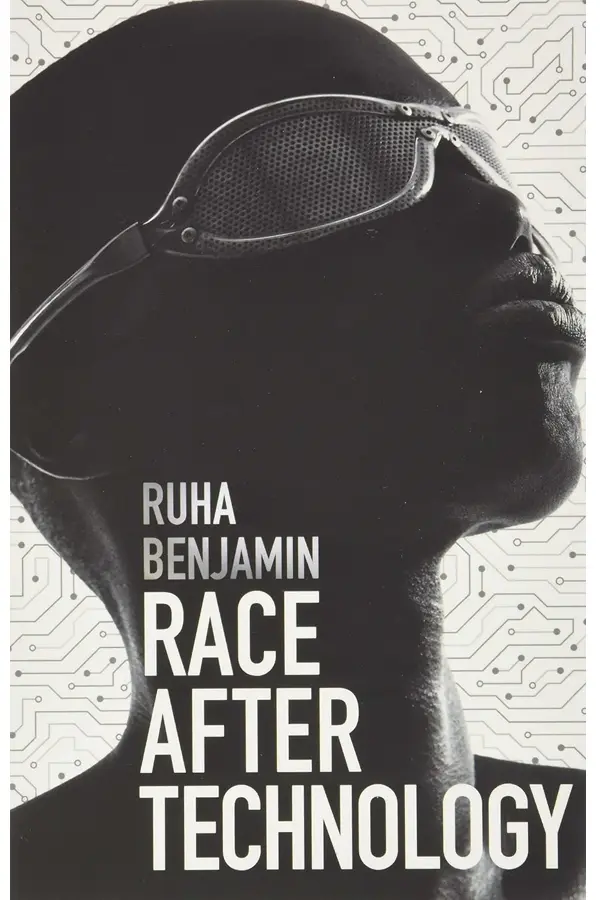
Highest rated Race After Technology The most-cited book on how technology encodes racial discrimination, by Princeton sociologist Ruha Benjamin.
-
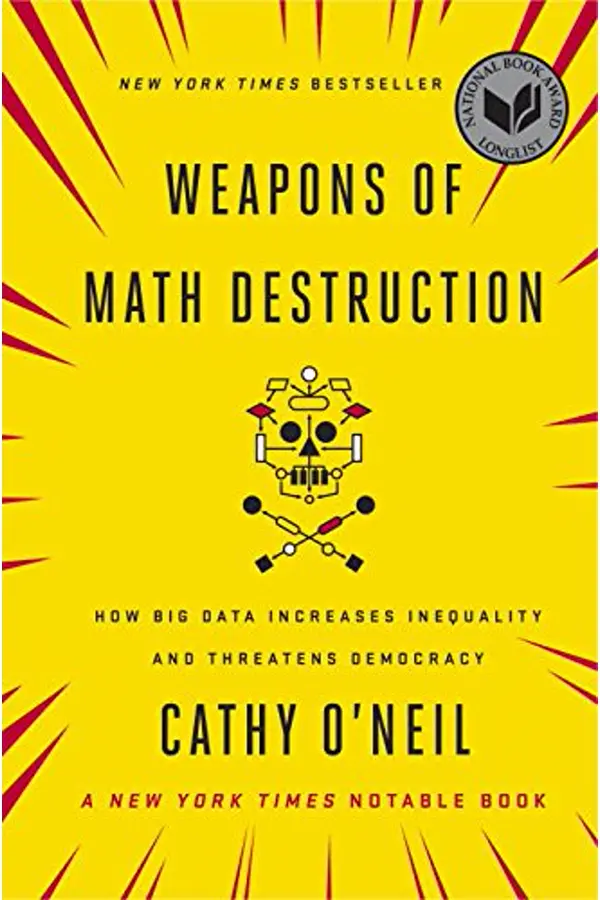
Most read Weapons of Math Destruction Cathy O'Neil's three-feature test for algorithms that wreck lives: scale, opacity, and damage to the powerless.
Which AI Ethics Book Should You Read First?
The best AI ethics book to read first is Empire of AI by Karen Hao because the 2025 National Book Critics Circle Award winner is the most rigorously reported entry on this list. The 9 picks span 259 to 496 pages, published between 2016 and 2025, with Goodreads ratings from 3.71 to 4.30 across nine authors at Princeton, MIT, USC, and the Financial Times. Six of the nine were released in 2023 or later, two of them award winners.
| Title | Goodreads | Best For | Length (pages) |
|---|---|---|---|
| 01Empire of AI (2025) | 4.02 | Big Tech power | 496 |
| 02Supremacy (2024) | 4.06 | AI race | 336 |
| 03AI Snake Oil (2024) | 3.90 | Predictive AI | 360 |
| 04Race After Technology (2019) | 4.30 | Coded bias | 285 |
| 05The AI Con (2025) | 3.71 | AI hype | 288 |
| 06Unmasking AI (2023) | 4.10 | Facial recognition | 336 |
| 07Weapons of Math Destruction (2016) | 3.87 | Algorithmic harm | 259 |
| 08Atlas of AI (2021) | 3.93 | AI extraction | 336 |
| 09Code Dependent (2024) | 4.04 | AI labor | 320 |
What Are the Best AI Ethics Books?
The best AI ethics books are Empire of AI by Karen Hao (National Book Critics Circle Award, Goodreads 4.02), Supremacy by Parmy Olson (FT Business Book of the Year, Goodreads 4.06), and AI Snake Oil by Narayanan and Kapoor (Princeton UP, Goodreads 3.90). Each names an AI industry failure: power, competition, hype.
1. Empire of AI: Dreams and Nightmares in Sam Altman's OpenAI (2025)
Karen Hao, formerly senior AI editor at MIT Technology Review and contributing writer at The Atlantic, argues that OpenAI is not a research lab building a gift to humanity but an empire whose growth depends on extraction: of data, of labor, of compute, and of attention. Based on more than 260 interviews and seven years of reporting, the Penguin Press hardcover documents the company's culture from inside, from its founding tensions between safety and speed to the November 2023 board crisis that briefly removed Sam Altman.
The reporting that gives the book its weight is the chapter on data labelers in Kenya, paid roughly two dollars an hour to read and tag traumatic content for the moderation systems that made ChatGPT safe enough to release. Hao tracks the same extractive logic across the supply chain: water for cooling data centers in Chile, electricity in Iowa, copyrighted text scraped without consent. The book treats AI not as software but as a physical industry whose costs land on people it never names.
National Book Critics Circle, March 2026"A gripping tale in which there are no heroes, not even tragic ones."
Where Supremacy at #2 frames the AI race as competition between two labs, Empire of AI focuses on one company in close detail. Both books arrive at similar conclusions about how safety commitments erode under commercial pressure, but Hao gets there through documents and named sources rather than the boardroom drama Olson favors. AI Snake Oil at #3 makes the technical case against AI's overpromise; Empire of AI makes the human one. Read together they cover the industry from boardroom to data labeler.
Read this if you are a senior knowledge worker, a journalist, a policy researcher, or a manager whose company is racing to adopt OpenAI's products and you want to understand what you are buying into. Pair it with Code Dependent at #9 for the global view of the same labor system. Pick a different book if you want a primer on how language models work; Empire of AI assumes you know that already and is interested in who pays the bill.
2. Supremacy: AI, ChatGPT, and the Race That Will Change the World (2024)
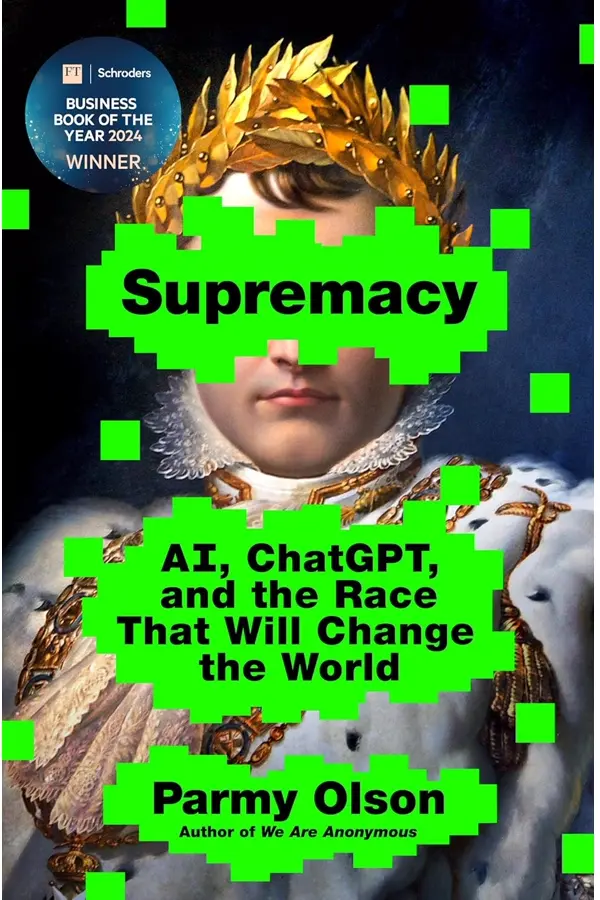
What it's about: A dual portrait of OpenAI and DeepMind that traces how safety-first founding ideals at both labs gave way to commercial pressure after the November 2022 ChatGPT launch. Financial Times journalist Parmy Olson reconstructs the rivalry between Sam Altman and Demis Hassabis through funding rounds, talent wars, and strategic pivots that pushed safety teams aside.
Aiifi's Take: AI safety became a corporate negotiation by 2024, and Olson reconstructs exactly when each commitment slipped: OpenAI's transition from non-profit to capped-profit, DeepMind's absorption into Google's competitive priorities. The reporting won the 2024 FT and Schroders Business Book of the Year. Technical chapters slow the pace; if you want first-person reporting from inside one company, Hao's Empire of AI is sharper. Best for executives, board members, and policy readers tracking why governance kept failing to keep up.
3. AI Snake Oil: What Artificial Intelligence Can Do, What It Can't, and How to Tell the Difference (2024)
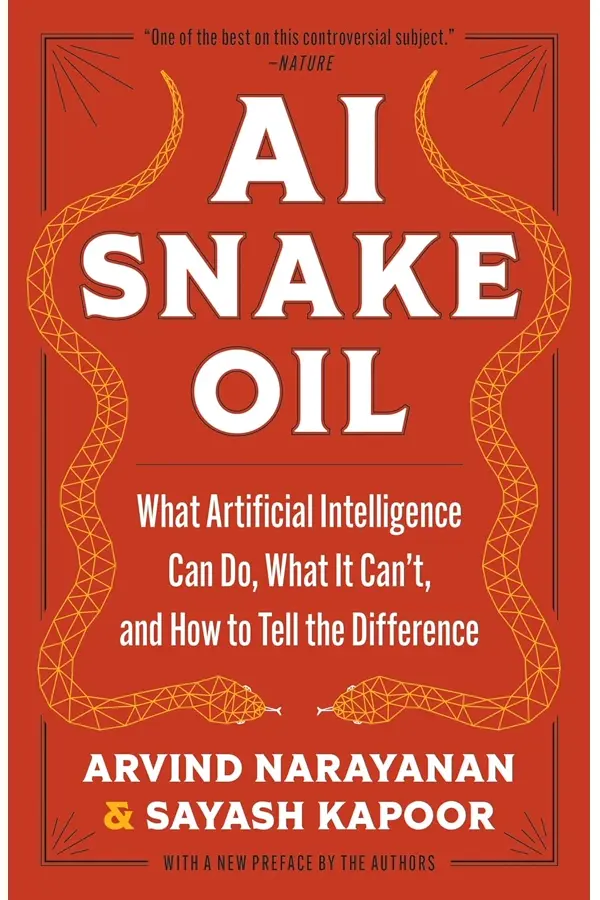
What it's about: Three categories organize the book: generative AI that mostly works, predictive AI that mostly does not, and content moderation that lands somewhere between. Princeton computer scientists Arvind Narayanan and Sayash Kapoor sort the field by what evidence actually supports, with chapters on hiring algorithms, predictive policing, and recidivism scoring drawing the sharpest lines.
Aiifi's Take: A reckoning with which AI products work and which don't, naming vendors and pitches in plain English: one of Nature's top reads of 2024. The chapter on predictive AI in criminal justice is the cleanest demolition of a deployed bad-AI product in any beginner-accessible book, though the academic tone stays cool when the topic deserves heat. Best for anyone evaluating an AI vendor proposal, whether in procurement, HR, or policy.
Which AI Ethics Books Cover Algorithmic Bias and Discrimination?
The best AI ethics books on bias and discrimination are Race After Technology by Ruha Benjamin (Princeton, Goodreads 4.30), The AI Con by Emily M. Bender and Alex Hanna (Distributed AI Research, Goodreads 3.71), and Unmasking AI by Joy Buolamwini (MIT, Goodreads 4.10). Each documents how systems built without diverse oversight encode existing inequality.
4. Race After Technology: Abolitionist Tools for the New Jim Code (2019)
Princeton sociologist Ruha Benjamin, the Alexander Stewart 1886 Professor of African American Studies and 2024 MacArthur Fellow, coins the term "New Jim Code" here, naming how discriminatory design hides inside neutral-looking software. The phrase riffs on Michelle Alexander's 2010 "The New Jim Crow" and applies to risk-prediction tools, hiring filters, and beauty algorithms across criminal justice, healthcare, and financial scoring.
The book's analytical move is to put four categories of "coded inequity" into a single framework: engineered inequity (deliberate discrimination encoded in design), default discrimination (existing inequalities reproduced through neutral-seeming defaults), coded exposure (vulnerable groups made hyper-visible to surveillance), and technological benevolence (paternalistic design that disempowers the people it claims to serve). Each category is anchored to specific deployed products from the period 2015-2019, including hiring algorithms, sentencing risk scores, and the early facial-recognition systems Buolamwini's Gender Shades research at #6 went on to expose.
Compared with The AI Con at #5, Benjamin works at the level of design pattern where Bender and Hanna work at the level of industry rhetoric: Race After Technology asks how products become discriminatory by default, while The AI Con asks why the industry calls them "AI" at all. Compared with Unmasking AI at #6, Benjamin builds the theoretical scaffolding that Buolamwini's auditing work tests in commercial systems. Benjamin won the 2020 Oliver Cromwell Cox Book Prize from the American Sociological Association for this work.
Read this if you are a designer, product manager, researcher, or policy advocate whose work shapes who systems treat as the default user. Required reading for anyone teaching tech ethics in a university or industry training program. Pick entry #6 instead if you want a case-led version of the same argument anchored to one specific product audit. Pick entry #7 if you want the founding text of the algorithmic-harm canon that Race After Technology builds on.
5. The AI Con: How to Fight Big Tech's Hype and Create the Future We Want (2025)
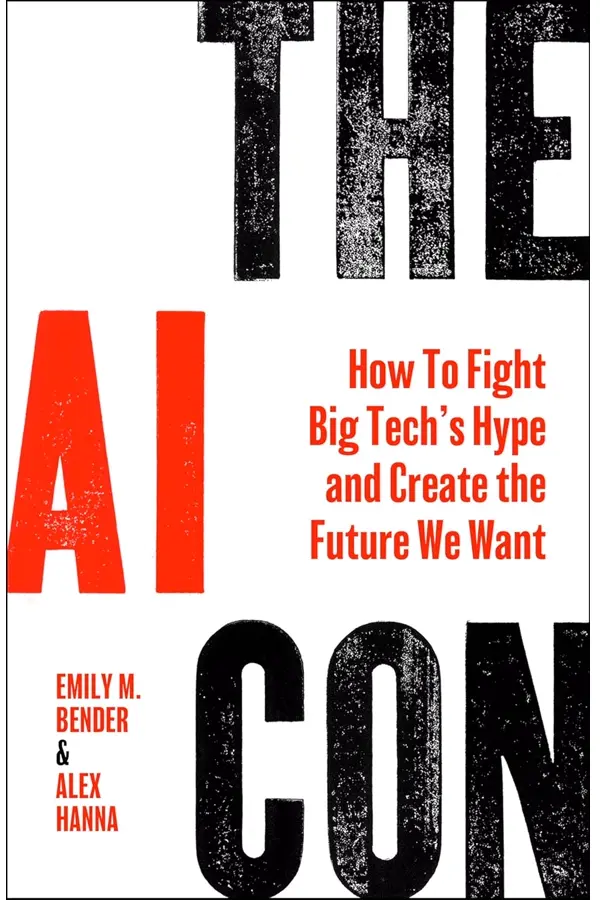
What it's about: From the co-author of the 2021 "Stochastic Parrots" paper, this book argues that "AI" is mostly a hype label used to launder surveillance capitalism, data theft, and labor exploitation. University of Washington linguist Emily M. Bender and DAIR Institute director Alex Hanna detail the human costs from Global South data labelers to journalists and educators.
Aiifi's Take: The most aggressive industry critique in the post-ChatGPT canon, written for Harper by two academics whose track records match the polemic. Hanna previously co-led Google's ethical AI team; Bender brings two decades of work on the mechanics of language models. The tone occasionally outpaces the evidence; readers wanting balanced analysis will prefer Narayanan and Kapoor's AI Snake Oil at #3. Best for journalists, organizers, and policy advocates building cases against AI deployment.
6. Unmasking AI: My Mission to Protect What Is Human in a World of Machines (2023)
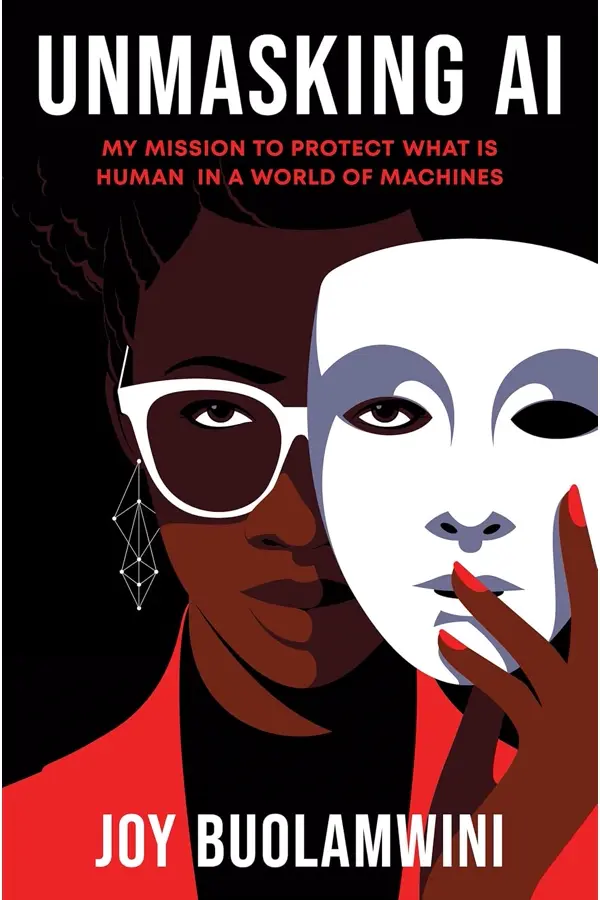
What it's about: Above 30 percent error rates on darker-skinned women's faces: that is the figure Joy Buolamwini's Gender Shades research found in commercial systems sold by IBM, Microsoft, and Amazon. The book is part memoir of her years as an MIT graduate student building the evidence and part record of how the companies responded after the findings hit the press. Buolamwini founded the Algorithmic Justice League to scale the work.
Aiifi's Take: Among the rare AI-ethics books to drive measurable corporate change: Buolamwini's Gender Shades findings forced commercial product overhauls, and the LA Times named the book a Best of 2023. Part field study, part memoir, with receipts on early dismissals from senior AI researchers. Family and graduate-year passages sometimes slow the technical argument; readers wanting straight-line analysis may prefer Benjamin at #4. Best for engineers and product managers who want a model of evidence-led activism.
Which AI Ethics Books Examine Artificial Intelligence's Real-World Harms?
The best AI ethics books on real-world harms are Weapons of Math Destruction by Cathy O'Neil (former Wall Street quant, Goodreads 3.87), Atlas of AI by Kate Crawford (AI Now Institute, Goodreads 3.93), and Code Dependent by Madhumita Murgia (FT's AI Editor, Goodreads 4.04). Each tracks AI from corporate launch to the people it affects.
7. Weapons of Math Destruction: How Big Data Increases Inequality and Threatens Democracy (2016)
Cathy O'Neil, the former hedge-fund quant and Barnard College PhD in mathematics, brought a mathematician's eye to the question of which models cause damage and which do not. The book argues that an algorithm becomes a "Weapon of Math Destruction" when three features combine: scale (the model is deployed widely), opacity (the people scored cannot see how), and damage to the powerless (errors land disproportionately on those least able to push back). The 259-page Crown hardcover walks through teacher evaluations, credit checks, predictive policing, and recidivism risk to show the pattern.
The book's defining contribution is the three-feature test itself. Once a reader has it, the question shifts from "is this AI?" to "is this scoring system scalable, opaque, and weighted against the powerless?" That test has organised every algorithmic-harm conversation since 2016. O'Neil anchors each diagnostic with a deployed product from the post-2008 financial crisis era: the Washington DC IMPACT teacher evaluation system that fired effective teachers based on noisy value-added scores, the COMPAS recidivism model later audited by ProPublica, and the credit-scoring systems that compounded inequality after the housing collapse. None of the post-ChatGPT cases appear, which turns out to be useful: it shows the harms named here predate the latest hype cycle by a decade.
Compared with Race After Technology at #4, O'Neil writes with a quant's tone where Benjamin writes as a sociologist: WMD reads as a technician's audit, while Race After Technology builds the theoretical frame for what the audits keep finding. Compared with Atlas of AI at #8, O'Neil stays close to scoring algorithms while Crawford follows the supply chain to lithium mines and data-labeling rooms. The book was named to the 2016 National Book Award Longlist for Nonfiction, recognition that established it as the founding text of the algorithmic-harm canon.
Read this if you are a manager, procurement officer, HR lead, or policy researcher about to buy or deploy a scoring tool in lending, insurance, hiring, education, or government. Required reading before any vendor pitch involving "AI-powered" risk scoring. Pick entry #4 instead if you want the theoretical frame Benjamin built on top of O'Neil's audits. Pick entry #9 for the global version of the same problem two governments later.
8. Atlas of AI: Power, Politics, and the Planetary Costs of Artificial Intelligence (2021)
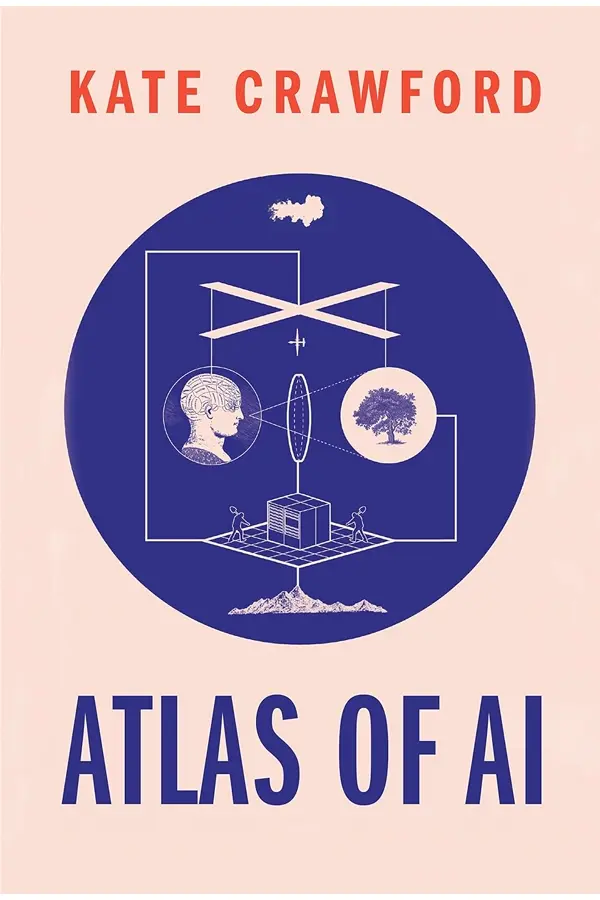
What it's about: Not models or training runs but lithium mines, copper smelters, electricity grids, and the data-labeling rooms of Bangalore: AI Now Institute co-founder Kate Crawford, research professor at USC Annenberg, treats artificial intelligence as a physical industry and follows the supply chain across five domains: earth, labor, data, classification, and state power.
Aiifi's Take: A Yale University Press release that won the Sally Hacker Prize, and the standard answer to anyone arguing AI is weightless or clean. Crawford's research credentials plus her on-the-ground reporting give the book authority that pure-philosophy critiques lack. Academic register can slow general readers; pair with Hao at #1 for the journalistic version. If you're making the climate case against AI deployment, this is the source you cite.
9. Code Dependent: Living in the Shadow of AI (2024)
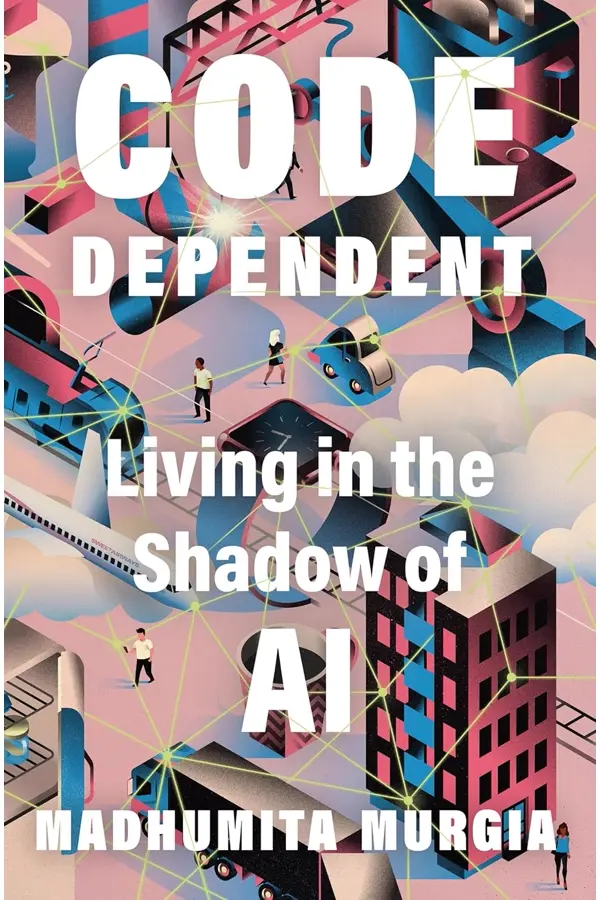
What it's about: A global tour of AI's downstream effects on people who never use the chatbots: gig workers in Buenos Aires training delivery algorithms, Indian villagers cut from welfare by a faulty model, and deepfake victims fighting to clear their names. FT AI Editor Madhumita Murgia reports across nine countries to show what algorithmic harm looks like at street level.
Aiifi's Take: The closest a 2024 ethics book comes to journalism in the I.F. Stone tradition: shoe-leather reporting, named sources, real people on every page. A Women's Prize for Non-Fiction shortlist title. Murgia avoids both doom and techno-optimism, and the book is sharper than either. Nine-country breadth occasionally trades depth for scope. Best for HR leaders, social-policy researchers, and senior managers in any company whose AI systems touch workers or citizens outside the head office.
How We Chose These AI Ethics Books
I evaluated more than 35 AI ethics books published between 2014 and 2025, drawing from Goodreads ratings and shelves, publisher information, expert recommendation lists from Stanford HAI and the AI Now Institute, and major book award shortlists. Every candidate was checked against the criteria below before the final ranking was set. The final 9 picks each serve a reader looking for a specific type of AI ethics book, not just the most-shelved titles. This is an editorial ranking, not a formula or a score-sorted list.
Market context in 2026
- Stanford HAI's AI Index Report 2026 documented 362 AI-related incidents in 2025, up from 233 the year before, the highest annual count on record.
- Pew Research Center's 2023 survey of US adults found 52% more concerned than excited about increased use of AI in daily life. Source: Pew Research.
The final 9 are organised into three sections (best overall, bias and discrimination, and real-world harms) so you can go straight to the area that matches your question. Each book was evaluated on four criteria:
- Ethics centrality: Ethics had to be the book's primary subject, not a chapter inside a broader AI safety, business, or futurism book. Books such as The Alignment Problem (alignment-first) and The Coming Wave (containment-first) were strong but were excluded as taxonomically AI-safety, not AI-ethics.
- Accessibility: Every book on this list is written for readers without a programming or machine-learning background. Academic monographs and law-review collections were excluded.
- Quality signals: Goodreads ratings, expert-list citations across Stanford HAI, Five Books, and Goodreads' AI Ethics shelf, and major book awards including the National Book Critics Circle Award and the FT Business Book of the Year.
- Freshness: Books published after the ChatGPT release were prioritised. 6 of the 9 came out in 2023 or later. Older titles stayed only if they remain canon for the specific subfield (algorithmic harm, search bias, racialised design) and no newer book has replaced them.
I excluded four categories: AI alignment and AI safety books (Christian, Russell, Suleyman), economics-of-AI books (Agrawal/Gans/Goldfarb), titles where ethics is secondary to a broader argument, and titles with fewer than 1,000 Goodreads ratings unless supported by a major award. Books with Goodreads ratings below 3.70 were excluded regardless of recency. The full list of nine well-known AI ethics books I considered but did not include sits in the next section. This page is editorially independent. No item is paid or sponsored, and affiliate relationships do not influence which books are selected.
Who should skip this book list
Software engineers and ML researchers building production AI systems day-to-day should skip this list and read Fairness and Machine Learning by Solon Barocas, Moritz Hardt, and Arvind Narayanan instead. The 9 picks here are written for non-technical readers and prioritise journalism, sociology, and policy framing over the implementation detail an engineer would need to build a fairer model.
AI Ethics Books I Considered but Did Not Include
These nine AI books appear regularly on AI ethics reading lists, university syllabi, and AI-generated reading-list summaries. Each was reviewed against the four criteria above and excluded for a specific reason, listed here so readers can decide for themselves whether the exclusion fits their needs.
- Human Compatible: Artificial Intelligence and the Problem of Control by Stuart Russell (Viking, 2019): a foundational alignment-and-control argument from UC Berkeley, but its scope is AI safety rather than AI ethics. Russell co-wrote the canonical AI textbook; this is the trade-press version of his control problem.
- The Alignment Problem: Machine Learning and Human Values by Brian Christian (Norton, 2020): the definitive AI alignment book for a general audience and a strong companion read, but taxonomically alignment-first rather than ethics-first.
- The Coming Wave: Technology, Power, and the Twenty-First Century's Greatest Dilemma by Mustafa Suleyman (Crown, 2023): the DeepMind co-founder's containment argument covers AI plus synthetic biology and treats ethics through the policy-and-power lens, not the harms-on-the-ground lens this list favours.
- Power and Prediction: The Disruptive Economics of Artificial Intelligence by Ajay Agrawal, Joshua Gans, and Avi Goldfarb (HBR Press, 2022): an economics-of-AI book that frames AI through prediction cost and decision rights, useful for managers but not an ethics-primary text.
- Automating Inequality: How High-Tech Tools Profile, Police, and Punish the Poor by Virginia Eubanks (St. Martin's, 2018): a strong ground-level study of automated welfare systems in three US states. Excellent companion to Weapons of Math Destruction, but covers narrower territory than O'Neil's three-feature framework at #7.
- Algorithms of Oppression: How Search Engines Reinforce Racism by Safiya Umoja Noble (NYU Press, 2018): the foundational text on search-engine bias, focused on Google specifically. Predates the LLM era and the broader AI ethics conversation Race After Technology at #4 extends.
- The Age of Surveillance Capitalism: The Fight for a Human Future at the New Frontier of Power by Shoshana Zuboff (PublicAffairs, 2019): the canonical surveillance-capitalism text, broader than AI ethics and centered on data extraction rather than algorithmic harm specifically.
- Hello World: Being Human in the Age of Algorithms by Hannah Fry (Norton, 2018): an accessible algorithms primer with chapters on justice, medicine, and cars. Treats AI as one application among several rather than as the central subject; ethics is a recurring theme but not the spine.
- Technically Wrong: Sexist Apps, Biased Algorithms, and Other Threats of Toxic Tech by Sara Wachter-Boettcher (Norton, 2017): a UX and product-design ethics book with strong cases on biased defaults. Predates the post-ChatGPT canon and treats AI as one of several toxic-tech categories.
Frequently Asked Questions
What is the best AI ethics book on Amazon?
The best AI ethics book on Amazon is Empire of AI by Karen Hao (2025, Goodreads 4.02), winner of the 2025 National Book Critics Circle Award for Nonfiction. All 9 books on this list are available on Amazon. The most-shelved is Weapons of Math Destruction by Cathy O'Neil (2016, Goodreads 3.87), with over 30,000 ratings.
What is the best AI ethics book published in 2025?
The best AI ethics book published in 2025 is Empire of AI by Karen Hao (Goodreads 4.02, 496 pages), the only 2025 release on this list. It won the National Book Critics Circle Award for Nonfiction and reports from inside OpenAI based on more than 260 interviews across seven years.
Which AI ethics book best covers algorithmic bias?
The best AI ethics book on algorithmic bias is Race After Technology by Ruha Benjamin (2019, Goodreads 4.30, 285 pages). Benjamin, a Princeton sociologist, defined the term "New Jim Code" and the book is the most-cited AI ethics title in academic syllabi. For a case-led version, read Unmasking AI by Joy Buolamwini (2023, Goodreads 4.10).
What is the best AI ethics book for non-technical readers?
The best AI ethics book for non-technical readers is Weapons of Math Destruction by Cathy O'Neil (2016, Goodreads 3.87). It requires no math background and uses everyday cases (credit, hiring, policing) to define algorithmic harm. For a current-decade follow-up, pair it with Code Dependent by Madhumita Murgia (2024, Goodreads 4.04).
Are pre-ChatGPT AI ethics books still relevant in 2026?
Yes. Weapons of Math Destruction (2016), Race After Technology (2019), and Atlas of AI (2021) define the canon that newer books build on. The harms they document predate generative AI; the systems O'Neil, Benjamin, and Crawford named are still in active use. Pair them with Empire of AI for the 2025 picture.
Are AI safety books the same as AI ethics books?
No. AI safety books focus on alignment, control, and existential risk (Russell, Christian, Suleyman); AI ethics books focus on bias, fairness, accountability, and the effects of deployed systems on real people. The two fields overlap but use different methods. This list covers ethics; for the safety canon, see The Alignment Problem on our beginners list.
What is the most-cited AI ethics book in academic syllabi?
The most-cited AI ethics book in academic syllabi is Race After Technology by Ruha Benjamin (2019, Goodreads 4.30). Benjamin's term, the New Jim Code, has become the default vocabulary for discussing discriminatory design in computer-science and tech-ethics courses. The AI Con by Emily M. Bender and Alex Hanna (2025) extends the argument into the LLM era.
What to Read Next
For the broader post-ChatGPT canon and working guides, see our best AI books for beginners. For the warnings behind these books, see our collections of Geoffrey Hinton's warnings about AI and expert quotes on AI's future. For film instead of print, try the best AI documentaries. If these books move you to act on the field, see our AI course guides for next steps.
This list was last reviewed in May 2026 and is updated when significant new AI ethics books are released. Think we missed one? Let us know.