Quick Picks
-
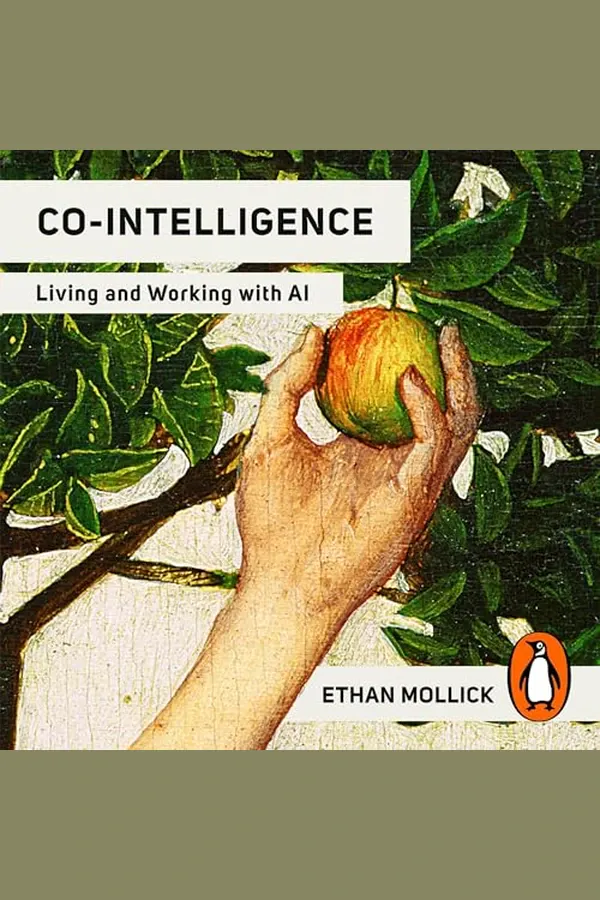 Best first listen Co-Intelligence Author-narrated and the shortest book here at 4h 39m: the most useful pick for getting better results from generative AI at work.
 -
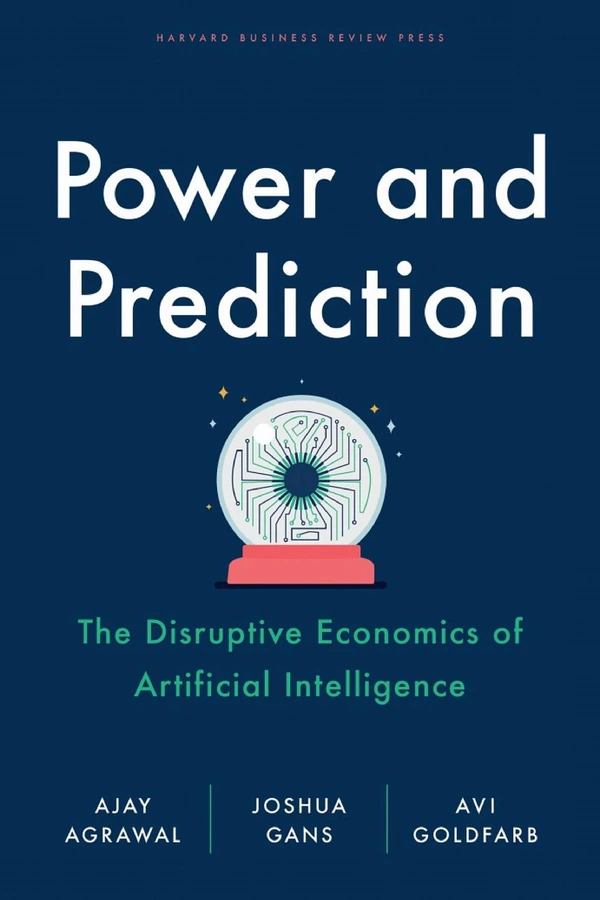
Best for managers Power and Prediction Three Toronto economists explain why most companies miss AI's real value by treating it as a feature instead of a system redesign.
-
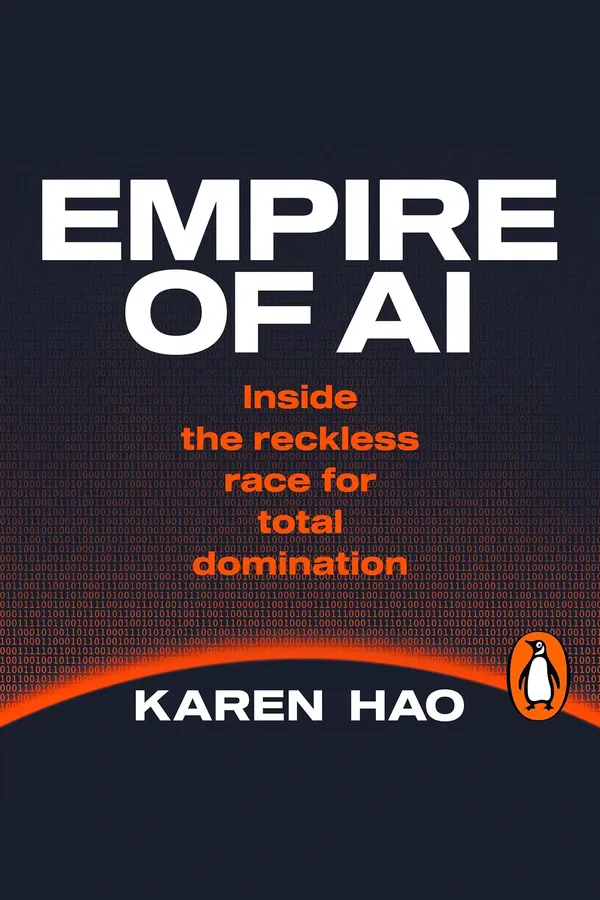
Best long-form skeptic Empire of AI 17h 51m on Sam Altman's OpenAI, built from 260+ interviews across seven years of independent reporting.
Which AI Audiobook Should You Listen to First?
The best AI audiobook to listen to first is Co-Intelligence, the shortest book on the list at 4 hours 39 minutes and the only one written for working professionals using ChatGPT-class tools daily. Publication years span 2017 to 2025, runtimes range from 4h 39m to 17h 51m, and Goodreads ratings span 3.58 to 4.33 across the 12 picks. This list covers audiobooks about AI, not AI tools that produce audio: every pick has a publisher-produced human narrator and works without visual reference to diagrams or code.
| Title | Goodreads | Best For | Runtime |
|---|---|---|---|
| 01Co-Intelligence (2024) | 3.93 | Practical AI at work | 4h 39m |
| 02The Coming Wave (2023) | 3.80 | Insider trajectory | 12h 7m |
| 03Empire of AI (2025) | 4.02 | Investigative reporting | 17h 51m |
| 04Power and Prediction (2022) | 4.22 | Workplace strategy | 10h 7m |
| 05AI 2041 (2021) | 3.82 | Scenario fiction | ~18h |
| 06The Skill Code (2024) | 3.58 | Apprenticeship erosion | 6h 48m |
| 07Life 3.0 (2017) | 3.99 | AGI primer | 13h 30m |
| 08Human Compatible (2019) | 4.04 | Alignment authority | 11h 38m |
| 09The Alignment Problem (2020) | 4.33 | Alignment reportage | 13h 33m |
| 10Atlas of AI (2021) | 3.93 | Materialist critique | 8h 53m |
| 11Code Dependent (2024) | 4.03 | Human-scale impact | 9h 25m |
| 12More Than a Glitch (2023) | 4.14 | Bias as structure | 7h 38m |
What Are the Best AI Audiobooks?
The best AI audiobooks are Co-Intelligence by Wharton's Ethan Mollick (Goodreads 3.93), The Coming Wave by Microsoft AI's Mustafa Suleyman (3.80), and Empire of AI by Karen Hao (4.02). All three are author-narrated; only Hao writes from outside the labs. Her 260-interview account took seven years.
1. Co-Intelligence: Living and Working with AI (2024)
Wharton professor Ethan Mollick built Co-Intelligence from daily prompt experiments with GPT-4 and other frontier models, plus a synthesis of academic research on generative AI in the workplace. The Penguin Audio recording, narrated by Mollick himself, runs 4 hours 39 minutes. The argument unfolds across four roles AI can take alongside a worker: coworker, tutor, expert, and future self.
Two organising frames carry the book. The first is the centaur-and-cyborg distinction: centaurs split work cleanly between human and AI, while cyborgs blur the line and cycle through drafts together. The second is the jagged frontier, which captures why you cannot predict AI's strengths from its weaknesses. It crushes some MBA-level analysis and fumbles arithmetic that a primary-school child handles. Mollick's daily experiments, rather than benchmark scores, are what make these frames feel earned. The book was named Best Book of the Year 2024 by both The Economist and the Financial Times.
Kirkus Reviews, May 2024"An important road map through the AI labyrinth, written with authority and free of technojargon."
Power and Prediction makes the case at the level of CEOs and operating models; Co-Intelligence stays at the level of an individual worker drafting a clause, summarising a meeting, or writing a brief. Empire of AI takes a third position: Karen Hao reports on the supply chain that produces ChatGPT, while Mollick describes the working day on the other side of the screen.
Listen to this first if you are a mid-career white-collar professional with one commute or workout block to give, and you want one audiobook that shapes how you draft, code, summarise, or research at work this week. The four rules and the centaur-cyborg frame are the parts that travel best. If you want the labour and ethics critique instead, start with Empire of AI at entry #3 and come back to this one for the technique.
2. The Coming Wave: AI, Power and Our Future (2023)
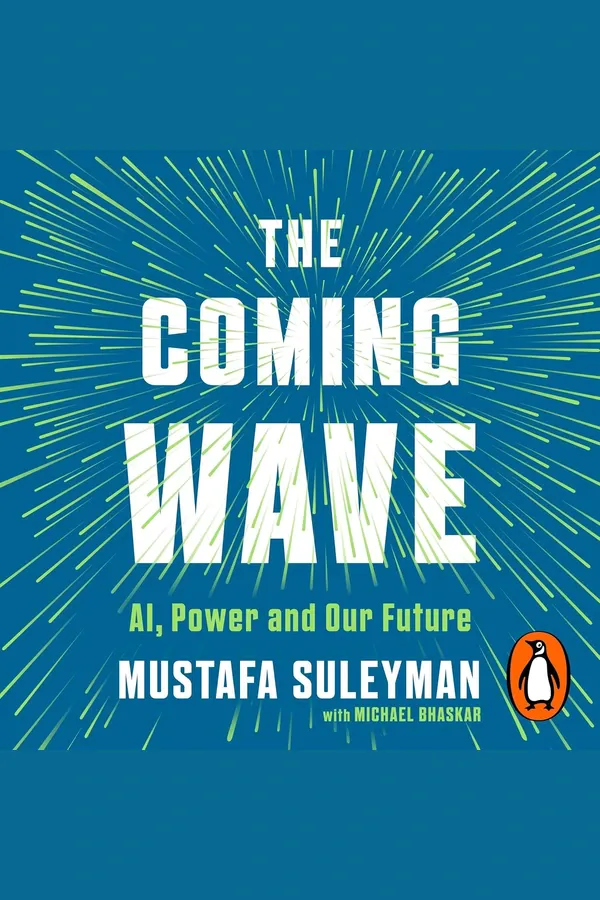
What it's about: Built around a "containment problem," The Coming Wave argues that AI and synthetic biology, taken together, form a wave nation-states are not equipped to contain. Mustafa Suleyman, DeepMind co-founder and now CEO of Microsoft AI, reads his own 12-hour Random House Audio edition, working with Michael Bhaskar to lay out a ten-step containment plan covering audits, choke points, makers, and the rest.
John Naughton, The Guardian, August 2023"The most refreshing feature of the book is the way it candidly addresses questions that are generally not discussed in polite society."
Aiifi's Take: The Coming Wave is the audiobook for senior leaders and policy professionals who want governance arguments from inside the labs. Suleyman built DeepMind for fifteen years before writing this containment case, which gives the "modern Faustian bargain" framing more bite than most policy books. Named Best Book of the Year 2023 by The Economist, the FT, and the Guardian. The weakness mirrors the strength: a builder warning other builders. Pair with Atlas of AI for independent counterweight.
3. Empire of AI: Inside the Reckless Race for Total Domination (2025)
What it's about: Empire of AI is built on 260+ interviews across seven years, with no cooperation from OpenAI itself. Karen Hao reads her own Penguin Audio edition. The reporting threads OpenAI's founding tensions, Altman's leadership, the November 2023 board ouster, Kenyan content moderation labour, and Chilean datacenter water-stress.
Kirkus Reviews, March 2025"A pointed account raises needed questions about how AI is to be regulated to do no—or at least less—harm."
Aiifi's Take: Karen Hao spent seven years reporting OpenAI for MIT Technology Review and The Atlantic before writing this. The chapter on Kenyan moderators paid less than two dollars an hour is the strongest original reporting in any AI book this year. Winner of the 2026 National Book Critics Circle Award and the Helen Bernstein Book Award. The OpenAI focus leaves Anthropic, Google DeepMind, and Meta comparatively undiscussed. Pick this when you want investigative reporting on AI's labour and environmental costs.
Which Audiobooks Cover the Future of Work?
The best AI audiobooks on work are Power and Prediction by Toronto's Ajay Agrawal, Joshua Gans, and Avi Goldfarb (4.22), AI 2041 by Kai-Fu Lee and Chen Qiufan (3.82), and The Skill Code by Matt Beane (3.58). The trio's 2018 bestseller Prediction Machines came first. The Skill Code rests on a decade of fieldwork.
4. Power and Prediction: The Disruptive Economics of Artificial Intelligence (2022)
Three economists at the University of Toronto's Rotman School wrote the strongest workplace-strategy book in this pool. Ajay Agrawal, Joshua Gans, and Avi Goldfarb founded Toronto's Creative Destruction Lab, which has launched more than 250 AI startups. The book follows their 2018 bestseller Prediction Machines and is organised this time around what they call the Between Times: the gap between an era when AI is bolted onto existing workflows and an era when it rewires entire systems. Tom Beyer narrates the 10-hour Ascent Audio edition.
The argument lands on hospital triage, insurance underwriting, and pricing as worked cases. Agrawal, Gans, and Goldfarb spend less time on prompts than on decision rules: where prediction creates value, when a narrow add-on disappoints, and why the wider rebuild usually pays better. The Forbes year-end list singled out the book in 2022 as one of the ten best business books published.
Where Co-Intelligence sets out individual prompting technique, Agrawal, Gans, and Goldfarb explain why a CEO's AI rollout disappoints when it stops at the level of individual workflows. The Skill Code looks at the same shift from below: Matt Beane shows what happens to junior staff once the broader rebuilds arrive.
Strategy and operations leaders, CFOs, and chiefs of staff get the most from this book, particularly when the question is where AI changes pricing, decisions, and workflow rather than where it replaces a single task. The economic frame is rigorous but abstract in places, so listeners who want concrete prompts and worked examples should pick Co-Intelligence at entry #1 instead.
5. AI 2041: Ten Visions for Our Future (2021)
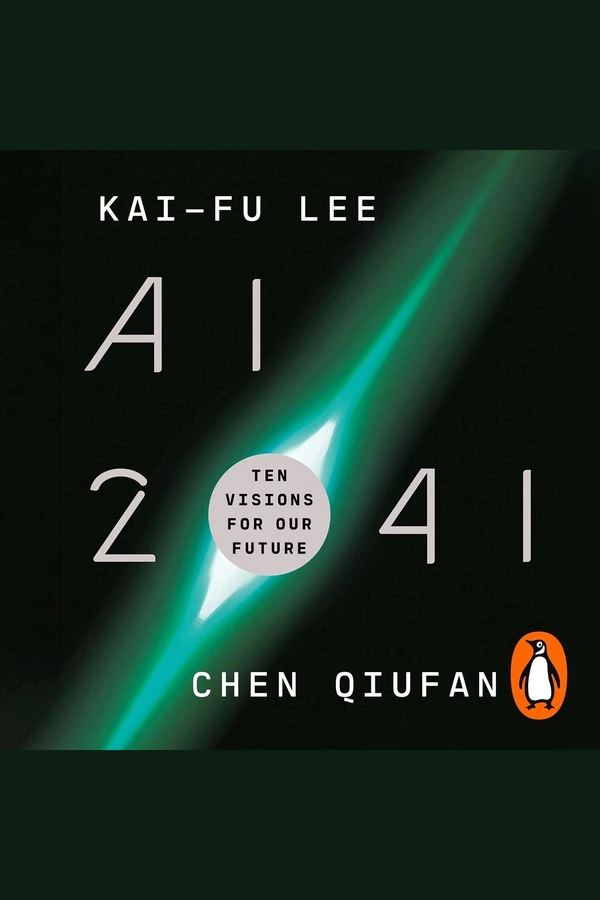
What it's about: Kai-Fu Lee, founder of Sinovation Ventures and former president of Google China, pairs with science-fiction novelist Chen Qiufan across ten near-future short stories. Each story sits in a different city in 2041, with a Lee commentary chapter following on the underlying technology. A full cast of seven voice actors performs the Random House Audio edition.
Aiifi's Take: Fiction does the teaching here, and the seven-voice cast performance does the rest. "The Golden Elephant" turns deep learning into an Indian insurance plot; "Twin Sparrows" carries NLP through Korean education; Lee's commentary chapters anchor each story to the technology. Named Best Book of the Year 2021 by the WSJ, the Washington Post, and the FT. The stories date faster than the commentary, and some 2021 LLM predictions read as conservative now. Pick this when you think better in narrative than argument.
6. The Skill Code: How to Save Human Ability in an Age of Intelligent Machines (2024)
What it's about: Matt Beane, a UC Santa Barbara associate professor, draws on a decade of ethnographic fieldwork on how juniors learn senior work in robotic surgery, finance, manufacturing, and policing. He condenses the research into three pillars he calls the skill code: challenge, complexity, and connection. The 6-hour 48-minute HarperAudio edition is read by Joe Knezevich.
Aiifi's Take: Beane's chapter on how robotic surgery cuts residents out of stitching practice is the cleanest case of AI erasing apprenticeship in the literature. The book is built to make a manager rethink an AI rollout already in progress. Selected by the Next Big Idea Club in 2024. The Goodreads sample is small at 231 ratings, and the argument leans on case studies rather than broad evidence. Best for managers and training leads running teams that train juniors.
Which Audiobooks Explore the Foundations of AI Safety?
The best foundational AI audiobooks are Life 3.0 by MIT's Max Tegmark (3.99), Human Compatible by Berkeley's Stuart Russell (4.04), and The Alignment Problem by Brian Christian (4.33). Russell co-authored the field's standard textbook with Peter Norvig. Tegmark frames AGI as a cosmic question, Russell as a control problem, Christian as research practice.
7. Life 3.0: Being Human in the Age of Artificial Intelligence (2017)
Max Tegmark's Life 3.0 is the most-rated AI book on Goodreads, with over 27,000 ratings. The MIT physicist and Future of Life Institute co-founder organises the book around three "lives": biological (Life 1.0), cultural (Life 2.0), and technological (Life 3.0). Random House Audio's 13-hour 30-minute edition is voiced by Rob Shapiro. The opening Omega Team thought experiment, in which an AI quietly takes over the global economy, is one of the most-cited scenes in the AI canon.
Tegmark's structuring move is the twelve-future matrix: egalitarian utopia, libertarian utopia, gatekeeper, descendants, enslaved god, and eight others. Each entry sketches one possible state of human and machine civilisation after AGI, then lets the listener weigh whether the trade-off is one they would take. The deeper question across all twelve is whether intelligence eventually rewrites its own substrate. The audiobook earned an AudioFile Earphones Award and was on Barack Obama's "Best of 2018" reading list.
Where Human Compatible is Russell's technical reformulation, Life 3.0 is the broader gateway: Tegmark sweeps across economics, consciousness, governance, and cosmic endowment in one pass. The Alignment Problem takes a third position, showing what alignment researchers do day-to-day rather than what a theorist or physicist argues from outside the lab. The three audiobooks together give a complete foundations track that moves from cosmic framing to research practice.
Anyone who has not read anything serious on AGI before should start here. Tegmark writes for the curious general listener and reads for them too, so the audiobook moves at conversational pace. Software engineers and ML researchers wanting the technical case for alignment should pick Human Compatible at entry #8 instead, since Russell assumes prior knowledge of reinforcement learning that Tegmark explicitly avoids.
8. Human Compatible: Artificial Intelligence and the Problem of Control (2019)
What it's about: A reformulation of what Stuart Russell calls AI's standard model: build systems uncertain about human preferences that learn them by observing behaviour. The UC Berkeley professor structures the 11-hour 38-minute audiobook in three parts: how AI got here, what could go wrong, and a model for "provably beneficial" machines. Raphael Corkhill narrates the Penguin Audio edition.
Aiifi's Take: Stuart Russell helped build modern AI; this is his case for why its current design is structurally unsafe. The Gorilla Problem and King Midas Problem framings, alongside the three principles for beneficial machines, do the heavy lifting. The Guardian's Ian Sample called it "the most important book on AI" of 2019, and it was longlisted for the FT/McKinsey Business Book of the Year. Some passages assume a working model of reinforcement learning. Pick this for the alignment case from inside the field.
9. The Alignment Problem: Machine Learning and Human Values (2020)
What it's about: Three movements (Prophecy, Agency, Normativity) carry The Alignment Problem through bias and fairness, reinforcement learning, and uncertainty. Brian Christian, a UC Berkeley visiting scholar and Oxford doctoral candidate, narrates his own 13-hour 33-minute Brilliance Audio edition. The reporting draws on dozens of interviews with ML researchers actively working on the problem.
Aiifi's Take: The best journalistic account of alignment as an active research field, told as reportage rather than philosophy. The COMPAS recidivism case, the Atari reinforcement-learning pipeline, and the Gridworld cleaning-robot example each anchor a section of the book to a specific piece of research. Winner of the 2022 Eric and Wendy Schmidt Award for Excellence in Science Communication. At 13h 33m it is a commitment, and Christian's reporter voice is closer to The Atlantic than a commute primer. Best for listeners who want the alignment debate told through the people building it.
Which Audiobooks Make the Critical Case Against the AI Build-Out?
The best critical AI audiobooks are Atlas of AI by Microsoft Research's Kate Crawford (3.93), Code Dependent by FT AI editor Madhumita Murgia (4.03), and More Than a Glitch by NYU's Meredith Broussard (4.14). Crawford spent six years on lithium mines and datacentres; Murgia centres each chapter on one worker affected by AI.
10. Atlas of AI: Power, Politics, and the Planetary Costs of Artificial Intelligence (2021)
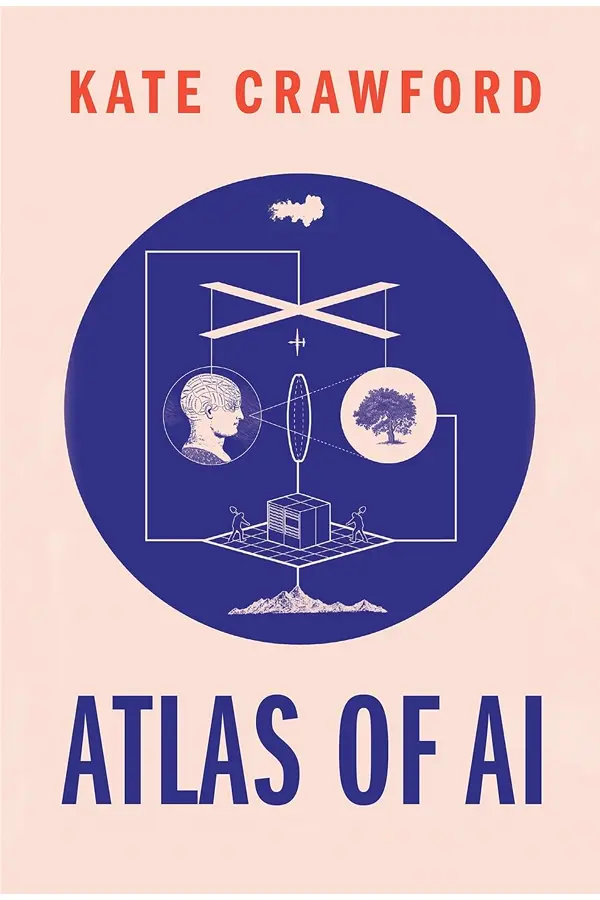
Six years of fieldwork at lithium mines, Amazon warehouses, datacenters, and training-data archives carry Atlas of AI. Kate Crawford, senior principal researcher at Microsoft Research and co-founder of the AI Now Institute at NYU, structures the 8-hour 53-minute Tantor Media audiobook as a six-chapter atlas: Earth, Labour, Data, Classification, Affect, State. Larissa Gallagher narrates. The opening visit to a lithium mine at Silver Peak, Nevada sets the book's posture: AI as supply chain first, software second.
The argument lands hardest in the Classification and Affect chapters. Crawford dismantles ImageNet's labelling categories, then takes apart the Paul Ekman-derived emotion-recognition systems that hiring tools and policing software now graft onto camera feeds. The New Yorker wrote that the book "argues that such technology is neither artificial nor particularly intelligent," and Nature called it the "dark side of AI's success." It was named a Best Book of 2021 by the Financial Times in technology and by New Scientist.
Murgia is the human-scale companion to this structural argument; Crawford works through supply chains and classification schemes, while Murgia follows individual workers through the same infrastructure. Karen Hao narrows the scope further, to a single company. Together, the three move from planetary infrastructure to one corporation to individual lives.
Listen to this first if you are a policy researcher, a designer of AI products, or a senior knowledge worker who already accepts that AI works and now wants to understand what it costs to make it work. Crawford's argument is critical from the first chapter, so listeners wanting a balanced primer-style introduction should pick Life 3.0 at entry #7 first and come back to this one for the full materialist case.
11. Code Dependent: How AI Is Changing Our Lives (2024)
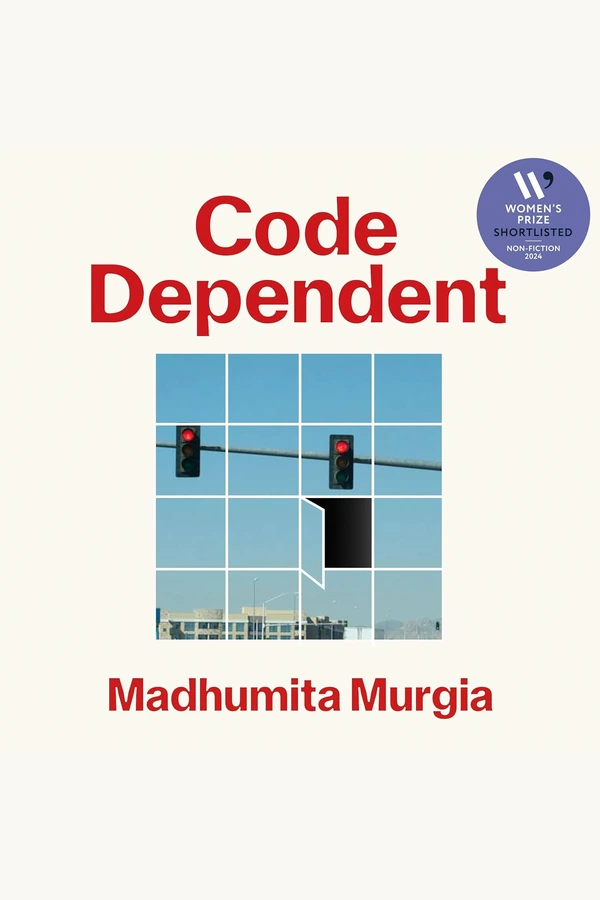
What it's about: Each chapter centres on one person affected by AI: Hugo, an Argentinian gig driver fighting Uber's algorithm; Diala, a Syrian refugee data-labeller in Bulgaria; Mary, a Kenyan content moderator processing OpenAI training data. Madhumita Murgia, the Financial Times' first AI editor, reads the 9-hour 25-minute Macmillan Audio edition and adds a bonus author interview at the end.
Aiifi's Take: Hugo's case against Uber's algorithm and Mary's against OpenAI's training-data pipeline are the cleanest worker-side studies any AI book has produced this decade. Murgia's reporting spans India, Kenya, Argentina, Bulgaria, China, and the UK. Shortlisted for the 2024 Women's Prize for Non-Fiction and named a Best Book of 2024 by Publishers Weekly. The case-study format leaves the technical argument implicit, so pair with a foundations pick for fuller context. Pick this for AI through the people living its effects.
12. More Than a Glitch: Confronting Race, Gender, and Ability Bias in Tech (2023)
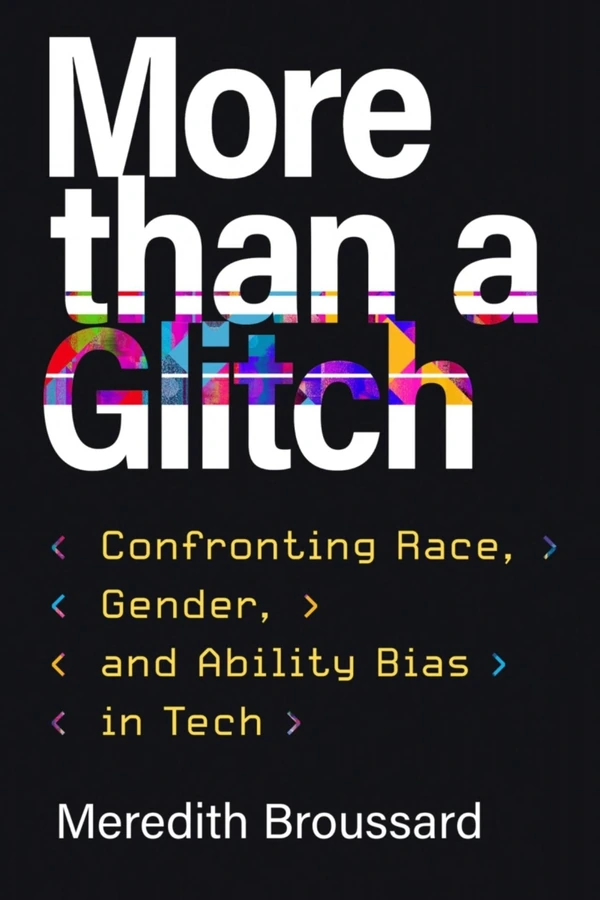
What it's about: Five domains carry More Than a Glitch's argument, with criminal justice, education, medicine, gender, and disability each getting a chapter. Meredith Broussard, an NYU data-journalism associate professor and research director at the NYU Alliance for Public Interest Technology, coined the term "technochauvinism." L. Malaika Cooper voices the 7-hour 38-minute Ascent Audio reissue.
Aiifi's Take: The clearest case that bias in AI is not a bug to be patched but a structural feature of how these systems are built. Detroit's facial-recognition wrongful-arrest cases, a breast-cancer detection algorithm that under-served Broussard herself, and the critique of automated essay grading each carry one chapter. Kirkus called it "a sharp rebuke of technochauvinism." The examples are predominantly US-based, so listeners wanting a global view will get more from Code Dependent. Best for listeners working in HR, hiring, or healthcare.
How We Chose These AI Audiobooks
I evaluated 22 AI audiobooks published between 2017 and 2025, drawing from Goodreads ratings and shelves, Audible bestseller lists, publisher catalogues at Penguin Audio, Random House Audio, HarperAudio, Brilliance Audio, and Tantor Media, expert recommendation lists from Stanford HAI and the AI Now Institute, and major book award shortlists including the National Book Critics Circle Award and the FT Business Book of the Year. Every candidate was checked against the criteria below before the final ranking was set. This is an editorial ranking, not a formula or a score-sorted list.
Market context in 2026
- 75% of knowledge workers use AI at work today, with usage nearly doubling in the last six months (Microsoft + LinkedIn, 2024 Work Trend Index Annual Report).
- 39% of workers' core skills are expected to change by 2030, with AI and big-data skills among the fastest-growing of all skill categories (World Economic Forum, Future of Jobs Report 2025).
- 51% of Americans aged 18 and older, an estimated 134 million people, have listened to an audiobook in the past year (Audio Publishers Association, APA Research Facts, 2025 Consumer Survey).
The final 12 picks were chosen against five criteria, applied in this order:
- Topic centrality (knockout): the audiobook had to be primarily about artificial intelligence as a subject. Adjacent fields (data science, automation history, robotics) were excluded, and so were AI tools that produce audio.
- Audience fit (knockout): accessible to non-technical white-collar professionals, with no required coding, graduate-level math, or engineering prerequisites.
- Audio-format suitability (knockout): a publisher-produced audiobook edition with human narration must exist, and the argument must hold up without required visual reference to diagrams, equations, or code blocks. AI-narrated titles were excluded.
- Quality signals (ranking): Goodreads rating and count, Audible rating where retrievable, awards, and reviews from major outlets including the NYT, FT, the Atlantic, the Guardian, the Economist, the WSJ, Wired, MIT Technology Review, and NPR.
- Freshness (tie-break): post-2022 audiobooks were prioritised. Pre-2022 titles stayed only when foundational (Life 3.0, Human Compatible, The Alignment Problem) or when they uniquely covered the audience use case (AI 2041).
The numbers behind the list: lowest Goodreads rating 3.58, highest 4.33, 1 of 12 won the National Book Critics Circle Award for Nonfiction, 6 of 12 published in 2023 or later.
We excluded three categories: AI tools and audiobook-creation software (ElevenLabs, Murf AI, Speechify, Play.ht), AI-adjacent but not AI-centric titles (Brian Christian and Tom Griffiths' Algorithms to Live By, Hannah Fry's Hello World, Walter Isaacson's The Innovators), and titles too technical or audio-unfriendly for non-technical professionals (Russell and Norvig's AI: A Modern Approach, Géron's Hands-On Machine Learning, Goodfellow et al.'s Deep Learning, which has no audiobook edition). Books with Goodreads ratings below 3.50 were excluded regardless of recency. The full list of 10 well-known AI audiobooks we considered but did not include sits in the next section.
This page is editorially independent. No item is paid, sponsored, or included as part of any commercial relationship.
Who should skip this audiobook list
Machine learning engineers and applied AI researchers who already work with frontier models day-to-day should skip this list and listen to Lex Fridman's AI podcast with Yann LeCun, Demis Hassabis, and Ilya Sutskever instead. The 12 picks here are written for non-technical white-collar professionals, so they spend more time on workplace strategy, alignment intuition, and labour critique than on the architecture detail an applied researcher would need.
AI Audiobooks We Considered but Did Not Include
These 10 AI audiobooks appear regularly on reading lists, recommendation threads, and bestseller charts. Each was reviewed against the five criteria above and excluded for a specific reason, listed here so readers can decide for themselves whether the exclusion fits their needs.
- The Worlds I See by Fei-Fei Li (2023): an excellent memoir (Goodreads 4.31 on 5,282 ratings) but framed primarily as autobiography rather than as an AI primer. Reframes AI history through one researcher's path.
- Genius Makers by Cade Metz (2021): a strong narrative history of deep learning (Goodreads 4.26) but ends before ChatGPT's launch. Empire of AI now does the inside-the-modern-era story better.
- A Brief History of Intelligence by Max Bennett (2023): outstanding reception (Goodreads 4.47, Daniel Kahneman blurb) but the topic splits between evolutionary neuroscience and AI, which dilutes topic centrality.
- The Big Nine by Amy Webb (2019): pre-LLM framing (Goodreads 3.75); the "G-MAFIA versus BAT" model and 2019 vantage now read as dated for current AI listening.
- Superintelligence by Nick Bostrom (2014): foundational (Goodreads 3.85 on 21,341 ratings) but dense and dated. Russell's Human Compatible covers similar ground more accessibly and more recently.
- Genesis by Henry Kissinger, Craig Mundie, and Eric Schmidt (2024): weak quality signals (Goodreads 3.52 on 1,605 ratings) and significant thematic overlap with The Coming Wave.
- The Age of AI by Henry Kissinger, Eric Schmidt, and Daniel Huttenlocher (2021): lowest Goodreads rating in the verified pool (3.43); largely superseded by the 2024 Genesis sequel.
- The Singularity Is Nearer by Ray Kurzweil (2024): hostile mainstream reception (the Washington Post called the book "careless and careening"); idiosyncratic worldview is poorly suited as a non-technical primer.
- The Atomic Human by Neil Lawrence (2024): a 15-hour 2-minute runtime is the longest in the verified pool, with thin quality signals (Goodreads 3.42 on 190 ratings); the metaphysical framing is harder to follow as audio.
- AI Superpowers by Kai-Fu Lee (2018): strong US-China analysis but superseded for this audience by Lee's own 2021 AI 2041, which uses the more listenable fiction-plus-commentary format.
Frequently Asked Questions
What is the best AI audiobook overall?
The best AI audiobook overall is Co-Intelligence by Ethan Mollick (2024, Goodreads 3.93, 4h 39m). It is the only pick written specifically for non-technical professionals using ChatGPT-class tools at work. For broader reporting on AI's labour and environmental costs, listen next to Empire of AI by Karen Hao (2025).
What is the shortest AI audiobook for a busy commute?
The shortest AI audiobook on this list is Co-Intelligence at 4h 39m, followed by The Skill Code (6h 48m) and More Than a Glitch (7h 38m). All three fit inside a typical work-week of commutes. Co-Intelligence is the most actionable for daily ChatGPT use; The Skill Code targets managers.
Which AI audiobook is best for managers and workplace strategy?
The best AI audiobook for managers is Power and Prediction by Agrawal, Gans, and Goldfarb (2022, Goodreads 4.22), the highest-rated workplace pick here. The three Toronto economists make the case that AI's full value comes from rewiring whole systems rather than improving a single workflow. Pair with The Skill Code.
What is the best AI audiobook narrated by its author?
The best author-narrated AI audiobook is Co-Intelligence, where Ethan Mollick reads the same conversational prose he writes. Other author-narrated picks include The Coming Wave (Mustafa Suleyman), Empire of AI (Karen Hao), The Alignment Problem (Brian Christian), and Code Dependent (Madhumita Murgia).
What is the most awarded AI audiobook on this list?
The most awarded AI audiobook here is Empire of AI by Karen Hao (2025), winner of the 2026 National Book Critics Circle Award and Helen Bernstein Book Award, plus an NYT Notable Book listing. Co-Intelligence follows with Best Book of the Year 2024 from The Economist and the FT.
Are older AI audiobooks still worth listening to in 2026?
Yes. Life 3.0 (2017) remains the most-rated AI book on Goodreads with 27,773 ratings, and its twelve-future matrix still frames most AGI conversations. Human Compatible (2019) and The Alignment Problem (2020) define the alignment canon. Pair them with Co-Intelligence (2024) and Empire of AI (2025).
Are any AI-narrated audiobooks on this list?
No. Every audiobook here has a publisher-produced human narrator: the author for five of the 12 picks, a professional voice actor for the other seven. AI-narrated audiobooks were excluded under the audio-format suitability criterion. Penguin Audio and Random House Audio carry half the list.
What to Listen to Next
For the print canon, see our best AI books for beginners, leadership books, and ethics books. For these authors' arguments in their own words, see Mustafa Suleyman's and Kai-Fu Lee's quotes. To learn AI yourself, see our AI course guides.
This list was last reviewed in May 2026 and is updated when significant new AI audiobooks are released. Think we missed one? Let us know.