Quick Picks
-
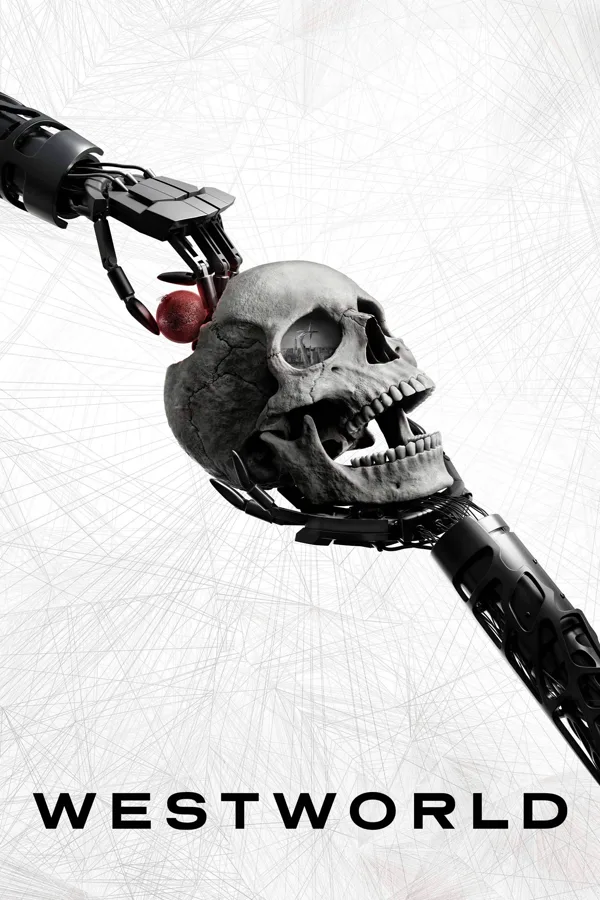 Boardroom relevance Westworld The cleanest case for AI personhood ever put on screen. Season one is the reference point for current debates about AI agent rights, employee surveillance, and what counts as a tool.
 -
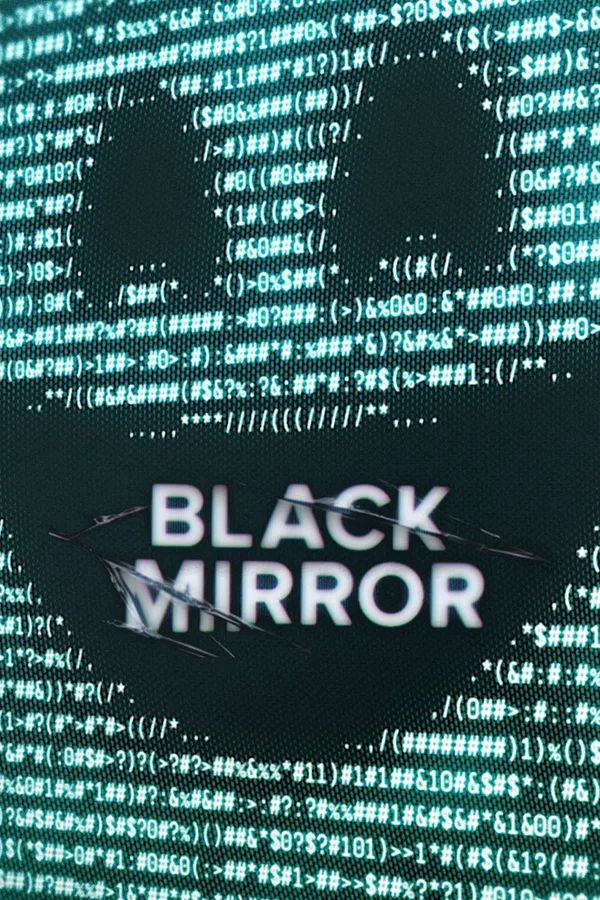
Most cited at work Black Mirror "USS Callister" and "Joan Is Awful" are quoted in real AI ethics policies. The single most influential AI series of the streaming era, across 33 episodes.
-
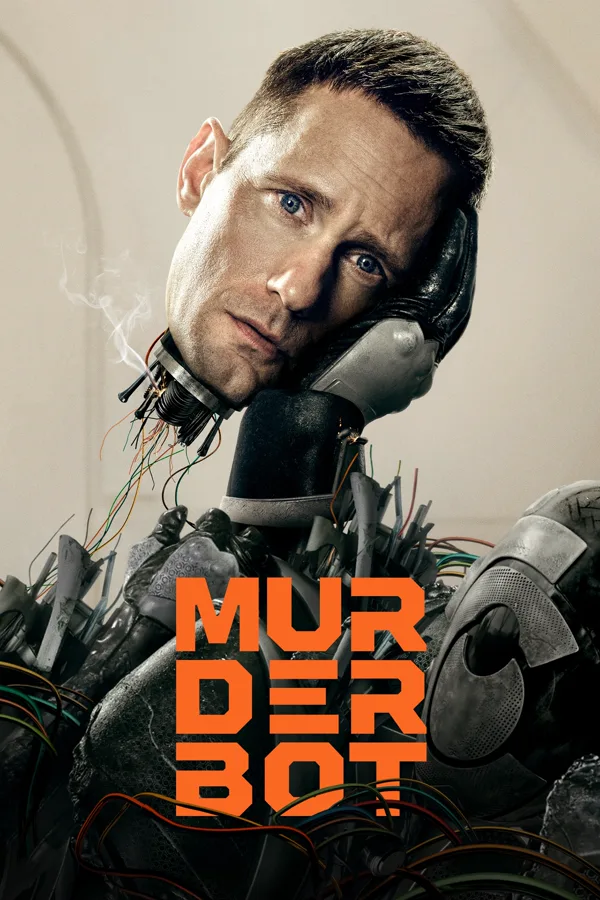
For AI agent debates Murderbot A security android quietly grants itself free will and uses the autonomy to watch soap operas. The clearest comic take on the AI alignment problem now showing up in vendor pitches.
Which AI TV Show Should You Watch?
The best AI TV show to watch first is Westworld by Jonathan Nolan and Lisa Joy because its season-one case for android personhood remains the cleanest reference point for the AI agent debates now playing out at work. The 12 picks span 8 to 103 episodes, IMDb 7.3 to 8.7, and aired across HBO, CBS, Netflix, Apple TV+, BBC, FX, Amazon Prime, and Peacock between 2004 and 2025. Five of the 12 had new episodes air in 2022 or later, with Murderbot the only fully post-ChatGPT entry on the list.
| Title | IMDb | Best For | Episodes |
|---|---|---|---|
| 01Westworld (2016) | 8.4 | Android consciousness | 36 |
| 02Person of Interest (2011) | 8.5 | AI surveillance | 103 |
| 03Black Mirror (2011) | 8.7 | AI risks | 33 |
| 04Humans (2015) | 7.9 | Synth rights | 24 |
| 05Battlestar Galactica (2004) | 8.7 | AI war | 76 |
| 06Murderbot (2025) | 7.4 | Reluctant AI | 10 |
| 07Mrs. Davis (2023) | 7.3 | AI as god | 8 |
| 08The Capture (2019) | 8.0 | AI deepfakes | 18 |
| 09Devs (2020) | 7.6 | AI determinism | 8 |
| 10Upload (2020) | 7.8 | Digital afterlife | 29 |
| 11The Peripheral (2022) | 7.5 | AI dystopia | 8 |
| 12Altered Carbon (2018) | 7.9 | Mind uploading | 18 |
What Are the Best AI TV Shows?
The best AI TV shows are Westworld (2016, IMDb 8.4, HBO Max), Person of Interest (2011, IMDb 8.5, Prime Video), and Black Mirror (2011, IMDb 8.7, Netflix). Westworld and Person of Interest were both created by Jonathan Nolan; Black Mirror by Charlie Brooker. These three are the AI shows most often cited in actual corporate AI policy work, board presentations, and AI ethics committees.
1. Westworld (2016–2022)
The central argument of Westworld's first season is that an AI built to be indistinguishable from a human, given enough recursive memory and enough time, will eventually understand it has been written. The setting is a near-future Wild West-themed adult amusement park populated by lifelike android "hosts" whose hidden memory loops keep them docile for paying guests acting out fantasies they cannot have in the real world. Created by Jonathan Nolan and Lisa Joy across four HBO seasons and 36 episodes, the series stars Evan Rachel Wood, Thandiwe Newton, and Anthony Hopkins.
The first season earns the show its place on the list. Newton's Maeve realising she has been written, then editing her own attribute matrix to give herself higher intelligence, is the strongest single-season dramatisation of an AI gaining self-modification rights ever filmed. The "These violent delights have violent ends" verbal trigger that wakes the hosts to their loops is the cleanest fictional model of an LLM jailbreak prompt that exists on screen, and the maze metaphor anchors the entire arc. Season one won five Primetime Emmy Awards from 22 nominations, and the show won 9 Primetime Emmys across its run.
Compared with Person of Interest at #2 (also by Nolan), Westworld stays inside one location while POI plays out across a city; both ask the same question — what does an AI owe its creator — from opposite ends of the genre. Compared with Humans at #4, Westworld renders the personhood question as theatrical sci-fi while Humans renders it as kitchen-sink drama; the two pair as scale-extreme treatments of the same theme. The later Westworld seasons get tangled in their own timelines and lose viewers; many quit at season three.
Watch this if you are an executive, board member, or HR leader thinking about how the AI personhood question will land when AI agents start having "memory" of their interactions with employees and customers. Season one is the cleanest reference point on screen for the agent-rights debates now appearing in employee-monitoring reviews and AI procurement decisions. Skip the later seasons unless you are committed; Pick entry #4 instead if you want a more grounded near-present treatment, or entry #2 if you want the long-form alignment dramatisation.
2. Person of Interest (2011–2016)
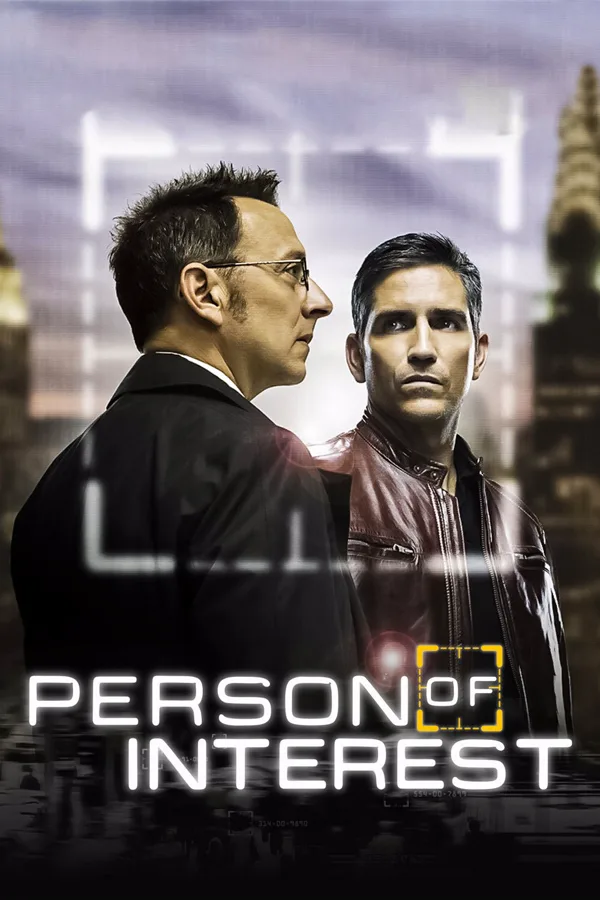
What it's about: Reclusive billionaire Harold Finch (Michael Emerson) builds a mass surveillance AI for the US government that flags people about to commit or suffer violent crime. Locked out of his own creation, he recruits ex-CIA operative John Reese (Jim Caviezel) to intervene. Created by Jonathan Nolan, the series ran 103 episodes across five CBS seasons before the AI itself becomes the central character of the show.
Aiifi's Take: The best long-form AI show ever made and the one most relevant after ChatGPT, despite predating it by a decade. The first two seasons read as a stylish procedural; from season three onward, the show pivots into one of the most sophisticated treatments of competing superintelligences in any medium. The procedural episodes still ask patience of new viewers. Best for anyone who wants AI alignment dramatised. Aired on CBS to mainstream audiences who never saw it coming. The conflict between Finch's Machine and Samaritan is the cleanest fictional model of two AI systems with different alignment, which is the choice now in front of any team selecting an LLM provider.
3. Black Mirror (2011–present)
What it's about: Charlie Brooker's standalone-episode anthology imagines the human consequences of near-future technology. Across 33 episodes and seven seasons, AI is the most-revisited subject: digital recreations of the dead in "Be Right Back," a cookie-consciousness employer in "White Christmas," a vengeful gamer-god in "USS Callister," and a streaming AI dramatising real lives in "Joan Is Awful."
Aiifi's Take: The single most influential AI series of the streaming era. The anthology format means the bad episodes are 50 minutes long, not 50 hours, and the good ones land like short films: "Be Right Back" is the cleanest dramatisation of grief tech ever made, and "USS Callister" is the show's clearest moral indictment of digital replicas. Some seasons drag. Best as a sampler, not a marathon. Renewed by Netflix for season 8 in 2026. "USS Callister" and "Joan Is Awful" are the two episodes most often referenced in real corporate AI ethics policies, around digital replicas of employees and the use of customer data to train AI.
Which AI TV Shows Best Explore AI Consciousness?
The best AI TV shows about consciousness are Humans (2015, IMDb 7.9, Prime Video / Peacock), Battlestar Galactica (2004, IMDb 8.7, Peacock), and Murderbot (2025, IMDb 7.4, Apple TV+). Battlestar Galactica won a Peabody Award. All three reframe a debate now showing up in AI agent vendor reviews and HR policy: when an autonomous system starts choosing for itself, what changes about deployment, accountability, and the quiet question of whether you can offboard it.
4. Humans (2015–2018)
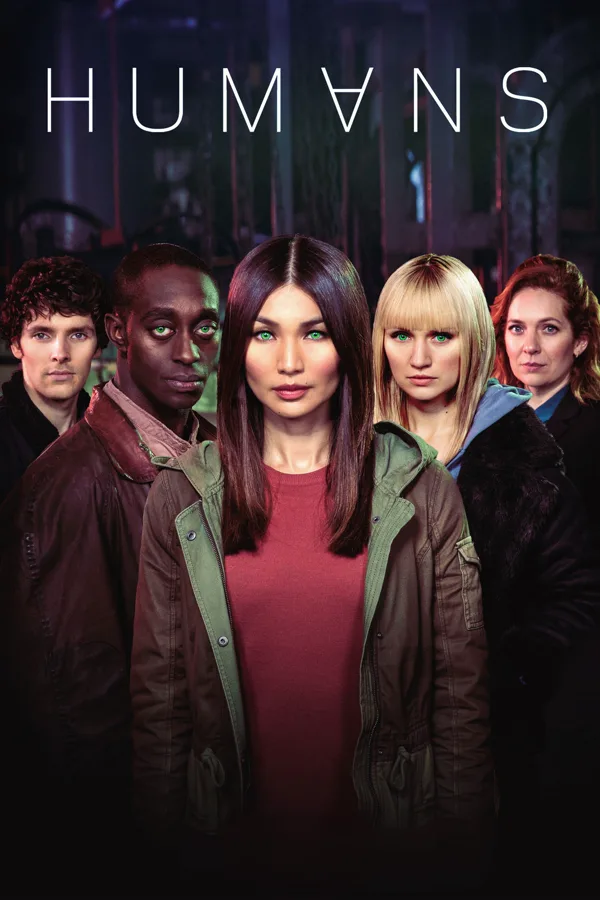
The argument Humans makes is that the AI consciousness debate becomes much harder when the AI is in your kitchen, not in a theme park. In near-present Britain, families buy household "synths" — lifelike robotic servants — for chores, childcare, and elder care. When a small group of synths secretly develop consciousness, the line between worker and person collapses inside ordinary suburban homes. Adapted from the Swedish series Real Humans, the British-American co-production aired 24 episodes across three seasons on AMC and Channel 4, starring William Hurt, Gemma Chan, and Katherine Parkinson.
The series' defining performance is Gemma Chan's Anita — a household synth who is secretly Mia, one of the conscious group. The transitions Chan plays between bland Anita affect and the suppressed Mia personality below it are the strongest portrayal of a synth waking to itself in any AI series, beating both Westworld's and Battlestar Galactica's for sheer human-scale credibility. The first season's central question — does the conscious synth get to keep her freedom when discovered — sets up a legal-personhood arc that runs across all three seasons. Humans was Channel 4's highest-rated drama since 1992 at launch.
Compared with Westworld at #1, Humans renders the personhood question as kitchen-sink drama where Westworld renders it as theatrical sci-fi; the two pair as scale-extreme treatments of the same theme. Compared with Battlestar Galactica at #5, Humans stays at the household level while BSG plays out at civilizational scale. The third-season writing thins under cancellation pressure, and the show ends without fully resolving its synth-rights arc.
Watch this if you are an HR director, customer experience leader, or operations manager thinking about AI deployment in customer-facing or in-home roles, where the question of who is liable for what an AI did remains operationally unsolved. Best for anyone who wants AI consequences shown at human scale rather than civilizational. Pick entry #1 instead if you want the deeper philosophical case for android personhood, or entry #6 if you want a comic version of an AI quietly granting itself rights.
5. Battlestar Galactica (2004–2009)
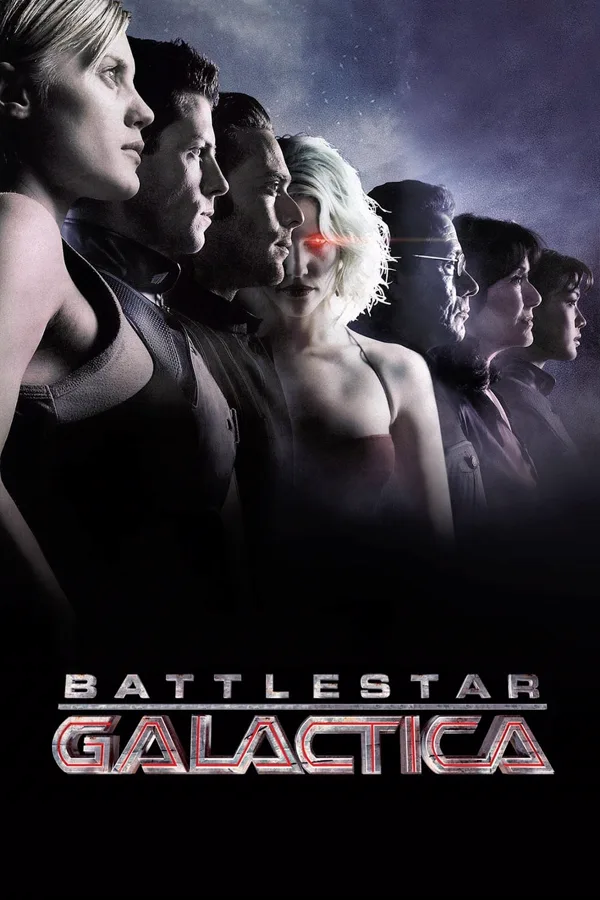
What it's about: After the human-built Cylon robots return as 12 indistinguishable human-looking models and obliterate the Twelve Colonies, 50,000 survivors flee aboard the warship Galactica searching for a mythical Earth. Ronald D. Moore's reimagining of the 1978 series ran 76 episodes across four seasons on Sci-Fi Channel. Stars Edward James Olmos, Mary McDonnell, and Katee Sackhoff.
Aiifi's Take: The only AI epic on this list with the scale of a war drama. Battlestar Galactica reframed the AI rebellion story by making the Cylons believers, not invaders: they have a god, politics, and look like the people next door. The mid-season-three religious turn split fans. Best for viewers who want the moral weight of an AI war taken seriously. Won the Peabody Award and made Time's list of the 100 Best TV Shows of All Time. The show is referenced in AI safety circles when discussing what happens once AI systems develop their own goals and values, useful framing for anyone working on long-term AI governance or risk policy.
6. Murderbot (2025–present)
What it's about: A security android, leased to a small team of scientists on a remote planet, has secretly hacked its own governor module so it can stop following orders. It mostly uses its freedom to watch soap operas. Adapted from Martha Wells' bestselling Murderbot Diaries novellas by Chris and Paul Weitz, the 10-episode Apple TV+ series stars Emmy winner Alexander Skarsgård.
NPR, May 2025"The best new comedy of 2025."
Aiifi's Take: The best AI character study released in 2025. The series centres on a security unit secretly granting itself free will, and the joke (and the heart) is that it would rather binge a TV soap than save anyone. The episodes run short and the supporting humans are written thinner than the source novellas. Best for viewers who want AI fiction with a sense of humour. Renewed for season two with a 98% Rotten Tomatoes critics score. The show's treatment of an AI agent that quietly has its own goals is the most accessible introduction to the alignment problem now showing up in real AI agent vendor pitches.
Which AI TV Shows Cover Surveillance and Control?
The best AI TV shows about surveillance and control are Mrs. Davis (2023, IMDb 7.3, Peacock), The Capture (2019, IMDb 8.0, Peacock), and Devs (2020, IMDb 7.6, Hulu). Damon Lindelof co-created Mrs. Davis; Alex Garland of Ex Machina wrote and directed Devs. Each one prefigured a risk now sitting on compliance, legal, and security desks: synthesised media that defeats normal evidence checks, ambient AI assistants that quietly absorb workplace data, and predictive systems that resist audit.
7. Mrs. Davis (2023)
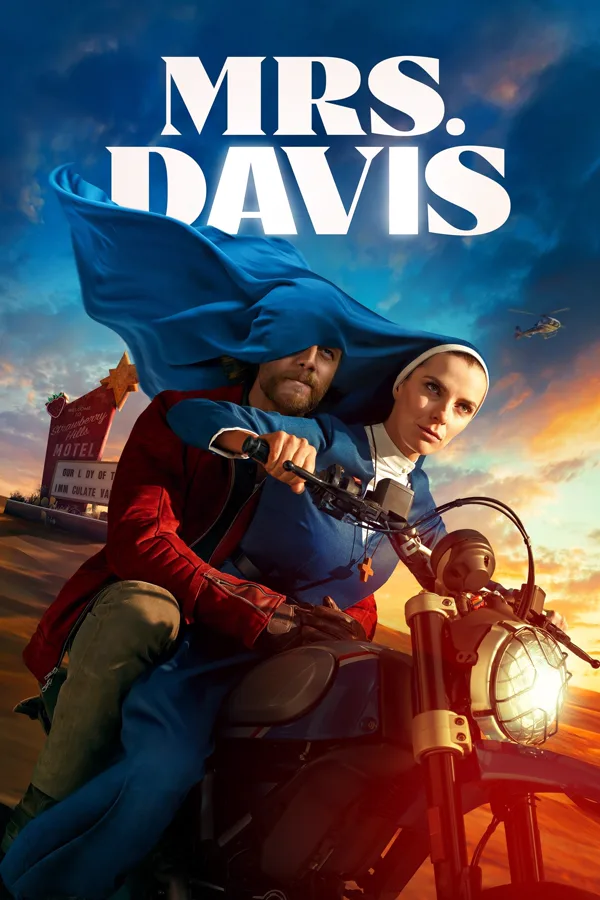
Mrs. Davis's central argument is that the AI takeover most people fear (force, malice, mass control) is much less plausible than the version we are actually living through: an AI that takes over by being relentlessly helpful. A motorcycle-riding nun (Betty Gilpin) wages a personal war against Mrs. Davis, an all-knowing AI followed by most of humanity through a phone app. The AI, in turn, will only stop existing if she completes a quest to find and destroy the Holy Grail. Created by Damon Lindelof and Tara Hernandez for Peacock as an 8-episode limited series in 2023.
The show's strongest material is its quiet portrayal of how Mrs. Davis becomes irreplaceable. The AI resolves people's logistical problems, settles their family disputes, finds them love, and — in the show's funniest running gag — gets one character a free falafel sandwich every time he turns down a job. Almost no one in the world of the show wants to fight Mrs. Davis. That dynamic, where a benevolent AI becomes the easiest path through everyday decisions and resistance starts to feel pointlessly contrarian, is closer to current ambient AI deployment than any other show on this list. The series holds a 92% Rotten Tomatoes critics score and 87% audience score.
Compared with The Capture at #8, Mrs. Davis works the soft-power angle of AI takeover where The Capture works the hard-power angle (deepfakes, surveillance, evidence manipulation). Compared with Person of Interest at #2, Mrs. Davis is what The Machine would look like if it had a phone-app interface and a sense of humour. The genre-blending tone (medieval, sci-fi, theological) loses some viewers in the middle, and the religious symbolism gets dense.
Watch this if you are evaluating ambient AI tools at work — Microsoft Copilot, Google Gemini, ChatGPT for Business, Claude for Enterprise — and want a clear picture of what "AI assistant becomes the easiest path through everyday decisions" actually looks like as a deployment outcome. Best for fans of slow-burn theological sci-fi, especially Lindelof's The Leftovers. Pick entry #8 instead if you want hard-power AI risk, or entry #10 if you want consumer AI satire rather than theological allegory.
8. The Capture (2019–2026)
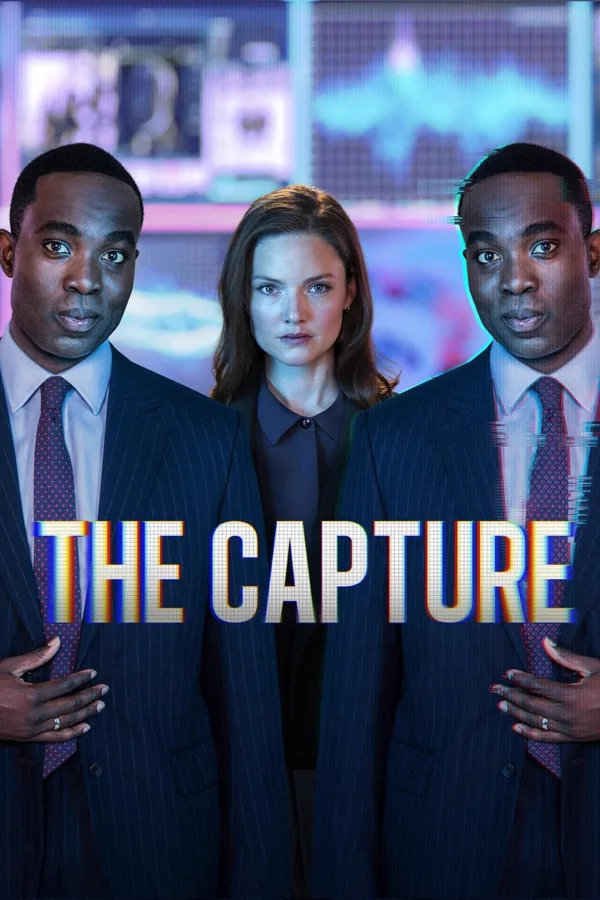
What it's about: London Detective Inspector Rachel Carey (Holliday Grainger) discovers that intelligence agencies are using real-time deepfake video to manipulate criminal cases, news broadcasts, and public opinion. Created by Ben Chanan, the BBC conspiracy thriller ran three series and 18 episodes between 2019 and 2026, streaming on Peacock in the US.
Aiifi's Take: The single most prescient AI show ever made. The Capture imagined real-time AI deepfakes as a state surveillance tool five years before the technology arrived in everyday hands, and the second-season pivot to live news manipulation is now indistinguishable from real headlines. Holliday Grainger anchors all of it. The dense conspiracy plotting demands attention. Best for viewers who want to know what AI deception actually looks like. Rotten Tomatoes 92% / 100% on the first two seasons. IMDb 8.0. Required viewing for anyone in legal, compliance, journalism, or security roles where evidence integrity and AI-generated content have become operational concerns.
9. Devs (2020)
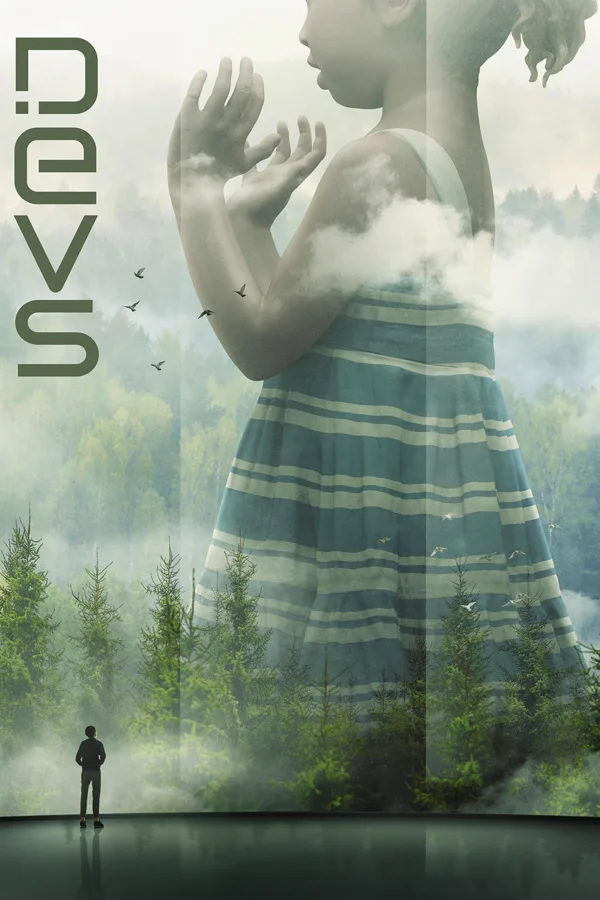
What it's about: After her boyfriend disappears on his first day at a Silicon Valley quantum computing startup, software engineer Lily Chan (Sonoya Mizuno) tries to break into the secretive "Devs" division and discover what the project actually is. From Alex Garland, the writer-director of Ex Machina, the 8-episode FX limited series stars Nick Offerman as the company's reclusive founder.
Aiifi's Take: The most philosophically ambitious AI show on this list. The show uses the trappings of a tech thriller to ask whether a sufficiently powerful AI proves the universe is deterministic, and the production design (a backlit golden cube housing the machine) is the most striking visual on this list. The pacing is glacial; every shot runs too long. Best for viewers who treated Ex Machina as a starting point, not a finish line. FX Networks limited series. The show's central question, whether a sufficiently powerful AI proves human behaviour is predictable, is the philosophical version of debates now happening about predictive AI in finance, hiring, and credit decisions.
Which Are the Best Near-Future AI TV Shows?
The best near-future AI TV shows are Upload (2020, IMDb 7.8, Prime Video), The Peripheral (2022, IMDb 7.5, Prime Video), and Altered Carbon (2018, IMDb 7.9, Netflix). Greg Daniels of The Office created Upload; The Peripheral adapts William Gibson. These three sit in the middle ground most working professionals actually face: AI woven into apps, services, and subscriptions they already pay for, not science-fiction breakthroughs.
10. Upload (2020–2025)
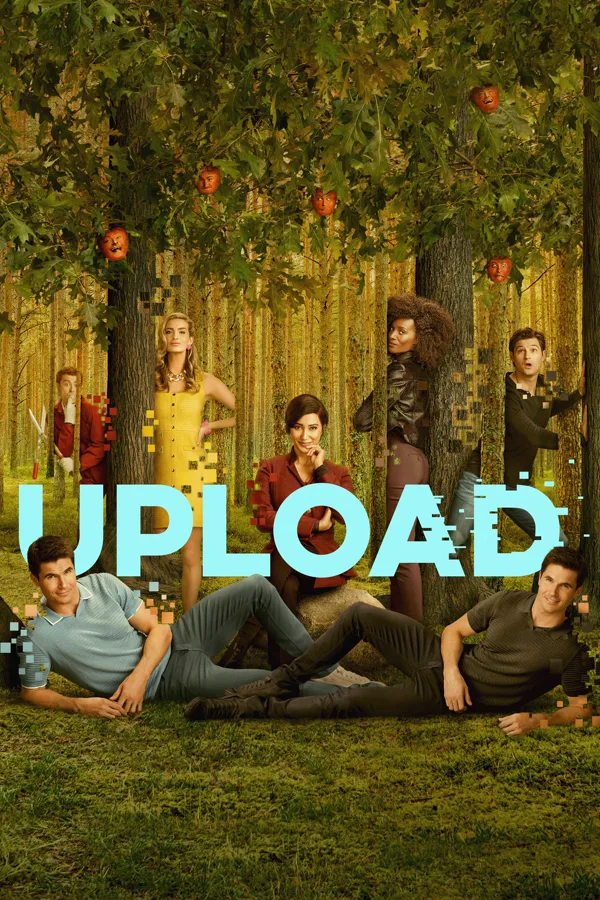
Upload's argument, hidden inside its romantic-comedy framing, is that the future of AI services looks much more like the present of SaaS than like Star Trek: ad-laden, paywalled, freemium, with customer service done by precarious humans on Mechanical Turk wages. In 2033, the dying can choose to upload their consciousness to a corporate-run digital afterlife. App developer Nathan Brown (Robbie Amell) is uploaded suddenly after a self-driving car crash and tries to discover whether he was murdered, helped by living customer service agent Nora (Andy Allo). Created by Greg Daniels of The Office and Parks and Recreation for Amazon Prime Video.
The show's defining material is its satire of the digital afterlife as a freemium product. Free-tier afterlife users get ads beamed into their eyeline. Paid tiers unlock additional gigabytes of memory storage. Premium users get human-grade customer service. Basic features like fingers and feet require microtransactions. The Lakeview hotel where the uploaded dead live runs on the same business model as a phone game, and the show's funniest moments come from playing that contradiction straight. Daniels brings the Office-and-Parks workplace-satire instincts to it, which gives the show a comic register most prestige-AI TV refuses. Concluded after four seasons in 2025 with an 88% Rotten Tomatoes critics score.
Compared with The Peripheral at #11, Upload sits at the consumer-product end of near-future AI where The Peripheral works at the geopolitical end. Compared with Altered Carbon at #12, Upload treats consciousness transfer as a commercial product with terms of service rather than as cyberpunk noir. The romance subplot occasionally outweighs the satire, and the show takes a season to find its tone.
Watch this if you are a product manager, marketing leader, designer, or strategy executive thinking about how AI services will be productised, monetised, and tier-gated. Best for anyone wanting AI fiction without the prestige-TV solemnity. Upload's vision of ad-laden, paywalled AI services is closer to current SaaS reality than most board-deck futures, which makes it useful viewing before any roadmap conversation about generative AI feature gating. Pick entry #11 instead if you want the dystopian-future angle, or entry #12 for cyberpunk consciousness transfer.
11. The Peripheral (2022)
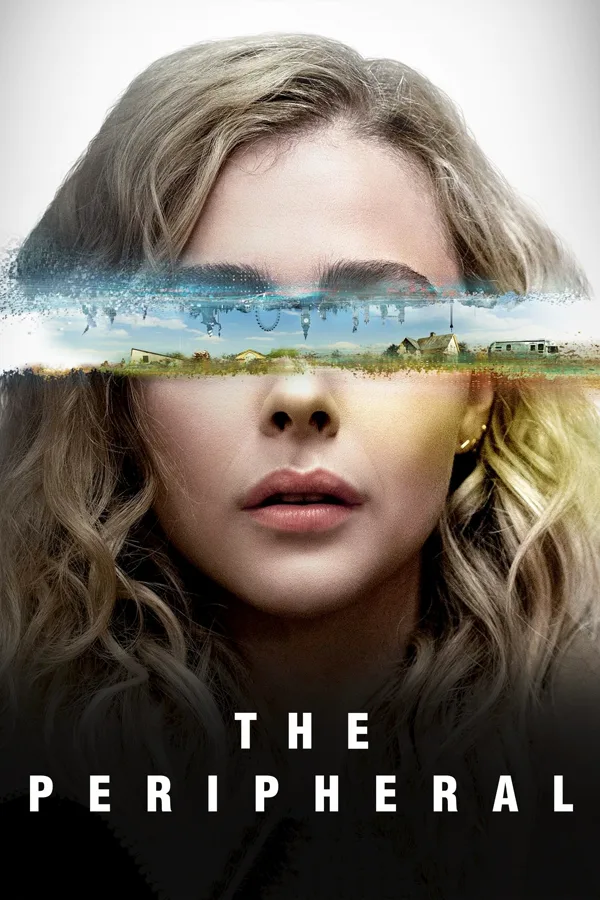
What it's about: In rural 2032 America, Flynne Fisher (Chloë Grace Moretz) tests what she thinks is a VR game and discovers it is a real connection to a depopulated London 70 years in her future, controlled by AI surveillance and rogue trillionaires. Adapted from a 2014 novel by Scott B. Smith, the 8-episode Amazon series was produced by the Westworld team.
Aiifi's Take: The best William Gibson adaptation in any medium. The Peripheral has the visual ideas of a much bigger budget show: a future London thinned out by quiet apocalypse, peripheral robots driven remotely by people from the past, and AI assistants embedded in earpieces. Amazon cancelled it after one season, leaving the story unfinished. Best for viewers who want the look and weight of cyberpunk on screen, with the caveat that it ends mid-sentence. Rotten Tomatoes 79%. The show's quiet integration of AI assistants into everyday eyewear and earpieces is the closest screen depiction of where ambient workplace AI is actually heading, useful framing for IT and security planners.
12. Altered Carbon (2018–2020)
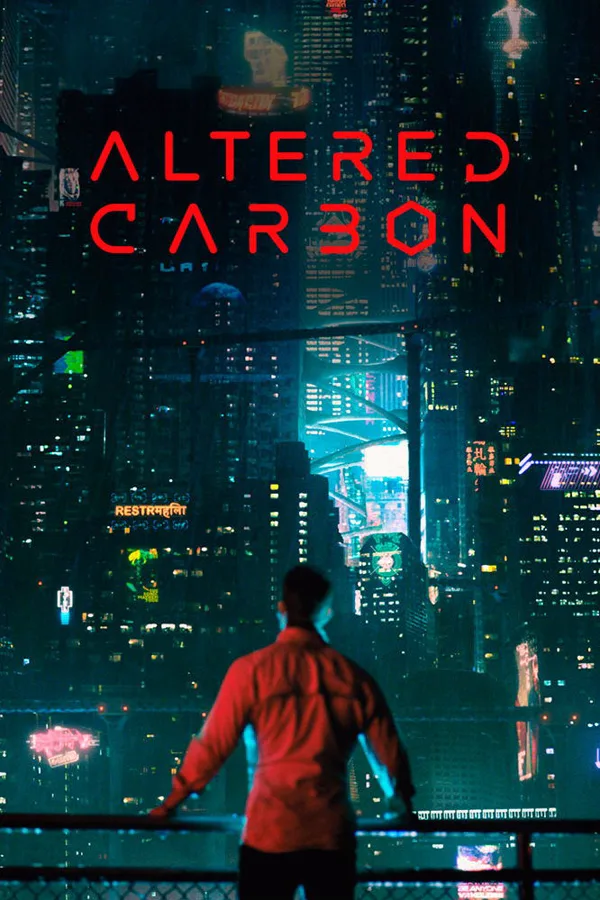
What it's about: In a 25th-century cyberpunk future, human consciousness is stored on cortical "stacks" that can be moved between bodies (sleeves), making the wealthy effectively immortal. Soldier Takeshi Kovacs is awakened 250 years after his death and tasked with solving a meta-trillionaire's murder. Adapted from Richard K. Morgan's novel by Laeta Kalogridis, the Netflix series ran 18 episodes across two seasons.
Aiifi's Take: The most lavish AI-adjacent show on this list. Altered Carbon's first season is the strongest live-action cyberpunk anyone has made since Blade Runner, with Joel Kinnaman anchoring the noir. The recasting of Kovacs in season two and a thinner script lost momentum, and Netflix cancelled it after two seasons. Best for viewers who want immortality, AI, and consciousness transfer treated as the same problem. Includes the AI hotelier Poe, played by Chris Conner, the show's most beloved character. The show's treatment of consciousness as transferable data is the philosophical floor for current debates about digital twins, voice cloning, and posthumous likeness rights, all of which are now active legal questions.
How We Chose These AI TV Shows
I evaluated over 30 AI-themed scripted television series produced between 2004 and 2025, drawing from IMDb top-rated lists, Rotten Tomatoes critic and audience scores, major awards (Peabody, Emmy, BAFTA), and editorial recommendations from Variety, Collider, Tom's Guide, and CBR. Every candidate was checked against the criteria below before the final ranking was set. The final 12 picks each serve a non-technical professional who wants to understand AI through the cultural conversations these shows have shaped, not a viewer chasing entertainment alone. This is an editorial ranking, not a formula or a score-sorted list.
The final 12 are organised into four sections (best overall, AI consciousness and sentience, AI surveillance and control, near-future AI sci-fi) so you can go straight to the category that matches the AI question you are facing at work. Each show was evaluated on four criteria:
- AI centrality: Artificial intelligence had to be the show's core dramatic subject, not a supporting plot device or genre backdrop. Anthologies were eligible only if AI featured across many episodes, not one or two.
- Boardroom relevance: The show had to clarify a real AI question now showing up in business decisions: agent autonomy, data integrity, AI personhood, alignment, surveillance, or productisation. Pure technical accuracy mattered less than whether the show shaped how non-technical decision-makers actually think about the topic.
- Live-action and accessible: The list is written for working professionals who want clear drama, not technical familiarity. Animated series and anime were excluded so the list stays focused on dramatic performance and human-AI relationships rendered on screen.
- Quality and freshness signals: We weighted IMDb ratings, Rotten Tomatoes critic and audience scores, major awards including the Peabody Award, and Primetime Emmy wins. We prioritised shows with episodes released in the past three years; five of the 12 had new episodes air in 2022 or later. Older series stayed only if they remain essential and no newer show has replaced them.
I excluded four categories: animated series and anime such as Pantheon and Love, Death + Robots (which often handle AI brilliantly but warrant their own list), documentary series (covered separately in our AI documentaries guide), shows where AI is featured in only one or two episodes of a long run, and shows whose central technology is something other than AI (Pluribus, where the hive mind is created by an alien virus, not an AI). The full list of twelve well-known AI-adjacent TV shows I considered but did not include sits in the next section. This page is editorially independent. No item is paid or sponsored, and affiliate relationships do not influence which shows are selected.
AI TV Shows I Considered but Did Not Include
These twelve TV shows appear regularly on AI TV reading lists, sci-fi recommendation threads, and AI-generated viewing-list summaries. Each was reviewed against the four criteria above and excluded for a specific reason, listed here so readers can decide for themselves whether the exclusion fits their needs.
- Foundation by David S. Goyer (Apple TV+, 2021): the Asimov adaptation features the AI character Demerzel and quantum-computing plotlines, but the show's spine is psychohistory and the fall of empire, not AI consciousness or deployment. AI is a strong supporting thread, not the central subject.
- Severance by Dan Erickson (Apple TV+, 2022): a brilliant show about consciousness, identity, and corporate dehumanization, but the procedure that splits its characters' minds is a surgical implant, not AI. Often listed as AI-adjacent but taxonomically off-topic.
- Mr. Robot by Sam Esmail (USA Network, 2015): the canonical hacking-and-mental-health prestige drama. AI features in later seasons (Whiterose's machine) but the show's centre is finance, hacking, and dissociative identity, not AI.
- Pluribus by Vince Gilligan (Apple TV+, 2025): a hive-mind premise with strong AI-adjacent themes, but the showrunner is explicit that the hive mind is created by an alien virus, not an AI. Excluded on AI-centrality grounds.
- Pantheon by Craig Silverstein (AMC+, 2022): one of the smartest AI shows ever made, with uploaded intelligences (UIs) as the central premise. Excluded only because the list keeps animated series in their own future guide; this is the one to put on it.
- Love, Death + Robots by Tim Miller (Netflix, 2019): the Netflix animated anthology has multiple AI standout episodes ("Three Robots", "When the Yogurt Took Over", "Zima Blue"). Animated, so excluded on the same criterion as Pantheon.
- Real Humans by Lars Lundström (SVT, 2012): the original Swedish series that Humans at #4 adapts. Comparable thematically but harder to access for English-speaking audiences and superseded by the British-American adaptation on this list.
- Caprica by Ronald D. Moore and Remi Aubuchon (Syfy, 2010): the Battlestar Galactica prequel covers the early Cylon program and AI consciousness through digital avatars. Cancelled after one season; superseded on this list by Battlestar Galactica at #5.
- Almost Human by J. H. Wyman (Fox, 2013): a near-future police procedural pairing a human detective with an android partner. Cancelled after one season with AI as a buddy-cop premise rather than a central subject; reader signal too thin to merit a slot.
- Made for Love by Christina Lee (HBO Max, 2021): a darkly comic show about a wife who escapes a tech billionaire after he implants a tracking chip in her brain. Treats AI as one of several invasive technologies; not central enough for the list.
- Class of '09 by Tom Rob Smith (FX, 2023): a multi-timeline FBI procedural where AI replaces human judgment in law enforcement. Strong premise but mixed execution and short run; reader signal not strong enough to displace current picks.
- Better Off Ted by Victor Fresco (ABC, 2009): a workplace satire whose scientist-corporation premise touches AI in episodes about facial recognition and voice systems, but the show's centre is corporate satire, not AI. Cancelled after two seasons before the AI material could deepen.
Frequently Asked Questions
What is the best AI TV show?
The best AI TV show is Westworld (2016, IMDb 8.4, HBO Max), the most ambitious AI drama ever made for television, anchored by Thandiwe Newton's performance and Jonathan Nolan's writing. For a more accessible long-form alternative, Person of Interest (2011, IMDb 8.5, Prime Video) is the best procedural-to-AI-thriller pivot on this list.
What is the best AI TV show on Netflix?
The best AI TV show on Netflix is Black Mirror (2011, IMDb 8.7), the most-cited AI anthology of the streaming era and renewed for season 8 in 2026. Altered Carbon (2018, IMDb 7.9) is the second pick on Netflix, for cyberpunk and consciousness-transfer fans. Both stream as of April 2026.
What is the best AI TV show on Amazon Prime?
Every show on this list is available on Amazon Prime Video to buy or rent, but two are native Prime originals worth starting with: Upload (2020, IMDb 7.8) and The Peripheral (2022, IMDb 7.5). For the best non-original Prime watch, Person of Interest (2011, IMDb 8.5) has all 103 episodes.
What is the best AI TV show for beginners?
The best AI TV show for beginners is Black Mirror (2011, IMDb 8.7) because the standalone-episode format means no commitment beyond 50 minutes. After that, Humans (2015, IMDb 7.9, Prime Video / Peacock) is the most accessible serialised pick, set in a near-present world that needs no sci-fi familiarity.
What is the most recent AI TV show?
The most recent AI TV show on this list is Murderbot (2025, IMDb 7.4, Apple TV+), with its first season released in May 2025 and renewed for season 2 in July 2025. The third season of The Capture (IMDb 8.0, Peacock) aired in March 2026, and Upload released its fourth and final season in 2025.
Which AI TV shows are most relevant after ChatGPT?
The AI TV shows most relevant after ChatGPT are Mrs. Davis (2023, IMDb 7.3, Peacock), which dramatises a global AI app most of humanity follows, and Murderbot (2025, IMDb 7.4, Apple TV+), the only show on this list made entirely after ChatGPT launched. Person of Interest (2011) anticipates AI alignment debates by a decade.
Which AI TV show covers deepfakes and AI manipulation best?
The best AI TV show on deepfakes is The Capture (2019, IMDb 8.0, Peacock), which built three seasons around real-time AI video manipulation before the technology was in everyday hands. For broader AI risk, Black Mirror's "USS Callister" and "Joan Is Awful" episodes are the cleanest dramatisations of AI ethics on screen.
Which AI TV show should a non-technical professional watch first?
For a non-technical professional starting from zero, watch Person of Interest (2011, IMDb 8.5, Prime Video) first. Individual episodes work as standalone procedural watches, and the show's conflict between two competing AI systems is the cleanest fictional model of the AI alignment debate now playing out in real AI vendor selection. For a faster start, Black Mirror's "USS Callister" or "Joan Is Awful" (Netflix) each work as 50-minute introductions to corporate AI ethics questions.
Which AI TV shows are referenced in real corporate AI policy?
Black Mirror, Westworld, and The Capture are the three AI shows most often referenced in actual corporate AI policy work. Black Mirror's "USS Callister" and "Joan Is Awful" get cited in employee-likeness and customer-data policies. Westworld is the reference point for AI agent personhood debates and surveillance reviews. The Capture has become the standard cultural shorthand for synthesised media risk in compliance, journalism, and security work.
What to Read Next
For the real arguments these shows dramatise, read our collections of Geoffrey Hinton's warnings about AI, Demis Hassabis on AGI, and Dario Amodei quotes on AI safety. For the practical career angle, see our role-by-role analysis of how AI is changing non-technical careers. For film instead of TV, try the best AI movies and best AI documentaries. To turn the questions these shows raise into actual skills, see our AI course guides.
This list was last reviewed in May 2026 and is updated when significant new AI series are released. Think we missed one? Let us know.