What Are the Top 3 AI Courses for Non-Technical Professionals?
- Best for workplace AI fluency Google AI Professional Certificate Google's 7-course Professional Certificate includes 20+ activities and holds 4.8/5 from 9,134 reviews across its courses. It costs $49/month and requires no coding.
- Best for business AI judgment Oxford AI Foundations Oxford professor Matthias Holweg leads 3 courses over 4 weeks, with a 4.8/5 rating from 486 reviews across its courses and a Saïd Business School certificate.
- Best for fast prompting skills Google Prompting Essentials Google's 4-course program takes under 10 hours and holds 4.8/5 from 7,851 reviews across its courses. It builds a reusable prompt library for daily work.
Which AI Course Should a Non-Technical Professional Take First?
| Title | Best For | Length | Price |
|---|---|---|---|
| 01Google AI Professional Certificate | Workplace fluency | Varies | $49/mo |
| 02Oxford AI Foundations | Business judgment | 4 wks | $49/mo |
| 03Google Prompting Essentials | Fast prompting | Under 10 hrs | $49/mo |
| 04AI For Everyone | Org AI literacy | 7 hrs | $49/mo |
| 05Google AI Essentials | Fast foundation | 4 hrs | $49/mo |
| 06Wharton AI For Business | AI strategy | Varies | $49/mo |
| 07Vanderbilt AI Agents | Agent workflows | Varies | $49/mo+ |
| 08Generative AI for Everyone | GenAI concepts | 6 hrs | $49/mo |
| 09Google Cloud Gen AI Leader | Formal credential | 90-min exam | $99 + tax |
Choose Google at #1 for the strongest all-round route, Oxford for strategy and governance, or Prompting Essentials for fast prompting; between beginner foundations, Google AI Essentials offers the shortest applied tool practice, while AI For Everyone teaches organizational concepts, project selection and AI-team collaboration.
Coursera Plus includes six ranked picks. Annual Plus is $399 a year and monthly Plus is $59 a month, versus $49 a month for one individual course subscription. New annual purchases have a 14-day refund window; annual renewal charges are non-refundable. Monthly Plus advertises a seven-day trial.
How We Chose These AI Courses for Non-Technical Professionals
I evaluated 24 candidates published or substantively updated after November 2022, retaining older foundations only when current evidence still supported them. Official provider and platform pages were checked through August 9, 2026, then the field was re-swept in August 2026.
- Four knockouts: every pick needed a practical non-coding outcome, no programming or machine-learning prerequisite, a realistic individual purchase path with extra tool costs disclosed, and enough current official evidence to verify curriculum, delivery, credential and cost.
- One ranking criterion: decision usefulness, evidence and accessibility. Accessibility covers realistic cost, prerequisites and self-paced or scheduled delivery; the complete rule also weighs outcome fit, practice, learner evidence and instructor or issuer authority.
A mature Coursera top-three program needed at least 4.5/5 from 200 reviews across the program's courses. All three cleared that threshold; the final list includes six Plus-eligible picks and three separate purchases. The list is not perfectly platform-neutral: the strongest practical beginner options cluster around Google, and that concentration remains visible instead of being diluted with weaker alternatives.
This page is editorially independent. No item is paid or sponsored, and affiliate relationships do not influence which courses are selected.
Which AI Courses Should Non-Technical Professionals Start With?
Start with Google's AI Professional Certificate, Oxford AI Foundations or Google Prompting Essentials. All three are self-paced Coursera programs solving different non-coding problems. Demand is rising: Microsoft and LinkedIn reported a 160% increase in AI-aptitude course use among non-technical professionals in six months.
1Google AI Professional Certificate
What it's about
The seven-course Google Professional Certificate uses Gemini, NotebookLM, Workspace and AI Studio across more than 20 activities. Learners produce plans, research, communications, analysis, content and a no-code app. The completely online program requires no previous AI or coding experience and awards the Google AI Professional Certificate.
Pros
- Activities produce plans, reports, communications, analysis and a no-code app.
- The 4.8/5 score from 9,134 reviews supplies strong learner evidence.
- The region-stated $49 per month makes the credential accessible to individuals.
Cons
- Google's tools dominate the examples, so other stacks require translation.
- Conflicting official hour totals prevent a trustworthy exact completion claim.
Aiifi's Take
Choose Google over Oxford at #2 when applied workplace outputs matter more than strategic evaluation and governance. The curriculum spans six professional domains after its AI foundation, and that spread suits generalists who want one credential to support several recurring job tasks. In practice, research, writing, analysis and no-code building can sit inside one learning plan instead of separate specialist courses. Our Google AI certificate review examines the complete curriculum.
Bottom Line
Take this if you're seeking the strongest all-round workplace AI credential without learning to code.
2Oxford AI Foundations
What it's about
The three-course Oxford specialization moves from AI and machine-learning foundations through generative and agentic systems to governance, risk and ethics. Scenario projects ask learners to judge opportunities, deployment risks and oversight frameworks. Oxford professor Matthias Holweg teaches the beginner-level, four-week online sequence.
Pros
- The sequence links AI concepts directly to business opportunity and governance decisions.
- Scenario projects make risk, ethics and oversight concrete for managers.
- Matthias Holweg supplies named Oxford faculty authority across all three courses.
Cons
- Strategic evaluation replaces coding, tool practice and model-deployment work.
- The member-course rating cannot establish satisfaction with the complete specialization.
Aiifi's Take
Choose Oxford over Google at #1 when decision quality and governance matter more than immediate workplace production. The final course centers transparency, accountability and trustworthy deployment. Its scenario outputs are most useful to managers who need reusable questions for project reviews: what evidence supports the opportunity, which risks need ownership and how oversight will work. The full Oxford review explains how that decision-focused sequence works.
Bottom Line
Take this if you're responsible for judging AI opportunities and risks without building the systems yourself.
3Google Prompting Essentials
What it's about
The four-course Google prompting program teaches a five-step task, context, references, evaluation and iteration framework. Practice covers writing, summarization, tables, timelines, analysis and presentations, then advances to prompt chaining and versioning. Beginner learners finish with a reusable prompt library rather than a coding project.
Pros
- One framework transfers across writing, summarization, analysis and presentation work.
- Hands-on practice leaves learners with reusable prompts for recurring tasks.
- No technical or prompting experience is required before starting.
Cons
- The narrow curriculum cannot replace broad AI literacy or business strategy.
- Google explicitly says it does not prepare dedicated prompt engineers.
Aiifi's Take
Choose Prompting Essentials for technique; choose Google AI Essentials at #5 for broader beginner literacy. Prompt versioning and chaining extend beyond one-shot templates, making this most useful when one recurring task can become a reusable workflow during the course. Bring a weekly deliverable—such as a status update, analysis or client brief—then refine and save the prompt as the practical output you keep using after completion. Our Google Prompting Essentials review maps the full sequence.
Bottom Line
Take this if you're already choosing AI tools and need clearer, repeatable instructions fast.
Which Courses Build AI Literacy and Business Strategy?
AI For Everyone, Google AI Essentials and Wharton AI For Business move from general literacy to cross-functional strategy. Choose a broad foundation when you need shared vocabulary; choose a manager-focused sequence when your work involves evaluating opportunities across several departments.
4AI For Everyone
What it's about
AI For Everyone from DeepLearning.AI is Andrew Ng's four-module course on AI terminology, project workflows, organizational opportunity selection and collaboration with technical teams. It adds strategy, implementation pitfalls, ethics and societal effects through the AI Transformation Playbook. The seven-hour online course uses videos, readings and graded quizzes, with no technical or business prerequisite.
Pros
- Project-selection and team-collaboration lessons translate directly to non-technical leadership.
- More than 53,000 reviews make its quality signal unusually mature.
- Seven hours keeps strategic literacy accessible to busy professionals.
Cons
- Four quizzes replace hands-on tool work or a portfolio project.
- Coursera Plus does not include this separate single-course purchase.
Aiifi's Take
Choose AI For Everyone for organizational strategy; choose Generative AI for Everyone at #8 for current LLM concepts. The AI Transformation Playbook gives managers a sequence for organizational adoption, making the course strongest before drafting an AI roadmap or briefing stakeholders on project selection. Use that sequence to frame candidate opportunities, team responsibilities and implementation steps before the next planning meeting, so the course becomes preparation for a real decision rather than general background.
Bottom Line
Take this if you're a manager who needs to discuss AI projects credibly with technical teams.
5Google AI Essentials
What it's about
The five-course Google beginner sequence covers AI basics, productivity, prompting, responsible use and staying current. Activities address research, organization, text and image creation, decision support, few-shot prompts, output evaluation, human oversight, privacy, security and bias. It is self-paced, completely online and requires zero technical experience.
Pros
- The four-hour headline makes completion realistic inside a crowded workweek.
- Responsible-use lessons cover oversight, privacy, security and bias.
- A 4.8 score from 24,751 reviews supports the beginner experience.
Cons
- The short sequence cannot match Oxford's strategy or governance depth.
- Taking Google's Professional Certificate later repeats foundational material.
Aiifi's Take
Choose Essentials for broad orientation; choose Prompting Essentials at #3 when instruction quality is the only gap. The sequence closes with a method for evaluating future AI tools, giving newcomers a repeatable way to compare new products after the course ends. It works best as a standalone orientation for people not yet committing to a longer credential, and can establish the baseline for choosing a later specialty. Our review covers that decision.
Bottom Line
Take this if you're completely new to workplace AI and want a safe four-hour start.
6Wharton AI For Business
What it's about
The four-course University of Pennsylvania specialization spans AI foundations, marketing, finance, people and enterprise strategy. Eight faculty cover personalization, risk, explainability, change, ethics and governance. It is beginner-level and online. $49 is the minimum first-month cost; conflicting duration signals mean the total varies and may span multiple $49 billing months.
Pros
- Cross-functional cases help managers see how AI decisions differ by department.
- Eight instructors bring marketing, people, risk and strategy perspectives.
- The curriculum treats ethics and governance as business responsibilities.
Cons
- Early TensorFlow and model vocabulary may stretch wholly non-technical beginners.
- Conflicting official schedules make the real time commitment uncertain.
Aiifi's Take
Choose Wharton for functional breadth; choose Oxford at #2 for a cleaner foundations-to-governance sequence. People management receives a complete course rather than one module, so Wharton best suits cross-functional leaders comparing workforce, marketing and risk proposals in one role. An HR, operations or strategy lead can use the four lenses to challenge assumptions consistently across departments. The Wharton review maps those functional perspectives.
Bottom Line
Take this if you're comparing AI opportunities across several business functions, not learning one tool.
Which Courses Cover Agents, Generative AI and Credentials?
Vanderbilt's Agentic AI for Leaders, Generative AI for Everyone and Google Cloud Generative AI Leader serve three later-stage goals: building supervised workflows, understanding modern model choices and earning a proctored credential. These are specialist next steps rather than interchangeable introductions.
7Vanderbilt AI Agents for Leaders
What it's about
The three-course Vanderbilt specialization covers agent planning, feedback, RAG and reusable patterns under Dr. Jules White. Learners build and test custom GPT workflows. Official workloads conflict between 12 and 32 hours; $69 assumes one $49 Coursera month plus $20 ChatGPT Plus, and longer completion could increase the Coursera cost.
Pros
- Projects progress from agent concepts to working custom-GPT automations.
- Testing, boundaries and human feedback temper the automation emphasis.
- The 4.8 score from 10,028 reviews supplies a substantial learner-quality signal.
Cons
- Custom-GPT assignments require qualifying paid ChatGPT access beyond the Coursera subscription.
- OpenAI-specific practice transfers imperfectly to other agent platforms.
Aiifi's Take
Choose Vanderbilt after basic prompting when multi-step delegation is the next skill gap. Travel and expense workflows provide concrete no-code agent test cases, so the course works best for professionals who can test a real cross-step process while they learn. Bring one recurring handoff—such as intake, review and approval—and use the assignments to define checkpoints and human intervention. Our agentic AI course review explains the project requirements.
Bottom Line
Take this if you're ready to move beyond prompts into supervised multi-step AI workflows.
8Generative AI for Everyone
What it's about
Generative AI for Everyone from DeepLearning.AI is Andrew Ng's three-module course on prompting, RAG, fine-tuning, model choice, tool use and agents without coding. It connects those concepts to project lifecycles, cost intuition, job-task analysis, team workflows and responsible AI. The six-hour course is self-paced and awards a shareable certificate outside Coursera Plus.
Pros
- Technical concepts are translated into business and project decisions without coding.
- Six hours makes current generative-AI vocabulary quick to acquire.
- Andrew Ng connects model choices to workflows, costs and risks.
Cons
- One practical exercise still references the older GPT-3.5 model.
- Coursera Plus excludes the course, and no capstone demonstrates application.
Aiifi's Take
Choose this for LLM concepts; choose AI For Everyone at #4 for organizational adoption and team collaboration. Cost intuition appears alongside RAG, fine-tuning and model selection, making the course a useful primer before reviewing a vendor proposal or discussing which model approach fits a project. Use those concepts to ask whether retrieval, customization or a different model is actually necessary. Our review maps the syllabus.
Bottom Line
Take this if you're hearing LLM terminology at work and need a clear six-hour translation.
9Google Cloud Gen AI Leader
What it's about
The Google Cloud credential route pairs a five-activity learning path with a scheduled 90-minute proctored exam. Preparation covers generative-AI foundations, Gemini, NotebookLM, organizational agents and business strategy, including a basic agent build. No technical experience is required, but Google publishes neither a total preparation duration nor learner rating.
Pros
- Passing earns a formal Google Cloud certification valid for three years.
- Preparation covers workplace tools and a basic agent build.
- Online or test-center delivery gives candidates two exam routes.
Cons
- The 50-60-question exam tests Google Cloud knowledge rather than practical delivery.
- Google publishes no learner rating or total preparation-path duration.
Aiifi's Take
Choose this exam for formal validation; choose Google's Coursera certificate at #1 for broader project evidence. The $99 credential remains valid for three years, and its signal is most legible inside organizations already evaluating Google Cloud. For a stakeholder discussing adoption, that can clarify internal role fit more directly than another completion certificate; outside that context, project evidence from the broader Google course is easier to demonstrate across routine work.
Bottom Line
Take this if you're working around Google Cloud adoption and need an exam-based AI credential.
Which AI Courses for Non-Technical Professionals Did We Consider but Not Pick?
These 10 near-misses come from 15 excluded candidates. We prioritized clearer individual access, better comparison evidence, broader audience fit and less duplication of skills already represented in the ranking.
- Microsoft AI Business Professional Professional Certificate by Microsoft: A relevant workplace route, but the ranked options offered a clearer individually accessible path.
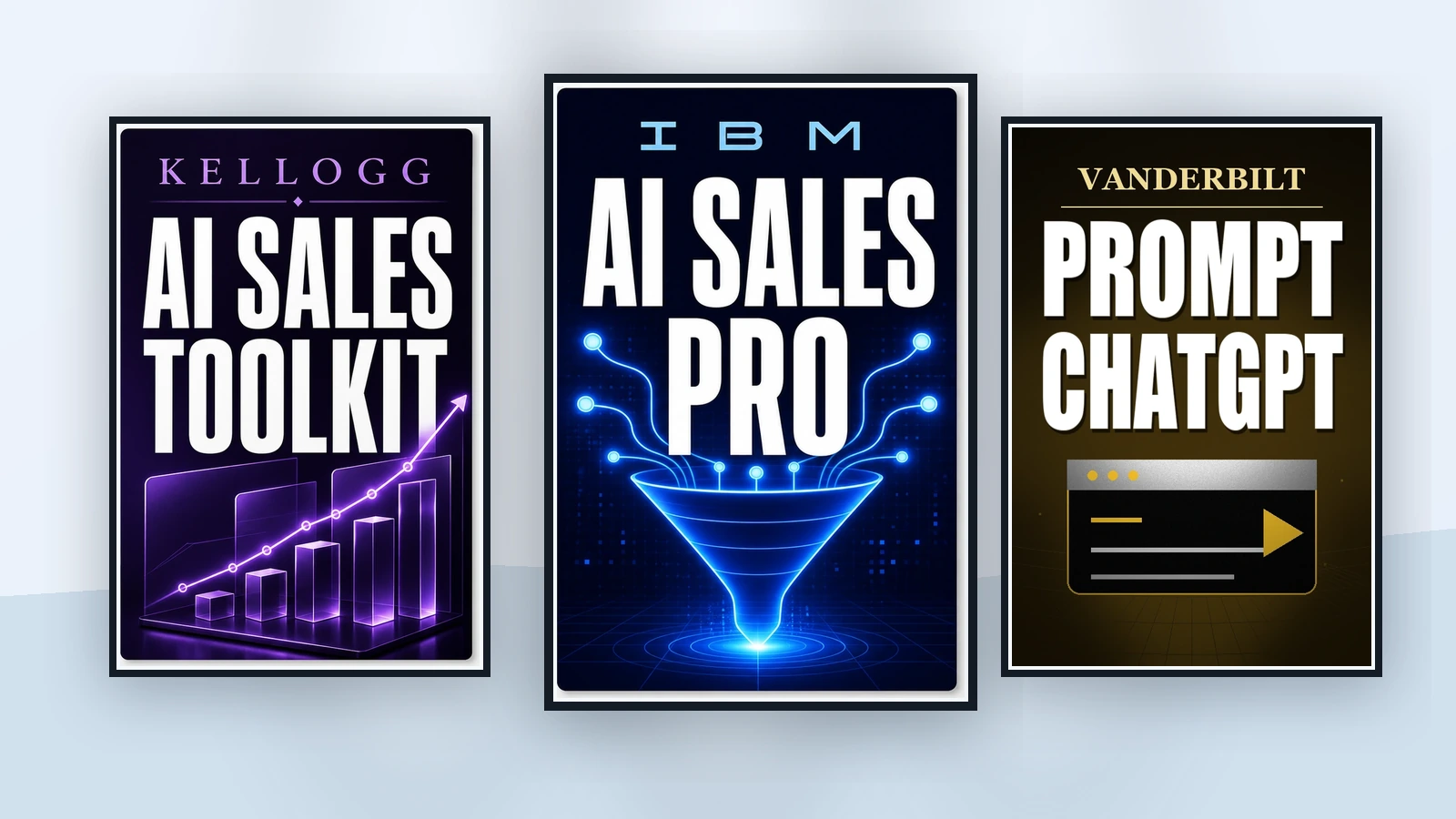
- Prompt Engineering for ChatGPT by Vanderbilt University: A focused prompting alternative, but another dedicated prompt course would duplicate this ranking's coverage.
- AI Foundations for Everyone by IBM: A broad foundation, but the ranked beginner paths were easier to compare from current official evidence.
- Generative AI for Executives and Business Leaders by IBM: A leadership alternative, but the ranked strategy courses fit a broader professional audience.
- Career Essentials in Generative AI by Microsoft and LinkedIn: A workplace introduction, but its individual purchase path was less transparent than the ranked options.
- AI Fundamentals by DataCamp: A general foundation, but its purchase terms were less directly comparable for a United States reader.
- Elements of AI by University of Helsinki and MinnaLearn: A respected alternative, but the ranked routes aligned more directly with current workplace decisions.
- AI Essentials for Business by Harvard Business School Online: A business alternative, but this ranking prioritized individually accessible subscriptions and entry routes.
- Artificial Intelligence: Implications for Business Strategy by MIT Sloan and CSAIL: A credible strategy option, but this ranking prioritized individually accessible learning paths.
- Oxford Artificial Intelligence Programme by Saïd Business School, University of Oxford: A separate executive option, but Oxford's ranked Coursera route was more comparable for individual buyers.
Frequently Asked Questions
Can a non-technical professional learn AI without knowing how to code?
Yes. Every ranked course is accessible without coding. Google's AI Professional Certificate and Google AI Essentials explicitly require no prior AI or programming experience, while Oxford says no technical background is required. The relevant prerequisite is professional judgment: you still need to check outputs, protect sensitive information and know when a specialist should take over.
Which AI course is best for a beginner with a non-technical background?
Google AI Essentials is the easiest first step: its current headline is four hours, it assumes zero experience and it covers prompting, productivity and responsible use. Choose Google's Professional Certificate instead when you want 20-plus activities and a stronger credential. Oxford is the deeper start for managers who must judge AI opportunities and governance.
Should a non-technical professional take AI For Everyone or Generative AI for Everyone?
Choose AI For Everyone for broad terminology, project selection, AI-team collaboration and organizational strategy. Choose Generative AI for Everyone for newer LLM concepts, prompting, RAG, model choice and the generative-AI project lifecycle. Both are short Andrew Ng courses without coding prerequisites, but neither is included with Coursera Plus.
Should a beginner take Google AI Essentials or the Google AI Professional Certificate?
Take Google AI Essentials when speed matters: it is a four-hour-listed foundation with five short courses. Take Google's AI Professional Certificate when you want broader workplace practice, 20-plus activities and a Professional Certificate. Both cost $49 per month in the United States and are included with Coursera Plus; our Google certificate review examines the longer option.
Which AI certification is best for a non-technical professional?
Google's AI Professional Certificate is the best general credential here because it combines a recognized issuer with practical work in research, writing, analysis and no-code app building. The Google Cloud Generative AI Leader route is the stronger exam-based signal for people working around cloud adoption, but its $99 proctored test and Google Cloud focus make it less universal.
Which online AI course is best for a busy working professional without a technical background?
Google Prompting Essentials is the best compact skills purchase: the official program says under 10 hours, requires no prior prompting experience and builds a reusable prompt library. If even that feels too long, Google AI Essentials carries a four-hour headline. Both are self-paced, so completion depends on your schedule rather than fixed classes.
Which Coursera Plus AI courses are best for non-technical professionals?
Coursera Plus covers six ranked picks: Google AI Professional, Oxford AI Foundations, Google Prompting Essentials, Google AI Essentials, Wharton AI For Business and Vanderbilt's Agentic AI for Leaders. The two ranked DeepLearning.AI courses—AI For Everyone and Generative AI for Everyone—are not included. Monthly Plus costs $59 and annual Plus costs $399; individual course subscriptions are $49 a month. Monthly plans advertise a seven-day trial, while Coursera's terms give new annual purchases a 14-day refund window; annual renewal charges are non-refundable. Our Plus guide explains the trade-off.
What should a non-technical professional learn after completing an introductory AI course?
Move from literacy to one applied gap. After Google AI Essentials, take Google Prompting Essentials for repeatable instructions, Vanderbilt's Agentic AI for Leaders for multi-step workflows, or Oxford for business evaluation and governance. Build one work sample alongside the course—a research brief, analysis, workflow or decision memo—because a certificate alone does not demonstrate reliable AI judgment.