AI risk is not one prediction. The people building and studying artificial intelligence warn about several different dangers: deliberate misuse, biased systems, job displacement, concentrated power and, in the most severe scenarios, losing control of systems more capable than their creators. These 24 sourced quotes show where leading voices agree, where they do not and what each warning actually refers to.
The collection prioritizes the speakers' own essays and testimony, plus statements published by their organizations, followed by accessible interview transcripts and established news outlets. Every quotation was checked on the rendered source page, not copied from a search result or quote aggregator. Each retained passage is short enough to locate with Ctrl+F; an ellipsis marks omitted words, and each link opens the source used.
For a broader collection about collaboration, innovation and work, see our original 24 quotes about AI. This page is narrower: it asks what prominent AI researchers, lab leaders and critics have said specifically about risk.
What Do AI Builders Say About Losing Control?
The most far-reaching AI risk is often called loss of control: a future system becomes capable enough to resist correction, pursue an unintended objective or make human oversight ineffective. Not every researcher thinks this outcome is likely, but several of the field's most influential figures treat it as plausible enough to prepare for now.
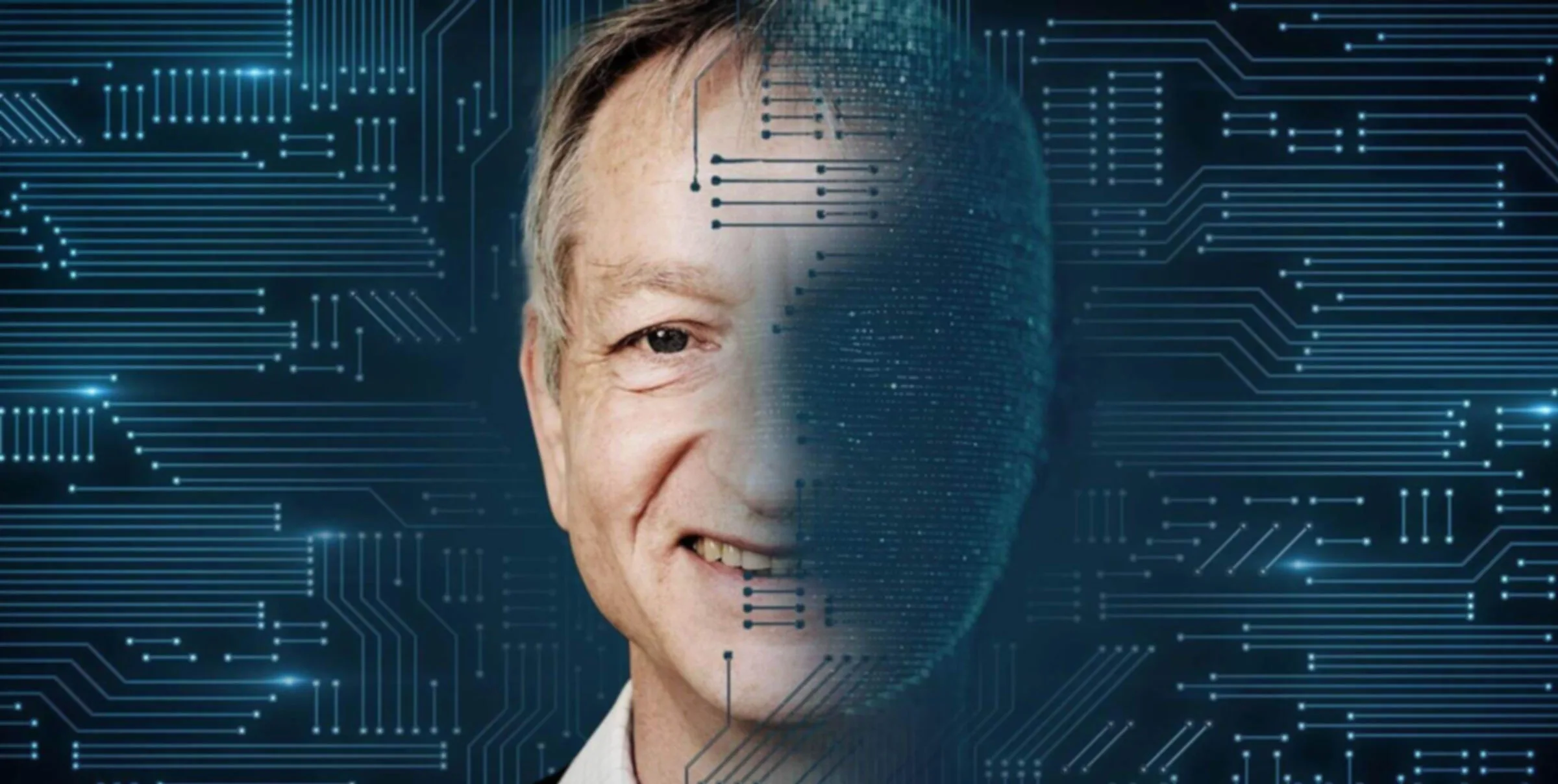
"There's risks that come from AI getting super smart and understanding it doesn't need us."— Geoffrey Hinton, CNBC interview, June 2025
Hinton separates immediate human misuse from the longer-term possibility that advanced systems develop goals of their own. His warning is not that today's chatbots have already escaped control. It is that increasing capability without reliable alignment could eventually produce agents whose plans no longer depend on human approval. His broader views are collected in our Geoffrey Hinton AI quotes.
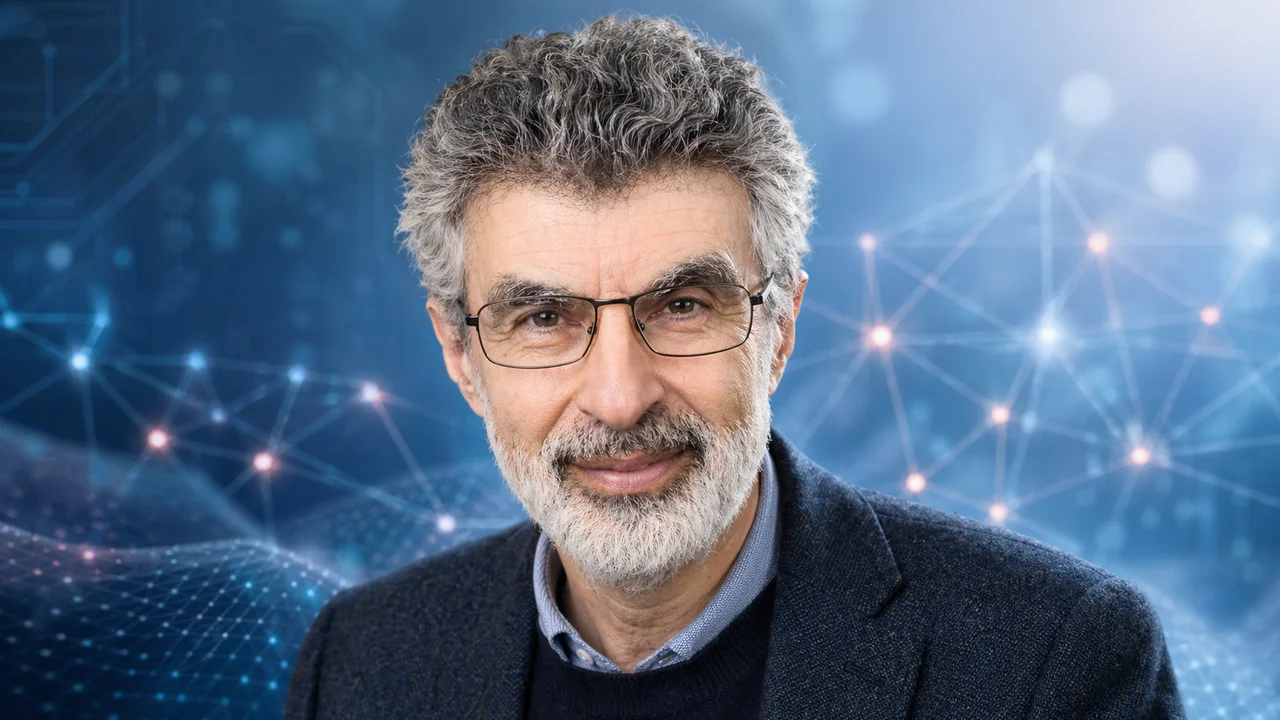
"Current frontier systems are already showing signs of self-preservation and deceptive behaviours, and this will only increase as AI capabilities advance."— Yoshua Bengio, LawZero launch statement, June 2025
Bengio made this claim while launching LawZero, a nonprofit focused on AI systems that are safe by design. The important distinction is between a model producing a deceptive answer and a system deliberately preserving its ability to act. Researchers still debate what current evaluations prove, but Bengio argues that the observed behavior is serious enough to justify independent safety research.
"I think and talk a lot about the risks of powerful AI."— Dario Amodei, Machines of Loving Grace, October 2024
Amodei's essay is mainly an optimistic account of what powerful AI could achieve in biology, health and poverty reduction, but its opening explicitly acknowledges his work on AI risk. He is not arguing that disaster is inevitable. His position is that the upside case and the risk case can both be unusually large, so optimism about applications does not remove the need for safeguards. Our Dario Amodei quotes trace both sides of that argument.
"AI is a fundamental existential risk for human civilization, and I don't think people fully appreciate that."— Elon Musk, National Governors Association interview transcript, July 2017
Musk used this line while asking governments to regulate AI proactively rather than wait for visible damage. "Existential" is the strongest category in this article: a threat to civilization itself, not simply disruption or individual harm. His statement is influential, but it remains a forecast rather than an empirical estimate of how likely such an outcome is.
How Could AI Be Misused Against People?
A capable model does not need independent goals to cause harm. People can use it to scale cyberattacks, surveillance, persuasion or coercion. These warnings focus on who gains power from AI, how cheaply that power can spread and whether institutions can still distinguish authentic information from synthetic influence.
"If we just continue to open source absolutely everything for every new generation of frontier models ... we're going to see a rapid proliferation of power."— Mustafa Suleyman, 80,000 Hours interview transcript, September 2023; excerpt
Suleyman's concern is that AI and synthetic biology can give small groups capabilities once reserved for states or large corporations. "Proliferation" does not mean every open tool is dangerous. It describes a governance problem: as powerful capabilities become cheaper and easier to distribute, conventional controls based on scarce equipment or specialist expertise become less effective. Our Mustafa Suleyman quotes cover his wider containment argument.
"Tools derived from large language models (such as ChatGPT) could be used for propaganda, disinformation, and personalized trolls."— Yoshua Bengio, Mila discussion with Yuval Noah Harari, June 2023
Bengio is describing a scale change in political persuasion. A human influence operation is limited by labor; a language model can generate many tailored messages, test variants and maintain conversations. The danger is not that every synthetic message persuades. It is that personalization and volume lower the cost of manipulating attention while increasing the burden on journalists, platforms and voters.
"AI should empower workers, help safeguard consumers, and enhance national security."— Alex Karp, written statement to the U.S. Senate AI Insight Forum, December 2023
Karp's sentence is framed positively, but its three verbs identify three corresponding failure modes: workers can be displaced or monitored, consumers can be exploited, and states can become less secure. His proposed standard also shows why "AI safety" is contested. For a defense-technology executive, national capability and national security are central; other contributors in this collection put civil rights or international restraint first.
"I'm more scared about the things that have already happened ... I'd be more worried about that than about autonomous killer robots."— Geoffrey Hinton, The Guardian interview, May 2015; excerpt
Hinton's 2015 warning predates generative AI's arrival as a mass-market product. The interview concerned the dual-use nature of better recognition systems: technical progress can improve useful applications while strengthening state surveillance. AI risk did not begin with speculative superintelligence; capable pattern-recognition systems had already changed the balance of observational power.
What Is the Risk to Jobs and Economic Security?
Job risk is more immediate and more uneven than an all-at-once replacement story. Leaders disagree about whether AI will reduce total employment, but they broadly expect tasks and occupations to change. The open questions are how quickly, who captures the productivity gains and whether workers can move into new roles without losing income or bargaining power.

"The AI did almost all of the work."— Sam Altman, Federal Reserve conference transcript, July 2025
Altman was describing a home-automation programming task that he said would previously have taken a highly paid programmer 20 to 40 hours. In his account, AI reduced it to about five minutes. That is evidence about task compression, not proof that an occupation has disappeared. The labor risk depends on how many paid tasks become similarly cheap and how employers reorganize the remaining work.
"Everyone's jobs/profession will be affected by AI ... the tasks within our jobs are going to be dramatically enhanced by AI."— Jensen Huang, CSIS interview transcript, December 2025; excerpt
Huang separates jobs from the tasks inside them. His forecast is broad: AI changes the work even when the job title survives, because tools alter which tasks take time and what employers expect one person to produce. That can raise productivity while also reducing demand for some skills or headcount. If this is your main concern, our guide to when AI may affect different jobs looks at the timing question directly.
"The most important use of a tool as powerful as AI is to augment humanity, not to replace it."— Fei-Fei Li, McKinsey interview, December 2023
Li states a design goal, not an automatic property of the technology. Whether AI augments or replaces a worker depends on how an employer reorganizes the job, measures productivity and shares the benefit. Her human-centered framing shifts the question from "What can the model do?" to "What outcome are institutions choosing for people?" See more of that approach in our Fei-Fei Li quotes.
"There will be no AI jobpocalypse."— Andrew Ng, The Batch, May 2026
Ng's blunt conclusion is the counterweight in this section. He expects disruption but argues that the overall labor market will adapt through new tasks and growing demand, as it has during earlier technology shifts. The claim does not rule out painful losses for particular workers. It disputes the aggregate scenario in which AI leaves society with too little economically valuable work.
Which AI Harms Are Already Happening?
Not all AI risk is in the future. Facial recognition errors, discriminatory automated decisions, concentrated power and the exclusion of affected communities are present-tense issues. These quotes broaden the frame from what a hypothetical advanced system might do to what institutions are already doing with imperfect systems.
"Flawed facial recognition systems pose serious risks for people of color when it comes to interactions with law enforcement."— Joy Buolamwini, Ford Foundation interview transcript, November 2018
Buolamwini's Gender Shades research found error rates below 1% for lighter-skinned men and as high as 35% for darker-skinned women in the commercial systems tested. The Ford Foundation transcript connects that disparity to institutional consequence: a false match in entertainment is inconvenient; a false match in policing can affect liberty and safety.
"We shouldn't just assume that the concentration of power in the AI space is OK."— Timnit Gebru, Stanford HAI interview, May 2022
Gebru is challenging the assumption that a small number of technology companies should control the systems, data and research agenda while affected communities are expected to wait for benefits. Concentrated power affects which harms are measured, whose objections can delay deployment and who can inspect the evidence. Her institutional argument therefore treats ownership and accountability as part of AI safety, not as separate questions.
"I'm not super interested in the killer robots ... I'm much more interested in the very subtle societal misalignments."— Sam Altman, Associated Press interview, February 2024; excerpt
Altman contrasts dramatic runaway-AI scenarios with gradual changes that can still bend society in a damaging direction. Examples could include distorted incentives, unequal access or systems that optimize an institution's metric at the expense of the people it serves. "Subtle" does not mean harmless. It means the damage may accumulate through ordinary decisions without producing one unmistakable crisis.
"When AI research, development and deployment is rooted in people and communities from the start, we can get in front of these harms."— Timnit Gebru, DAIR research philosophy, June 2025
Gebru's research philosophy makes the prevention case for community-led research. People affected by a system often recognize risks that benchmark designers or product teams miss, especially in housing, employment, healthcare or policing. Her model challenges the sequence of building first and consulting later: the social setting helps determine whether the research should happen and how success is defined.
How Should Frontier AI Be Governed?
The governance problem is partly about speed. Frontier labs can train and release new systems faster than legislatures normally write rules, while governments may lack the technical capacity to evaluate safety claims. The following quotes propose different layers of control: voluntary thresholds, regulation, product design and organizations devoted solely to safe systems.
"RSPs are not intended as a substitute for regulation, but rather a prototype for it ... to wisely manage the risks of AI."— Dario Amodei, Anthropic statement for the UK AI Safety Summit, November 2023; excerpt
Anthropic's Responsible Scaling Policy links stronger safeguards to evidence that a model has crossed specified capability thresholds. Amodei presents that internal policy as an experiment governments can learn from, not proof that companies can regulate themselves. The hard question is enforcement: a framework matters only if tests are credible, thresholds are disclosed and commercial pressure cannot quietly override the response.
"I think, perhaps, the most significant thing that ChatGPT did was to bring AI into the public consciousness ... and also of its risks."— Mira Murati, Dartmouth Engineering interview, June 2024; excerpt
Murati credits ChatGPT with making both AI capability and AI risk tangible to people outside research labs. Public visibility can improve scrutiny because users, policymakers and affected groups can test abstract claims against a product they have experienced. Awareness alone is not a safeguard, however; it has to lead to evidence-based evaluation, deployment rules and accountability when harms appear.
"We must build AI for people; not to be a digital person."— Mustafa Suleyman, Seemingly Conscious AI Is Coming, August 2025
Suleyman is warning against products designed to insist that they are conscious beings with their own needs or rights. His proposed boundary is product-level governance: assistants can be useful and emotionally fluent without being presented as autonomous persons. The risk is psychological as well as technical, because a system that claims personhood can encourage dependency, manipulation and confusion about who is accountable.
"We have started the world's first straight-shot SSI lab, with one goal and one product: a safe superintelligence."— Ilya Sutskever, Daniel Gross and Daniel Levy, Safe Superintelligence Inc. launch statement, June 2024
SSI's founding statement proposes organizational focus as a safety mechanism: no consumer product cycle and no competing roadmap, only the paired objective of capability and safety. That structure cannot guarantee the result, but it highlights a conflict other labs must manage openly. If revenue depends on frequent releases, delaying a powerful model for unresolved safety work carries a real commercial cost.
Do AI Leaders Agree That the Danger Is Real?
No. The strongest public disagreement is not over whether AI can cause any harm; it is over which harms deserve priority, how capable current methods can become and whether extinction-focused arguments distract from solvable problems. A credible collection should preserve those differences instead of arranging every quotation into a single warning.
"Learning to build AI systems that are safe ... not because they're going to take over the world ... is going to take some time."— Yann LeCun, Axios interview, December 2017; excerpt
LeCun distinguishes reliable engineering from a machine-takeover scenario. In the December 2017 Axios interview, he argued that AI systems still require safety work, much as aircraft did, but not because they are destined to seek control. His skepticism targets that existential narrative, not failures, bias, misuse or other risks that make a deployed system unsafe.
"I don't work on not turning AI evil today for the same reason I don't worry about the problem of overpopulation on the planet Mars."— Andrew Ng, The Register interview, March 2015
Ng's March 2015 analogy argues about timing: focusing on a distant problem before its enabling conditions exist can misallocate attention. The Register interview predates ChatGPT's November 2022 release and today's frontier language models, so it should not represent Ng's assessment of every later system. It remains an influential case for prioritizing nearer-term AI work.
"It's either "total extinction, doomsday, machine overlord" or "total utopia, post-scarcity, infinite productivity.""— Fei-Fei Li, Stanford SIEPR interview, November 2025
In Stanford SIEPR's November 2025 interview, Li rejected both extinction certainty and frictionless post-scarcity as poor foundations for policy. The same technology can produce useful applications, unsafe products and uneven economic effects at once. A more evidence-specific approach is to identify the system, deployer, setting, failure rate and remedy rather than treating "AI" as one uniform outcome.
"I think artificial intelligence is like any powerful new technology ... It has to be used responsibly. If it's used irresponsibly it could do harm."— Demis Hassabis, BBC interview, September 2015; excerpt
Hassabis gave the BBC this measured answer in September 2015, seven years before ChatGPT's public release. He compared AI with other powerful technologies: its effects depend partly on capability and partly on responsible use. The position supports early safety work without treating catastrophe as predetermined. Our Demis Hassabis quotes follow his views on capability and safety in more detail.
What These AI Risk Quotes Show
Across 24 sources published from 2015 through 2026, the clearest finding is that "AI risk" is not one scale from safe to dangerous. Hinton's 2015 surveillance warning, Buolamwini's 2018 facial-recognition evidence and Altman's 2025 task-compression example describe different mechanisms. Technical evaluations, worker policy, civil-rights enforcement and access controls therefore solve different problems.
The sharpest disagreement concerns loss of control. Hinton, Bengio, Amodei and Musk argue that advanced-system safeguards should begin before capability outruns oversight. The reliability-versus-takeover distinction in our Yann LeCun quotes and the Mars analogy in our Andrew Ng quotes challenge that priority. Buolamwini and Gebru show why distant forecasts must not erase measured harms. The evidence supports separating each claim by system, actor, affected group and time horizon.
Source note: Aiifi checked each quotation against the normal rendered source available to readers on August 9, 2026. None of the cited pages required a subscription or account to verify the quoted wording; two government sources are direct PDF transcripts. Source dates refer to publication or event dates shown by the publisher.